
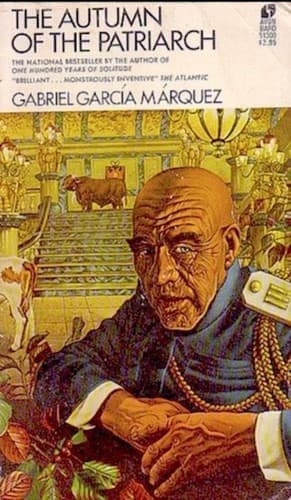
The Autumn of the Patriarch
Gabriel García Márquez
A lyrical, sprawling portrait of a long-ruling Caribbean-style dictator that shares Butterflies' focus on how tyranny distorts ordinary lives over decades.
Reader-supported: when you buy through links on our site, we may earn an affiliate commission. Learn more
We earn a commission if you buy through these links. Learn more
Find Similar BooksGuide by the Books of the Day editors · Updated · How we write our guides
A tight, emotionally direct novel about the Mirabal sisters, four women who fought Trujillo's dictatorship, told through four distinct voices so the reader feels both the public danger and the private lives beneath it.
2 creators reviewed In the Time of the Butterflies on YouTube between 2019 and 2023, with 67.2K views between them. Their opinions are their own; we picked these reviews, we didn't write them.
In the Time of the Butterflies is a historical novel about the Mirabal sisters, four women from the Dominican Republic who opposed the dictatorship of Rafael Trujillo and were killed in 1960. Alvarez builds the book around all four sisters, giving each her own voice, so the same years arrive from different angles: a young woman's private longings, a marriage strained by politics, the risks of smuggling and organizing, and the constant fear that comes with every knock at the door. Because the outcome is known from the start, the pull comes less from suspense than from watching ordinary lives bend under pressure.
The style is lyrical and intimate. The sisters speak in the first person and move freely across time, drifting between childhood, marriage, prison, and the years after. Dedé, the survivor, returns to the story in the present and carries both grief and a sense of responsibility to tell it properly. Spanish words and Dominican idiom appear throughout, and the prose leans toward emotion and imagery more than documentary detail.
Reading it feels less like a history lesson than like spending years with a family. It is short enough to finish in a few sittings, and it works both as an introduction to a chapter of Caribbean history and as a portrait of sisterhood under threat.
The novel shows how repression works as daily texture rather than only as headline events. Rumors, informers, a state-controlled press, and the gradual shrinking of safe speech shape how families eat, marry, study, and speak to one another. The political is never abstract here; it arrives in kitchens and bedrooms.
Rotating narration lets each sister see the same events differently. One is drawn to idealism, another to caution, another to domestic life, and the survivor to memory and guilt. Together they produce a fuller picture of the family than any single narrator could, and they show how different temperaments arrive at the same risk.
The book is interested in how courage starts small: a marriage chosen or endured, a favor done for a friend, a decision to keep quiet or to speak. Alvarez suggests that political commitment grows out of loyalty and love long before it becomes a public cause, and that the costs fall first on the people closest to you.
Dedé's position as the sister who lived is central. Her narration raises questions about witness, survival, and the duty to remember people who were turned into symbols. The novel is aware that a legend can flatten real women, and it works against that flattening by insisting on their particular, flawed humanity.
The sisters' voices can sometimes blur together, and the lyrical register occasionally softens the brutality of the regime, which readers wanting a sharp political account may find thin. Trujillo himself stays largely offstage, seen through the fear he produces rather than through his own perspective. Because the book is widely taught in schools, some readers find its tone earnest and its symbolism heavy-handed. It is a novelist's rendering of real events and real people, not a scholarly history, and it has drawn debate from some readers about its emphases.
Book details and cover from Google Books.
Ready to read In the Time of the Butterflies?
Get your copy on Amazon, or listen to it on Audible. We earn a commission if you buy through these links.
Gabriel García Márquez
A lyrical, sprawling portrait of a long-ruling Caribbean-style dictator that shares Butterflies' focus on how tyranny distorts ordinary lives over decades.
Jeffrey Eugenides
Readers who admire Butterflies' sisterly bond and shifting perspectives will find a similar collective narration here, told with melancholy, precision and a sense of lost girlhood.
Sandra Cisneros
Short, vivid vignettes narrated in a young Latina voice echo Alvarez's blend of coming-of-age memory, family loyalty and the pull of home.
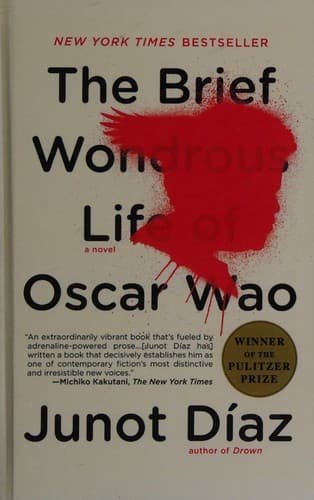
Junot Díaz
A Dominican-American family story that moves between the Dominican Republic and New York, with the shadow of Trujillo's dictatorship running through its generations.