Reader-supported: when you buy through links on our site, we may earn an affiliate commission. Learn more

Cover of The Virgin Suicides
Buy on AmazonBuy on Bookshop.orgListen on Audible

We earn a commission if you buy through these links. Learn more

Find Similar Books

The Virgin Suicides

by Jeffrey Eugenides

Fiction
★★★★★4.5 (19)

Guide by the Books of the Day editors · Updated · How we write our guides

A haunting, darkly funny novel told by the neighborhood boys who watched five sisters in 1970s suburbia, prized for its mood, voice, and the questions it refuses to answer.

What Creators Say About The Virgin Suicides

2 creators reviewed The Virgin Suicides on YouTube between 2024 and 2026, with 177.3K views between them. Their opinions are their own; we picked these reviews, we didn't write them.

faulkner, hamnet, the virgin suicides — my fave december & january readslucy ng. on YouTube175.5K views · 2026
Jeffrey Eugenides Double Bill! The Virgin Suicides & MiddlesexRoro Reads on YouTube1.8K views · 2024

What It's About

The Virgin Suicides is narrated by an unnamed group of boys who grew up on the same street as the Lisbon sisters. They speak as "we," a collective voice that mixes adult hindsight with the breathless guesswork of teenagers. Rather than entering the girls' heads, they gather evidence: yearbook photos, records, rumors, and scraps of overheard talk. The result is less a whodunit than an attempt to understand something that cannot be fully understood.

The prose is lush and precise, with long sentences heavy with suburban detail: lawns, cars, dinners, and the tidy, anxious rituals of a family that seems to be closing in on itself. Eugenides tends to find comedy inside grief. The boys' obsessions are funny and sad at once, and the narration keeps undercutting its own certainty. The mood is dreamy and elegiac, closer to a memory that won't settle than to a plot-driven thriller.

Reading it feels like being handed a box of fragments and asked to build a picture. You get the boys' wistful, slightly unreliable version of events and a steady sense of how little anyone outside the house could know. It is short enough to finish in a couple of sittings, and the ache lingers long after.

Read this if you…

  • Want a short, lyrical novel where mood, atmosphere, and voice matter more than plot.
  • Are drawn to coming-of-age stories told with dark humor and melancholy.
  • Enjoy unreliable or communal narrators and don't need every question answered.

Skip it if you…

  • Need a clear plot, a satisfying resolution, or a clear explanation of motive.
  • Find stories about teen suicide too painful right now, even when handled with restraint.

Key Ideas

  1. 1

    Collective narration as a way of looking

    The boys speak as one group, and that shared voice turns watching into a kind of obsession. The novel shows how communal rumor and gossip shape what a community believes it knows, and how much of that knowledge is really projection.

  2. 2

    A mystery that refuses to resolve

    The book is less interested in why things happened than in the gap between observers and the people they observe. The boys assemble evidence and keep admitting that it never adds up, which is the point. Readers expecting answers will find the frustration is part of the design.

  3. 3

    Adolescence as projection and longing

    Teenagers turn the sisters into objects of fantasy and romance, and the novel quietly exposes how distorting that gaze is. The boys' idealization says as much about their own hunger and confusion as it does about the girls.

  4. 4

    Suburban comfort beside private despair

    The neighborhood's order, its routines, and its consumer comforts sit side by side with the family's hidden unhappiness. Eugenides uses dark humor to show how little the surface of ordinary life reveals about what is happening inside a house.

Limitations

Critics often note that the boys' perspective keeps the sisters at a distance. The girls remain largely mysterious, and some readers find them more symbols than fully realized people. The 1970s suburban setting and the boys' gendered gaze can feel dated to some readers, and the book's romantic mythologizing may frustrate anyone looking for deep psychological portraits of the family. Its tone is deliberately hazy, which some find evocative and others find evasive.

Questions Readers Ask

Is The Virgin Suicides still worth reading?
Yes, for most readers. Its sentences hold up well, and its concerns about adolescence, idealization, and how communities misread the people inside them remain relevant. The 1970s setting is part of the texture rather than a barrier, though the boys' attitudes toward the girls can feel uncomfortable by today's standards, which the book partly intends.
How does it compare to Eugenides's Middlesex?
Middlesex is much longer and sprawls across generations, family history, and questions of identity. The Virgin Suicides is slimmer, more tightly focused, and closer to a fable. If you want a fast, haunting introduction to Eugenides, start here. If you want his most ambitious scope, read Middlesex next.
Should I watch Sofia Coppola's film before or after reading?
Either order works, but reading first lets the book's collective voice and ironic humor register fully. The film emphasizes dreamy images and atmosphere, while the novel adds the boys' running commentary, their obsessive detective work, and a more pointed sense of how memory distorts events.
Published
1993
ISBN
9781429960441
Difficulty
beginner
Category
Fiction

Book details and cover from Google Books.

Ready to read The Virgin Suicides?

Get your copy on Amazon, or listen to it on Audible. We earn a commission if you buy through these links.

Books Like The Virgin Suicides

View all →
Cover of We Have Always Lived in the Castle

We Have Always Lived in the Castle

Shirley Jackson

Like the Lisbon sisters, the Blackwood sisters live isolated from their town, and the outside world watches them with suspicion and fascination. Jackson's eerie, precise prose builds the same sense of a family withdrawing into its own private logic.

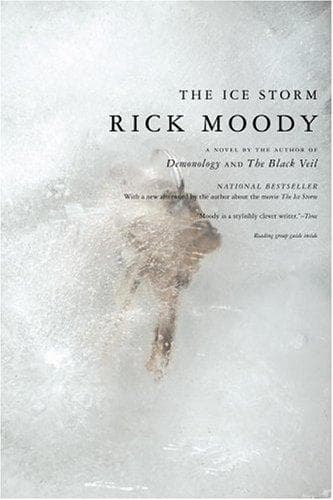
Cover of The ice storm

The ice storm

Rick Moody

Set in 1973 suburban Connecticut, it follows two families whose quiet lives are coming apart. Like The Virgin Suicides, it pairs sharp satire of middle-class comfort with a deep sadness about adolescence and the adults failing around it.

Cover of The Perks of Being a Wallflower

The Perks of Being a Wallflower

Stephen Chbosky

Told through letters from a sensitive teenager, it captures the intensity of first friendships, crushes, and private pain. Readers who loved the boys' hushed, yearning view of youth will find the same emotional closeness here.

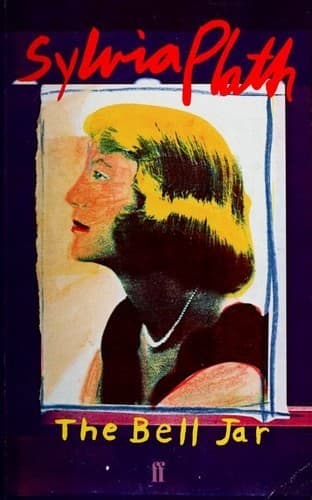
Cover of The Bell Jar

The Bell Jar

Sylvia Plath

Esther Greenwood's account of a summer unravelling is sharp, witty, and bleak, with a clear eye for the pressures placed on young women. Its mix of dark humor and depression echoes the tone of Eugenides's novel.

Explore More