Reader-supported: when you buy through links on our site, we may earn an affiliate commission. Learn more

Cover of Being Wrong
Buy on AmazonBuy on Bookshop.orgListen on Audible

We earn a commission if you buy through these links. Learn more

Find Similar Books

Being Wrong

by Kathryn Schulz

Psychology
★★★★☆4.0 (1)

Schulz turns our resistance to being wrong into a warm, curious inquiry, showing why error feels like certainty and why admitting it can be useful.

What It's About

Being Wrong is a book about error written by a journalist who spent years writing about mistakes of every kind, and it reads like a long, curious essay rather than a manual. Schulz moves between philosophy, psychology, literature, and the everyday experience of realizing you have been mistaken about something important. Her central question is why being wrong feels so much worse than it should, and why we are so reluctant to admit it.

The book's approach is to take error seriously as a subject in its own right. Instead of treating mistakes as failures to be eliminated, she examines how the mind produces them, how we defend our beliefs, and how the moment of discovery feels. She draws on a wide cast of thinkers and writers, using their lives and arguments as case studies, and mixes these with reporting-style scenes and a conversational voice that keeps the material light even when the ideas get dense.

Reading it is less like absorbing a body of research and more like being walked through a series of provocations. You will finish with a clearer sense of why certainty is so comfortable, and a more forgiving attitude toward your own mistakes, though the book offers its advice more as a shift in outlook than as a checklist.

Read this if you…

  • want to understand why admitting a mistake feels so uncomfortable
  • enjoy essayistic nonfiction that mixes ideas with reporting and storytelling
  • are interested in how belief, certainty, and identity interact

Skip it if you…

  • want a practical, step-by-step guide to better decision-making
  • prefer dense, research-driven psychology with extensive citations and data

Key Ideas

  1. 1

    Being wrong feels like being right

    The moment of discovering an error often doesn't register as a correction of a mistake; it registers as the world suddenly being different. Most of us experience our beliefs as simply how things are, so we don't notice we hold them until they break. Schulz uses this to explain why we often defend positions long after the evidence has turned.

  2. 2

    Error is a byproduct of how minds work

    Schulz argues that the capacity to be wrong is tied to the same faculties that let us learn, generalize, and imagine. A mind that never erred would be one that never extrapolated beyond what it already knew. Seeing error as a side effect of thinking, rather than purely a defect, changes how we judge it.

  3. 3

    Why we cling to being right

    Being right offers social standing, emotional comfort, and a sense of competence, so admitting error can feel like a threat to identity. The book looks at how this pull shapes personal relationships and public debate, and why people often double down rather than revise their views.

  4. 4

    Mistakes as a route to growth

    The book's more hopeful thread is that error, when handled well, can prompt curiosity and revision. Schulz suggests that cultivating humility about what we know makes us better listeners and thinkers, though she is clear this is an ongoing practice rather than a switch you flip.

Limitations

Some readers find the book diffuse, since its wide tour of philosophy, literature, and history can feel loosely stitched together, and its advice is more inspirational than specific. Critics also note that its psychological claims lean on older studies, some of which have since been questioned in replication debates that followed. The book is more interested in the human experience of error than in the mechanics of correcting it, so readers hoping for practical tools may come away wanting more.

Questions Readers Ask

Is Being Wrong still relevant?
The core observations about how we experience error are durable, since they rest largely on long-standing philosophy and common experience. The specific research references are where age shows, and some findings have been revised since 2010, so treat them as starting points rather than settled science.
How does it compare with Thinking, Fast and Slow?
Kahneman's book is a research-first tour of cognitive biases, while Schulz is more interested in the emotional and philosophical side of error. If you want the mechanics of judgment, Kahneman is the better choice; if you want to understand why being wrong hurts so much, Schulz is the stronger companion.

What Creators Say About Being Wrong

Reviews from readers on YouTube. Their opinions are their own.

On being wrong | Kathryn SchulzTED on YouTube
Kathryn Schulz, author of BEING WRONG: Adventures in the Margin of ErrorEccoBooks on YouTube
Published
2011
ISBN
9780061176050
Difficulty
beginner
Category
Psychology

Book details and cover from Google Books.

Ready to read Being Wrong?

Get your copy on Amazon, or listen to it on Audible. We earn a commission if you buy through these links.

Books Like Being Wrong

View all →
Cover of Thinking, Fast and Slow

Thinking, Fast and Slow

Daniel Kahneman

Like Schulz, Kahneman examines the mental shortcuts that make us confident when we shouldn't be. His account of intuition and overconfidence extends the questions Being Wrong raises about why certainty feels so good.

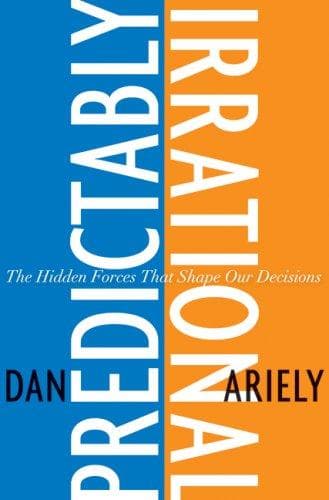
Cover of Predictably Irrational

Predictably Irrational

Dan Ariely

Ariely uses experiments to show how everyday decisions go wrong in consistent, surprising ways. Readers drawn to Schulz's look at our blind spots will enjoy his clear, anecdote-driven demonstrations.

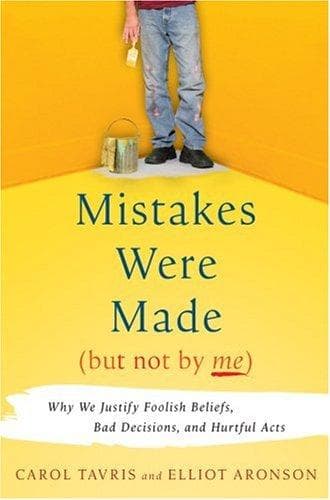
Cover of Mistakes Were Made (But Not by Me)

Mistakes Were Made (But Not by Me)

Carol Tavris, Elliot Aronson

Tavris and Aronson explain self-justification, the process by which we protect our beliefs after being shown wrong. It is a close companion to Being Wrong's discussion of why admitting error is so hard.

Cover of The Black Swan

The Black Swan

Nassim Nicholas Taleb, David Chandler

Taleb argues that rare, unpredictable events shape history far more than our forecasts admit. His scepticism about confident prediction echoes Schulz's warnings about certainty in the face of an uncertain world.

Explore More