Reader-supported: when you buy through links on our site, we may earn an affiliate commission. Learn more

Cover of Battle Cry of Freedom
Buy on AmazonBuy on Bookshop.orgListen on Audible

We earn a commission if you buy through these links. Learn more

Find Similar Books

Battle Cry of Freedom

by James M. McPherson

History
★★★★☆3.5 (15)

Guide by the Books of the Day editors · Updated · How we write our guides

A sweeping one-volume account of the Civil War's origins and course that ties politics, ideology, and battlefield events into one argument about liberty, slavery, and why the Union won.

What Creators Say About Battle Cry of Freedom

2 creators reviewed Battle Cry of Freedom on YouTube between 2018 and 2025, with 3.7K views between them. Their opinions are their own; we picked these reviews, we didn't write them.

Book Review: BATTLE CRY OF FREEDOMRyan Gerard Comedy on YouTube2.5K views · 2018
Why you should read Battle Cry of Freedom by James M. McPhersonDeep Thought on YouTube1.2K views · 2025

What It's About

Battle Cry of Freedom covers the years from the aftermath of the Mexican War through the 1850s crises, secession, the fighting, and Appomattox, roughly 1848 to 1865. It won the Pulitzer Prize for History in 1989. McPherson moves between Washington, state capitals, army camps, and battlefields, so the reader keeps seeing how a decision in Congress or a campaign in Virginia shapes events elsewhere.

The book is a synthesis more than a single new discovery. McPherson draws on a large body of earlier scholarship and arranges it around a central argument: both sides fought in the name of liberty, and the conflict changed what that word meant once emancipation became a war aim. Political maneuvering, the home fronts, internal dissent in both sections, and military strategy are woven together rather than handled in separate chapters.

Reading it feels like being guided by a confident expert through a crowded period. The prose is brisk, and the battle descriptions are clear enough for readers with little military background. The number of names and the density of political detail, however, call for steady attention across a long book. It rewards patience more than speed.

Read this if you…

  • want a single, connected account of the Civil War and the crisis that led to it
  • are interested in how politics, ideology, and military strategy shaped one another
  • can handle a long, dense book and want more than a battle-by-battle survey

Skip it if you…

  • want a detailed tactical study of individual battles or campaigns
  • are looking for the latest scholarship on Reconstruction, enslaved people's own voices, or Black soldiers

Key Ideas

  1. 1

    Slavery as the root of the sectional crisis

    McPherson argues that the conflict grew out of the fight over whether slavery could expand into the western territories. The rise of the Republican Party around opposition to that expansion, and the secession that followed Lincoln's election, are treated as links in one chain rather than separate events. Understanding that chain is the book's first step toward explaining the war.

  2. 2

    Two competing claims to liberty

    The title captures a shared vocabulary. Southern secessionists claimed the right of self-government their forebears had fought for, while Northerners defended the Union as the foundation of American freedom. McPherson shows how both sides sincerely saw themselves as defenders of liberty, which helps explain why neither was willing to compromise on the basic principle.

  3. 3

    Emancipation as a second war aim

    The North did not enter the war to end slavery, but it could not avoid confronting slavery as the underlying cause. The book traces how emancipation moved from an unwelcome complication to official policy, changing the war's purpose and its moral meaning. This shift is central to the book's account of what the war accomplished.

  4. 4

    The home fronts and internal dissent

    Battle Cry of Freedom gives real weight to politics and society away from the front lines. Anti-war opposition in the North, strains within the Confederacy, economic hardship, and the pressures of conscription all appear as active forces shaping the military outcome. The war is presented as a contest of societies, not just armies.

  5. 5

    Why the Union ultimately prevailed

    Rather than pointing to one decisive factor, McPherson weighs the North's material advantages, its political will, and the strategic choices of its leaders against Confederate strengths and mistakes. The argument is built from the interplay of these elements over time, which makes the victory look contingent rather than inevitable.

Limitations

The book was published in 1988, and Civil War scholarship has expanded considerably since. Later historians have written more extensively about enslaved people's agency, Black soldiers, emancipation from below, women, and Reconstruction, which the book does not cover because it ends in 1865. Some critics have found its focus on Northern politics and national leaders leaves less room for ordinary Southern whites and for the Confederacy as a society. Its length and density can also be demanding.

Questions Readers Ask

Is Battle Cry of Freedom still worth reading given newer Civil War scholarship?
Yes, as a foundational synthesis that connects the prewar crisis, the war, and its political consequences in one account. Because it predates much recent work on enslaved people, Black soldiers, and Reconstruction, pairing it with newer books in those areas gives a fuller picture than either source offers alone.
How does it compare to Shelby Foote's Civil War narrative?
Foote's three-volume work is more literary and focused on the battles and the people who fought them. McPherson is more analytical and political, and he begins earlier, with the 1850s crises. Many readers start with McPherson for the argument and move to Foote for the texture of the campaigns.
Published
2003
ISBN
9780199743902
Difficulty
intermediate
Category
History

Book details and cover from Google Books.

Ready to read Battle Cry of Freedom?

Get your copy on Amazon, or listen to it on Audible. We earn a commission if you buy through these links.

Books Like Battle Cry of Freedom

View all →
Cover of A Stillness at Appomattox

A Stillness at Appomattox

Bruce Catton

Catton's Pulitzer-winning account of the Army of the Potomac covers the war's campaigns with the same narrative drive McPherson brings to the military and political story, and it closes on the surrender at Appomattox.

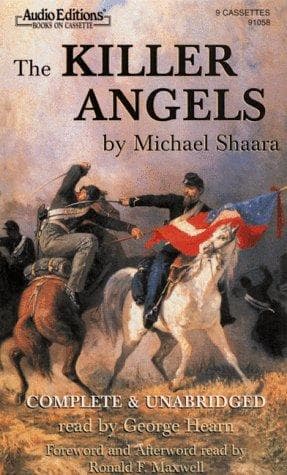
Cover of The Killer Angels

The Killer Angels

Michael Shaara

This novel follows the commanders at Gettysburg through their own eyes, giving human shape to the strategic decisions and personalities that Battle Cry of Freedom analyses at a wider scale.

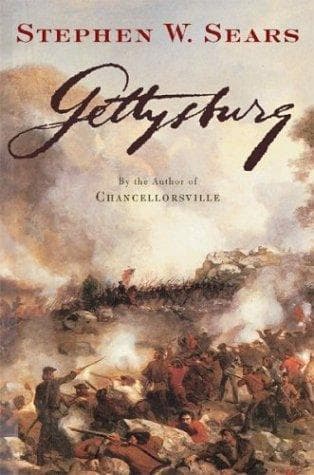
Cover of Gettysburg

Gettysburg

Stephen W. Sears

Sears gives the battle a detailed, carefully sourced account of the maneuvering on both sides, the kind of close military analysis that readers of Battle Cry of Freedom will find satisfying.

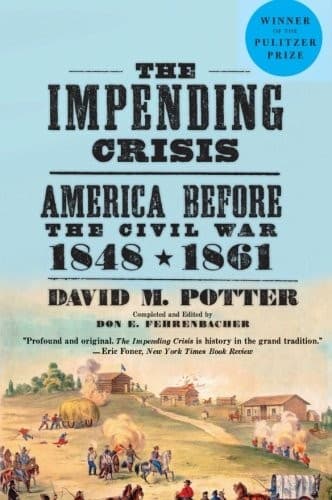
Cover of The impending crisis

The impending crisis

David M. Potter

Potter's study of the American crisis from 1848 to 1861 explains how sectional conflict escalated toward secession, the same period McPherson treats in the chapters on the 1850s and the Republican rise.

Explore More