
We earn a commission if you buy through these links. Learn more
The Killer Angels
A Pulitzer-winning novel that shows Gettysburg through the minds of its commanders, making the decisions behind three bloody July days feel personal, uncertain, and heavy.
What It's About
The Killer Angels dramatizes the Battle of Gettysburg, fought July 1 to 3, 1863, through the eyes of the officers who shaped it. The main viewpoints belong to Union colonel Joshua Chamberlain of the 20th Maine, Confederate general James Longstreet, and Robert E. Lee, with several other officers taking turns. Shaara builds the story from the men's judgments, doubts, and arguments rather than from sweeping maps or troop movements.
The style is close third person, dialogue-heavy, and often slow. Long scenes of conversation and private reflection carry much of the weight, especially the tense exchanges between Lee and Longstreet over whether to attack. It reads more like a character study than an action novel, and the battle scenes are vivid without being the whole point.
Reading it is a serious, moving experience. You know roughly where the story is heading, and Shaara makes the waiting hurt. The emotional payoff comes from people weighing duty, honor, and the human cost of the war, which leaves the book feeling more like a meditation on command than a simple war story.
Read this if you…
- want a historical novel that explores leadership and moral doubt rather than action alone
- are interested in Gettysburg and want to understand the decisions behind it
- enjoy long, reflective dialogue and character-driven storytelling
Skip it if you…
- want fast-paced battle scenes or a plot that moves quickly
- are looking for a balanced, up-to-date account of the battle rather than a novel
Key Ideas
- 1
Command as a burden of judgment
Shaara keeps returning to the weight of making decisions that will send thousands of men to die. Lee and Longstreet disagree openly about the wisdom of attacking, and the novel treats that disagreement as a moral and strategic problem rather than a simple matter of right and wrong. You come away understanding how generals live with decisions they cannot take back.
- 2
Chamberlain and the meaning of duty
Joshua Chamberlain, a former college professor turned colonel, is the book's most sympathetic figure. His struggle to reconcile his scholarly temperament with the demands of fighting gives the novel its emotional center. His defense of Little Round Top is treated as both a tactical necessity and a test of character.
- 3
Both sides as men with reasons
The novel gives Confederate officers real interiority, showing their loyalties, convictions, and grief alongside the Union men. This is the book's most discussed choice. It makes the conflict harder to reduce to villains and heroes, though it also raises questions about whose perspective the story ultimately favors.
- 4
The battle seen from the middle
Instead of an overview, Shaara gives you confusion, fatigue, rumor, and partial information, the way officers would have experienced it. Maps and orders appear, but they are filtered through people who are tired, unsure, and afraid. The effect is intimate and often disorienting.
Limitations
The viewpoint is almost entirely that of officers, so enlisted soldiers, civilians in Gettysburg, and the enslaved people whose lives shaped the war are largely absent. Critics have also noted that the sympathetic portrayal of Confederate leaders can slide toward a Lost Cause tone. The dialogue sometimes feels stagey and speech-heavy, and Shaara invents interior thoughts for real people, which some readers find blurs fact and fiction. Historians have since refined many details of the battle.
Questions Readers Ask
- Is The Killer Angels good for someone who doesn't know much about Gettysburg?
- Yes, though a short overview of the battle first helps. Shaara introduces the key commanders and terrain clearly, and the story follows three days in order. Readers new to the subject may find the officers' names and regiments hard to track at times, but the emotional throughline is strong enough to carry you through.
- How does it compare to the 1993 film Gettysburg?
- The film is based on the novel and follows its main storylines, including Chamberlain's arc. The book gives far more room to the officers' private thinking and to the Lee and Longstreet debate. Most readers find the novel deeper and slower, while the film is more cinematic and focused on battle spectacle.
- Published
- 1974
- ISBN
- 9781565111769
- Difficulty
- intermediate
- Category
- History
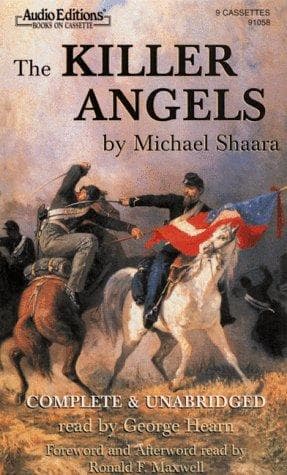
Book details and cover from Google Books.
Ready to read The Killer Angels?
Get your copy on Amazon, or listen to it on Audible. We earn a commission if you buy through these links.