
We earn a commission if you buy through these links. Learn more
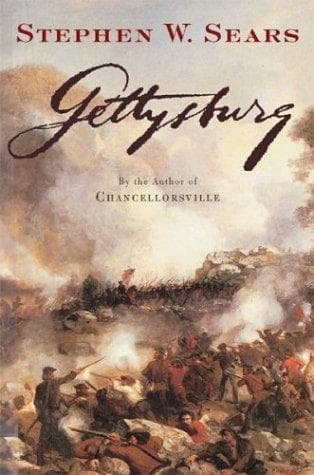
Gettysburg
A patient, detailed narrative that shows how an accidental meeting of two armies became the turning point of the Civil War, with the decisions on both sides laid out in full.
What It's About
Stephen W. Sears's Gettysburg is a narrative history of the battle fought around the small Pennsylvania town from July 1 to 3, 1863. It covers the three days of fighting that stopped Robert E. Lee's invasion of the North, and it places those days within the campaign that brought the two armies together, a meeting that neither commander had fully planned. Sears follows both sides closely, from the army and corps commanders down to the regiments that held or lost key ground.
Sears builds the account from official reports, unit records, and the letters and memoirs of soldiers and officers. He spends real effort weighing why commanders made the choices they did, and where their plans failed to match the terrain, the timing, or the information they had. The result is a strong sense of confusion and delay, and of how much depended on a few hours on a few ridges.
Reading this book is an immersive, unhurried experience rather than a quick overview. It is dense with troop movements and rewards patience, especially if you keep a good set of battle maps nearby. Sears writes clearly and avoids heavy jargon, so even the most tangled afternoons stay readable, and the book works best when read in sittings rather than skimmed.
Read this if you…
- want a detailed, military-focused account of the battle and its decision points
- enjoy following campaigns through unit movements, terrain, and command dilemmas
- already know the basic story of Gettysburg and want more depth on how it unfolded
Skip it if you…
- want a short overview or a book that covers the battle in an afternoon
- are mainly interested in the home front, politics, or the experiences of enslaved people and Black soldiers
Key Ideas
- 1
A battle nobody fully planned
Sears shows that Gettysburg began as a meeting engagement, when advance units of both armies collided while searching for supplies and information. Lee's larger invasion strategy shaped the stakes, but the exact place and timing of the fighting were largely improvised, which helps explain why the first day turned on local decisions.
- 2
Early decisions on high ground
The first day's fighting over the ridges and hills around town determined who controlled the commanding terrain for the rest of the battle. Sears pays close attention to how positions were taken, held, and lost, and to the consequences of moves that looked minor at the time.
- 3
Command judgment under uncertainty
The book examines the debates and hesitations among Lee and his subordinates, as well as the Union leadership's choices, without treating any single decision as obvious in hindsight. Readers see commanders working with incomplete maps, late reports, and conflicting advice.
- 4
Pickett's Charge as the product of earlier choices
Sears treats the assault on the third day as the outcome of the preceding two days rather than as an isolated act of folly. He describes the attack's human cost in detail and considers why the decision was made, making the charge a window into the battle's larger logic.
Limitations
Sears's book is a battle narrative, so it devotes most of its attention to the armies and their commanders. Civilians in Gettysburg, the political context in Washington and Richmond, and the broader meaning of emancipation receive much less space. Some readers find the troop-level detail heavy going, and the book's emphasis on command decisions reflects a particular historiographical approach that later scholarship has questioned and expanded on, especially around memory, commemoration, and the local community.
Questions Readers Ask
- Is Sears's Gettysburg good for a first book on the Civil War?
- It can be, but it is more useful for readers who already have the basic outline of the war and the battle. Sears assumes you can follow multiple corps and divisions across a single battlefield. If you are new to the subject, a shorter overview first will make the narrative easier to follow, and then this book will fill in the detail.
- How does this book compare with other Gettysburg histories?
- Sears is best understood as a detailed narrative of the battle's military course, with close attention to decisions and movements. Books focused on the local community, the town's residents, or the battle's place in national memory take a different approach. Readers who want the operational story should find Sears more satisfying than those looking for social or cultural context.
- Published
- 2003
- ISBN
- 9781299897045
- Difficulty
- intermediate
- Category
- Gettysburg, Battle of, Gettysburg, Pa., 1863
Book details and cover from Google Books.
Ready to read Gettysburg?
Get your copy on Amazon, or listen to it on Audible. We earn a commission if you buy through these links.