
Sapiens
Yuval Noah Harari
Like Gombrich, Harari takes the entire span of human experience as his subject, from early foragers to modern societies, and asks big questions about what shaped our species and its choices.
Reader-supported: when you buy through links on our site, we may earn an affiliate commission. Learn more
We earn a commission if you buy through these links. Learn more
Find Similar BooksGuide by the Books of the Day editors · Updated · How we write our guides
A brisk, warmly told one-volume history of humankind, written for children but rewarding for adults who want the big picture of wars, art, and science back in one sweep.
2 creators reviewed A Little History of the World on YouTube between 2012 and 2020, with 20.2K views between them. Their opinions are their own; we picked these reviews, we didn't write them.
A Little History of the World is a single-volume survey of human history, from the earliest people through to the twentieth century and the atomic bomb. Gombrich wrote it for young readers, and it reads like a storyteller leaning across a table: a confident narrator who has opinions, asks questions, and keeps events moving. Names and dates appear, but sparingly. What matters is the arc of settlements, empires, religions, and inventions.
The approach is selective and openly judgmental. Gombrich pays attention to who built what and at what cost, and he is comfortable saying a conqueror was cruel or a ruler was wise. Art and science get real room alongside battles, so temples, paintings, and printing presses sit next to campaigns and treaties. The chapters are short, which keeps the book moving and makes it easy to dip into.
Reading it feels less like studying than like hearing a long story from someone who knows its outline well. Adults often find it a refreshing way to recover the shape of history after years of disconnected school lessons. It rewards a slow, unhurried read and works surprisingly well aloud.
Gombrich treats the past as a single narrative in which each era grows out of the one before. Cause and consequence are emphasized, so the reader gets a sense of momentum rather than a list of isolated periods. The effect is a map of how the world got to be the way it is, drawn with broad strokes.
The book keeps returning to the idea that human beings build remarkable things and also lose them quickly. Cities fall, knowledge is forgotten, and wars undo decades of progress. Gombrich does not present advance as a straight line, and this tension between what people make and how easily it breaks gives the book its emotional weight.
Rather than treating culture as decoration added to political events, Gombrich, a well-known art historian, places paintings, buildings, and scientific discoveries at the center of the story. Religion and philosophy also appear as forces that moved people, not as footnotes. This makes the narrative feel fuller than a history of rulers alone.
The book deliberately leaves out most detail. It chooses a handful of episodes to illustrate larger patterns and trusts the reader to fill gaps later. This is the source of both its charm and its limits: the picture is vivid and memorable, but many events and regions receive only a sentence or two.
The book is compact by design, so many events, figures, and regions get only passing mention. Its perspective is largely Eurocentric, and some judgments and framings reflect the period in which it was written. Some readers find the moralizing tone too direct, and the simplicity that suits children can feel thin to adults who already know the material. Newer historical research has changed many interpretations, so it works best as an introduction rather than a final word.
Book details and cover from Google Books.
Ready to read A Little History of the World?
Get your copy on Amazon, or listen to it on Audible. We earn a commission if you buy through these links.
Yuval Noah Harari
Like Gombrich, Harari takes the entire span of human experience as his subject, from early foragers to modern societies, and asks big questions about what shaped our species and its choices.

Jared Diamond
Diamond explains why different societies developed so unevenly over thousands of years, offering the same long-view curiosity about history that Gombrich brings to his short chapters.
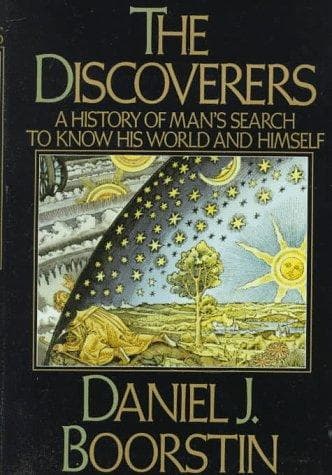
Daniel J. Boorstin
Boorstin traces how humans gradually learned about their world and themselves, a wide, lively account of human curiosity and achievement that suits readers who enjoyed Gombrich's focus on progress.
Hendrik Willem Van Loon
Written as a friendly narrative for young people, this classic also tells humanity's story from the earliest times onward, with the same warmth and simplicity that made Gombrich's book so approachable.