
Sapiens
Yuval Noah Harari
Like Van Loon, Harari tells the whole human story in one continuous, opinionated narrative, moving from early humans to the present with a clear sense of the bigger pattern.
Reader-supported: when you buy through links on our site, we may earn an affiliate commission. Learn more
We earn a commission if you buy through these links. Learn more
Find Similar BooksGuide by the Books of the Day editors · Updated · How we write our guides
A warm, opinionated, self-illustrated walk through the whole human story from prehistory to the early twentieth century, and a classic of how history can be told to young readers.
2 creators reviewed The Story of Mankind on YouTube between 2023 and 2025, with 592 views between them. Their opinions are their own; we picked these reviews, we didn't write them.
The Story of Mankind, first published in 1921, is a single-volume survey of human history from the earliest times through the years just after the First World War. Van Loon wrote it for young readers, and it won the first Newbery Medal in 1922. Its structure is simply chronological, moving from early peoples and river civilizations through Greece, Rome, the medieval world, the Renaissance, revolutions, and the age of machines.
The voice is the main attraction. Van Loon talks to the reader directly, makes confident judgments, and mixes narrative with asides, jokes, and opinions. He also drew many of the book's illustrations and maps himself, and those sketches are part of the experience: they are rough, personal, and meant to make the past feel handmade rather than museum-polished. Chapters are short and punchy, so the book reads quickly even though it covers a huge span.
Reading it now is a mixed experience. It is an early-twentieth-century book, and its knowledge, confidence, and framing reflect its time. Expect a Europe-centered narrative, sweeping generalizations about nations and peoples, and occasional attitudes that modern readers will find dated. Treat it as a vivid, personal reading of history rather than a current reference, and it rewards you with a sense of how an intelligent storyteller of the 1920s saw the human past.
Van Loon's central conviction is that peoples and eras are connected rather than isolated. He presents progress as something built up across cultures over long stretches of time, so that a reader sees how ideas, skills, and institutions passed from one civilization to the next instead of appearing in separate national bubbles.
Rivers, seas, climate, and trade routes recur as explanations for why societies rose and fell. The book encourages you to ask where a people lived and what the land allowed them to do, treating geography as a quiet driver behind wars, migrations, and commerce.
Much of the book's sense of progress rests on the spread of knowledge: writing, printing, science, and new tools. Van Loon tends to credit thinkers and technologies with reshaping daily life, so reading it gives you a steady sense of how innovation accumulates over time.
The book is not neutral in tone. Its author makes judgments, takes sides, and explains complicated matters in plain, conversational language aimed at a young audience. That method makes the past accessible and memorable, though it also means you are hearing one strong personal interpretation.
Much of the research predates decades of later scholarship, especially on prehistory, ancient Africa, the Americas, and Asia, which are covered unevenly. The narrative is centered on Europe and the West, and some passages reflect the racial and national assumptions of the 1920s. Van Loon's confident tone can blur fact and opinion, and because the book was aimed at children it simplifies heavily. Think of it as an entry point and a historical artifact rather than a reference you can rely on for details.
Book details and cover from Google Books.
Ready to read The Story of Mankind?
Get your copy on Amazon, or listen to it on Audible. We earn a commission if you buy through these links.
Yuval Noah Harari
Like Van Loon, Harari tells the whole human story in one continuous, opinionated narrative, moving from early humans to the present with a clear sense of the bigger pattern.
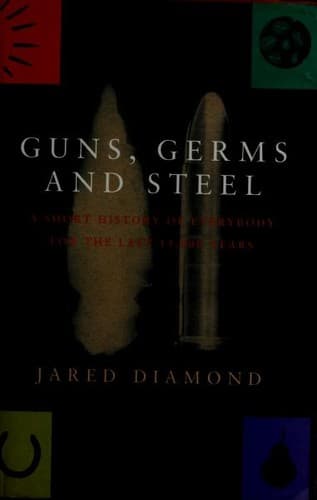
Jared Diamond
It asks the big-picture question Van Loon likes to explore, why some societies developed faster than others, and answers it across continents and thousands of years.
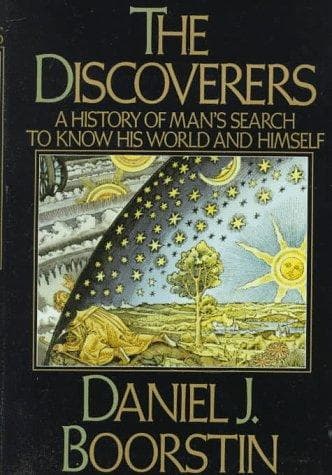
Daniel J. Boorstin
A readable, enthusiastic survey of how human curiosity shaped the world, told through people and ideas in the same spirit of wide-ranging storytelling.
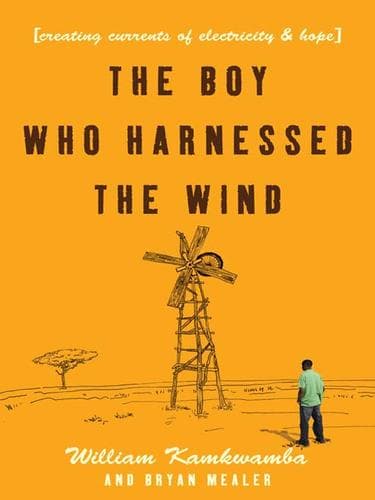
William Kamkwamba, Bryan Mealer
A true story told with the directness and wonder that made The Story of Mankind appealing, showing how one person's ingenuity changed a community's history.