Reader-supported: when you buy through links on our site, we may earn an affiliate commission. Learn more

Cover of A Confederacy of Dunces
Buy on AmazonBuy on Bookshop.orgListen on Audible

We earn a commission if you buy through these links. Learn more

Find Similar Books

A Confederacy of Dunces

by John Kennedy Toole

Fiction
★★★★☆4.0 (65)

Guide by the Books of the Day editors · Updated · How we write our guides

Ignatius Reilly, a self-appointed crank with a medieval worldview, makes this Pulitzer-winning New Orleans comedy a rare pleasure of satire and sheer character.

What Creators Say About A Confederacy of Dunces

2 creators reviewed A Confederacy of Dunces on YouTube between 2014 and 2019, with 108.6K views between them. Their opinions are their own; we picked these reviews, we didn't write them.

Vsauce2 Reviews A Confederacy of DuncesWisecrack on YouTube84.9K views · 2014
Why Read A Confederacy Of Dunces by John Kennedy Toole? A Short Reviewthepearlreview on YouTube23.7K views · 2019

What It's About

A Confederacy of Dunces follows Ignatius J. Reilly, a heavyset, self-styled scholar in his thirties who still lives with his mother in an Uptown New Orleans house and is certain that the modern world has lost its way. He keeps a journal of grievances, wears a distinctive cap, and regards himself as the only intelligent person in the city. When money trouble and a run of mishaps push him out into the streets, he takes a series of jobs and crosses paths with a crowd of working people, hustlers, bureaucrats, and misfits.

Toole writes in a comic, exaggerated register that moves between slapstick, sharp social observation, and the florid, often pompous interior voice of Ignatius. The scenes are short and vivid, and much of the humor comes from the gap between Ignatius's lofty pronouncements and his actual behavior. Reading it feels like being pulled through a crowded, sweaty city by someone who will not stop talking, and who is often the most ridiculous person in the room.

The experience is looser than a conventional plot. Expect a book that rewards attention to dialogue, to the details of work and street life, and to the way minor characters come alive in a few lines. It is funny in a bruised, affectionate way rather than a cruel one, and it is more interested in people and their small schemes than in tidy resolution.

Read this if you…

  • enjoy big, unruly comic characters and street-level stories
  • like satire aimed at self-satisfied pretension and bad faith
  • want a novel that is funny about a real city without reading like a postcard

Skip it if you…

  • need a tightly plotted story with a clear and steady forward drive
  • find a self-righteous, complaining narrator exhausting over several hundred pages

Key Ideas

  1. 1

    A narrator who is wrong about nearly everything

    Ignatius presents himself as a learned defender of old standards, yet his squalor, vanity, and self-deception are obvious to everyone else. The comedy depends on the reader seeing what he cannot, which makes his grand speeches both hilarious and quietly sad.

  2. 2

    Satire of a city's manners and class

    Toole turns his eye on New Orleans as a place of rigid social ranks, commerce, and mismatched ambition. The satire takes aim at pretension at every level, from the wealthy household to the street vendor, and it is sharper about institutions than about individuals.

  3. 3

    An episodic structure that gathers momentum

    The book moves through loosely linked misadventures, with characters pulled into the orbit of Ignatius's plans and mistakes. It reads like a picaresque in which the chaos feels deliberate, and the threads gradually tighten as the story goes on.

  4. 4

    A voice built for performance

    Ignatius's grandiloquent, ornate speech and the book's quick, sharp dialogue are where much of the pleasure lies. Readers who enjoy sentences for their own sake, and set pieces that play like sketches, will get the most out of the prose.

Limitations

Critics often note that the book is episodic, and that Ignatius, though funny, can wear thin over its length. Some readers find the caricatures broad, and the attitudes toward race, sexuality, and class reflect the 1960s setting and sometimes a satirist's blunt hand. Its reputation also owes much to its unusual publication history, which can set expectations higher than the novel meets for every reader.

Questions Readers Ask

Is A Confederacy of Dunces worth reading if I usually avoid comic novels?
It can be, especially if you enjoy character-driven humor more than gags. The jokes come from people behaving badly and from Ignatius's self-importance, not from clever wordplay alone. If you found other comic novels thin, this one has more bite and more sympathy for its characters. If you dislike broad comedy altogether, you may find it tiresome.
Does the book still feel relevant today?
Its satire of pretension, consumer culture, and institutional inertia still lands, and Ignatius's contempt for modern life reads as a recognizable type. Some of its social attitudes date from its 1960s setting, so readers should expect period views. Many people find that the comedy and the portrait of New Orleans hold up well.
Published
2004
ISBN
9780807130087
Difficulty
intermediate
Category
Fiction

Book details and cover from Google Books.

Ready to read A Confederacy of Dunces?

Get your copy on Amazon, or listen to it on Audible. We earn a commission if you buy through these links.

Books Like A Confederacy of Dunces

View all →
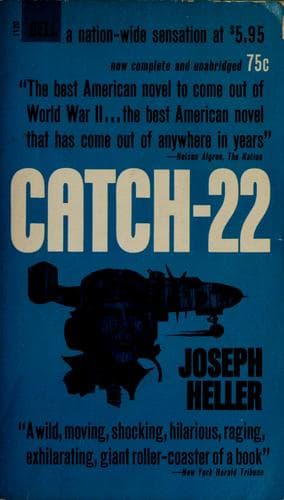
Cover of Catch-22

Catch-22

Joseph Heller

Like Ignatius Reilly, Yossarian is a deeply unheroic protagonist surrounded by absurd bureaucracy and a crowd of memorable misfits. Heller's satire of institutional nonsense has the same anarchic comic energy Toole brings to New Orleans.

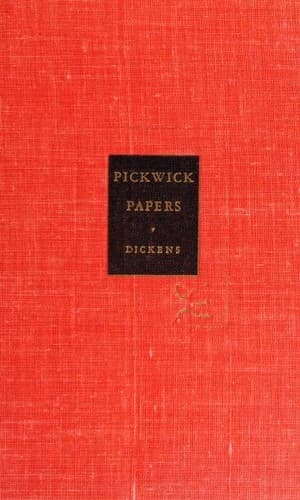
Cover of The Pickwick Papers

The Pickwick Papers

Charles Dickens

Dickens fills his episodic comic novel with larger-than-life characters and farcical escapades, much as Toole does with Ignatius and his circle. Its loose, wandering structure suits readers who enjoyed the book's rambling set pieces.

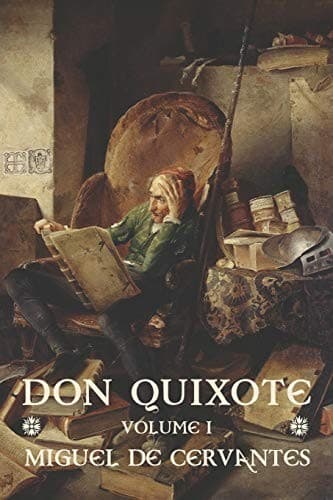
Cover of Don Quixote

Don Quixote

Miguel de Cervantes Saavedra

Ignatius is often compared to a fat Don Quixote, and Cervantes's novel is the original comic study of a self-deluded dreamer colliding with the real world. Its mix of farce and tenderness will feel familiar to Toole's readers.

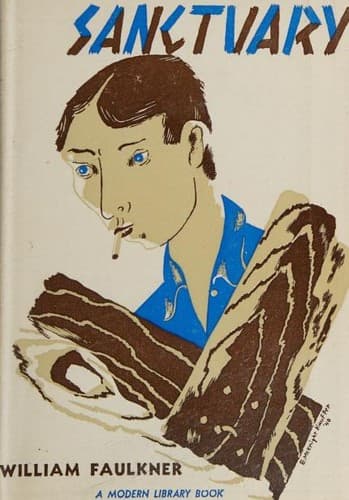
Cover of Sanctuary

Sanctuary

William Faulkner

Faulkner's Southern grotesques and dark sense of humour echo the atmosphere of Toole's novel. Readers who enjoyed its portrait of a decaying American South will find a similarly unsettling, morally tangled world.

Explore More