
We earn a commission if you buy through these links. Learn more
The Pickwick Papers
Guide by the Books of the Day editors · Updated · How we write our guides
A warm, episodic comic novel about a kindly gentleman, his loyal friends, and his quick-witted servant Sam Weller, rewarding for its characters and humour more than its plot.
What Creators Say About The Pickwick Papers
2 creators reviewed The Pickwick Papers on YouTube between 2016 and 2022, with 18.7K views between them. Their opinions are their own; we picked these reviews, we didn't write them.
What It's About
The Pickwick Papers, Dickens's first major novel, began as a run of monthly parts published in 1836 and 1837. It follows Samuel Pickwick, a retired and good-natured London gentleman who founds a club devoted to studying the oddities of the world. He sets off on journeys through the English countryside and towns with three devoted companions, and the comedy comes from their scrapes, misunderstandings, and encounters with an unforgettable cast of innkeepers, lawyers, swindlers, and hangers-on.
The structure is loose and episodic, closer to a picaresque road story than a tightly plotted novel. Many chapters feel like self-contained sketches, some interrupted by inserted tales told by various characters, and the narrative moves easily between farce, sentiment, and sharp social observation. Much of the energy comes from Sam Weller, Pickwick's cheeky and streetwise manservant, whose talk is among the most memorable things in the book.
Reading it feels less like following a story than like keeping good company. You wander with the travellers, laugh often, and accept long digressions for the sake of a vivid character. Its warmth is real, but it arrives gradually, and its pleasures lie mostly in the prose, the people, and the set pieces rather than in suspense.
Read this if you…
- enjoy character-driven comedy more than tight plotting
- like Victorian humour, lively dialogue, and a long road story
- want a warm, funny book that rewards a slow, unhurried pace
Skip it if you…
- need steady momentum and a clear plot to stay engaged
- find dialect-heavy humour and long digressions tiring
Key Ideas
- 1
Goodness as the source of comedy
Pickwick's innocent good faith is both the joke and the moral centre. The world repeatedly takes advantage of his trust, but Dickens treats his generosity with affection rather than contempt, so the humour rarely turns cruel. Readers who enjoy characters whose decency is funny in itself will find much to like here.
- 2
A world seen from the road
Travel drives the book's shape. Each stop brings new inns, coaches, and social types, so the narrative keeps reinventing its setting. The countryside and town life of the period become a backdrop for a broad panorama of ordinary English society, from the respectable to the shabby.
- 3
Sam Weller and the voice of the street
Sam's slang, wit, and practical common sense give the novel its distinctive sound. His exchanges with his father and with Pickwick are often the funniest passages. Much of the dialogue depends on dialect and wordplay, which is part of the pleasure but also a barrier for some readers.
- 4
Law, debt, and the comedy of injustice
Courts, lawyers, and the machinery of debt appear again and again as targets of satire. The laughter is often at the expense of legal absurdity, yet the book hints at the real harm such systems do. It is a first glimpse of the social concerns Dickens would press much harder in later novels.
- 5
Digression as a serial pleasure
The book was written for readers who bought it in instalments, and it shows. Inserted stories, comic set pieces, and recurring jokes give each part a satisfying shape. Read in one long sitting, the repetition can feel padded, but read at a leisurely pace it has a relaxed and generous rhythm.
Limitations
The book is uneven. Some middle sections are often criticised as padded, and the inserted tales vary in quality. Female characters are thin and sometimes sentimental, and the humour leans on dialect and caricature that modern readers may find wearing or uncomfortable. Its social satire is lighter than in Dickens's later novels, so readers wanting sharp indictment may feel it holds back. Period slang and legal detail also require patience.
Questions Readers Ask
- Is The Pickwick Papers a good first Dickens novel?
- It can be, if you want comedy rather than the darker social novels. It is long and loosely structured, so readers new to Dickens may find it slow at first. Oliver Twist or A Christmas Carol offer tighter plots and more focused storytelling, and they may be a better starting point depending on your taste.
- Is the book still funny to modern readers?
- Many of its set pieces still work, especially the comic exchanges between Pickwick, his friends, and Sam Weller. Some humour depends on dialect, period manners, and broad caricature that can feel dated. Readers who enjoy character comedy usually find it rewarding, while those who want sharp, modern wit may find it uneven.
- Published
- 1800
- ISBN
- 9798588592604
- Difficulty
- intermediate
- Category
- Fiction
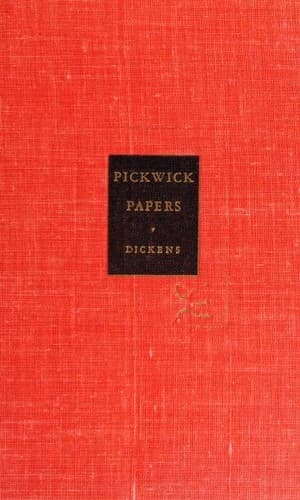
Book details and cover from Google Books.
Ready to read The Pickwick Papers?
Get your copy on Amazon, or listen to it on Audible. We earn a commission if you buy through these links.