
We earn a commission if you buy through these links. Learn more
Don Quixote
by Miguel de Cervantes Saavedra
Guide by the Books of the Day editors · Updated · How we write our guides
Cervantes' comic masterpiece about a man who reads too many romances and rides out to prove them true is funnier, sadder, and stranger than its reputation suggests.
What Creators Say About Don Quixote
2 creators reviewed Don Quixote on YouTube between 2018 and 2021, with 3.5M views between them. Their opinions are their own; we picked these reviews, we didn't write them.
What It's About
Don Quixote follows Alonso Quijano, a minor gentleman in La Mancha who reads so many chivalric romances that he loses his grip on ordinary life. He renames himself Don Quixote, dusts off a rusty suit of armor, and sets out on an old horse with a laborer named Sancho Panza as his squire, promising him an island as a reward. The first part, published in 1605, is mostly a run of misadventures in which windmills become giants and inns become castles. The second part, from 1615, is more reflective, and its characters have already read the first, which gives the whole book an unusually self-aware texture.
Cervantes works in episodes rather than a tight plot. Much of the pleasure comes from the partnership between the idealistic knight and the earthy, proverb-loving squire, who keep trading places in the argument about what is real. The narrator often pauses to doubt his sources, and the book breaks off into embedded stories told by other characters. The prose is brisk and sly, and the humor moves from slapstick to quiet irony. Expect a book that rewards patience and rereading rather than one that pulls you forward by suspense.
Reading it feels less like following a quest and more like wandering a crowded, talkative inn at night, where every conversation drifts into another. You will laugh often and sometimes wince at the beatings, but the book keeps asking whether imagination and kindness can survive disappointment.
Read this if you…
- enjoy long comic novels with loose, episodic structure
- are curious about where the modern novel began and like playful, self-aware narration
- want a funny, humane book you can read in short stretches over several months
Skip it if you…
- need a fast plot with momentum and a clear arc
- find long digressions and embedded tales tiresome rather than charming
Key Ideas
- 1
Books that reshape the reader's mind
Quixote's madness comes from reading too much, so the novel is partly a study of how fiction gets into people. It also invites a question about this book itself: what do its own stories do to the person holding it? The joke works on several levels at once, and it is more pointed than a simple satire of silly romances.
- 2
An idealist and a realist learning from each other
Sancho is practical, greedy, and full of proverbs, while Quixote sees knights, enchanters, and damsels everywhere. Over the course of the book each starts to borrow something from the other. Their conversations are the emotional center, and they hold more warmth than the slapstick around them.
- 3
Illusion and reality never fully settle
The world keeps refusing to match the romances, yet Quixote often reads that refusal as a trick by enemy enchanters. The book leaves you unsure whether he is a fool, a visionary, or both. That ambiguity is a large part of why readers keep returning to it centuries later.
- 4
Early self-aware storytelling and narrative games
Cervantes claims to be translating a manuscript by a supposed Arab historian, doubts the reliability of his own material, and comments on the book's reception within the book. These moves look modern, and they make the novel feel like a conversation with its reader rather than a closed story.
- 5
Laughter that turns toward sympathy
The early chapters are mostly comic, but the humor gradually softens into tenderness. Readers often find they are laughing with Quixote rather than at him by the end. This shift is what gives the book its emotional weight beneath the jokes.
Limitations
The book is long, and its episodic structure means some stretches, especially the inset stories and the middle of the first part, can feel slack to modern readers. Much of the humor depends on 17th-century Spanish culture, chivalric romances, and proverbs that rarely survive translation intact, so notes and context help. Women have limited roles and are often seen through the knight's idealized fantasies. The comic violence, including repeated beatings, can feel harsher than the book intends. Translations differ a great deal in tone and readability.
Questions Readers Ask
- Which translation should I read?
- Translations differ widely in tone, so it is worth comparing a few. Edith Grossman's 2003 translation is widely praised for its readability and idiomatic English. John Rutherford's Penguin version is also well regarded and includes useful notes. Older translations can sound stiff, and some modernized versions lose the book's wordplay, so check a sample before committing to one.
- Is Don Quixote still worth reading today?
- Yes, especially if you enjoy books that poke fun at their own form. The core questions about imagination, disappointment, and the power of stories still feel current. Expect some dated customs and a slow start, but the humor and the warm relationship between Quixote and Sancho hold up well for patient readers.
- How does it compare to Tristram Shandy?
- Both are digressive, self-aware, and fond of playing with the reader, but they feel different. Sterne is more experimental and stranger on the page. Cervantes has a clearer road-trip structure and a warmer, more humane tone, which makes him easier to enter for many readers.
- Published
- 2017
- ISBN
- 9781434104441
- Difficulty
- intermediate
- Category
- Fiction
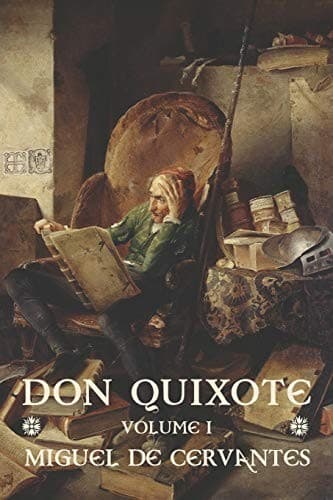
Book details and cover from Google Books.
Ready to read Don Quixote?
Get your copy on Amazon, or listen to it on Audible. We earn a commission if you buy through these links.