
We earn a commission if you buy through these links. Learn more
Sanctuary
Guide by the Books of the Day editors · Updated · How we write our guides
Faulkner's most lurid novel, a Prohibition-era crime story of kidnapping and moral rot that shows how his fiction can work as a fast, disturbing thriller.
What Creators Say About Sanctuary
2 creators reviewed Sanctuary on YouTube between 2016 and 2022, with 7.5K views between them. Their opinions are their own; we picked these reviews, we didn't write them.
What It's About
Sanctuary (1931) is a William Faulkner novel, not a tech book, despite the category on file. It is set in northern Mississippi during Prohibition. It begins as a crime story: Temple Drake, a college student, is stranded after a car trouble at a decaying farmhouse run by a bootlegging gang, where the silent, sinister Popeye holds sway. The plot moves quickly through kidnapping, a murder trial, and a Memphis brothel, so it reads more like a pulp thriller than the sprawling family chronicles Faulkner is famous for.
Faulkner was open about writing it partly for money, and it is often treated as the most commercial of his major books. The prose is still unmistakably his: long looping sentences, shifting viewpoints, and a dread built from heat, decay, and what characters refuse to say. Sections that follow the lawyer Horace Benbow give the book a reflective center, a man whose moral unease sits uneasily beside the grim events around him.
Reading it feels like being pulled through a nightmare that doubles as a hard look at Southern respectability, class, and the way women are judged and used. It is brutal and sometimes hard to sit with, and the pacing swings between tense scenes and dense, slow stretches of interior thought.
Read this if you…
- want a dark, fast-moving crime novel with literary ambition
- are curious how Faulkner handles genre fiction rather than his family sagas
- can tolerate graphic violence and disturbing material in exchange for atmosphere and moral unease
Skip it if you…
- want a clear, cheerful, or morally uplifting story
- are new to Faulkner and want his most accessible entry point
Key Ideas
- 1
A crime story that drifts into Gothic horror
The opening reads like a hard-boiled thriller of bootleggers and a stranded young woman, but the tone keeps tilting toward something more grotesque and dreamlike. The reader should expect suspense mixed with a sense that the rules of ordinary life have stopped applying. The horror comes as much from atmosphere as from events.
- 2
Respectability as a thin and fragile mask
Faulkner repeatedly shows how the manners and reputations of a town's respectable families cover cruelty, hypocrisy, and self-interest. Lawyers, judges, and society figures are as compromised as the criminals. The novel asks what a community is actually protecting when it protects its image.
- 3
Gender, class, and who gets blamed
The story keeps returning to how a young woman's character is judged once her name is involved in scandal. Faulkner lets the reader see the double standards at work, though the book's own treatment of its women is debated. It is a useful text for thinking about reputation and blame in 1930s America.
- 4
Commercial ambition meeting serious craft
Faulkner wrote the book partly to earn money, yet it still shows his sentence-level skill and his interest in fractured perspectives. Seeing a major writer work in a more accessible mode can be illuminating. It helps readers understand how he balanced market pressure with his experimental instincts.
Limitations
The novel is violent and sexually disturbing, and some readers will find it exploitative rather than critical, especially in how it handles its central young woman. Its racial attitudes reflect the 1930s South and are uncomfortable to read. Several characters are thin or functional, and the plot can feel more lurid than psychologically deep. Faulkner himself later described it dismissively, and a 1951 revision added a preface that readers should consider alongside the original text.
Questions Readers Ask
- Is Sanctuary a good first Faulkner book?
- It is more readable than The Sound and the Fury or Absalom, Absalom!, because its plot is a straightforward crime story. Still, its tone is harsh and its subject matter disturbing. Many readers find it works better after they have read a more typical Faulkner novel, so they can appreciate what he is doing differently here.
- Is Sanctuary still relevant today?
- Its themes of reputation, violence, and how society polices women remain relevant. Its depiction of Prohibition-era gangs also feels current in its portrayal of organized crime as a business run on fear. The racial attitudes and some of the gender portrayals reflect their time, so readers should approach them with context.
- Published
- 1931
- ISBN
- 9798502294508
- Difficulty
- intermediate
- Category
- Tech
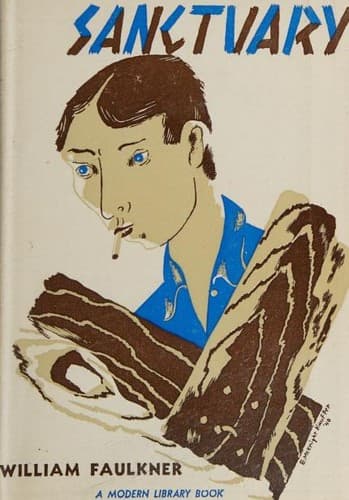
Book details and cover from Google Books.
Ready to read Sanctuary?
Get your copy on Amazon, or listen to it on Audible. We earn a commission if you buy through these links.