
We earn a commission if you buy through these links. Learn more
Riddley Walker
Russell Hoban's 1980 novel rebuilds a shattered Kent in a dialect that looks impossible at first, then becomes its own kind of music. A singular reading experience.
What It's About
Riddley Walker is set many centuries after a catastrophe has left England in a near-medieval state. Knowledge survives only in fragments, scrambled by generations of retelling. The narrator, a young man in what was once Kent, lives among people who half-understand the machines and science of the old world and treat them as sacred or forbidden. The whole book is told in his voice, spelled the way a half-literate teller would hear words aloud, so clever becomes clevver and familiar phrases drift into new meanings.
The approach mixes adventure, coming-of-age story, and a meditation on how myths form. Riddley's world is one of ritual shows, travelling performers, and an authority that controls what people may know. Hoban makes you do the work: you read aloud, guess at words, and slowly feel the sentences open up. The early pages are slow and can feel like a locked door. Once the rhythm takes hold, the prose is funny, lyrical, and sometimes frightening, and you begin to hear the story the way Riddley does.
The experience depends less on plot twists than on accumulating meaning. Ideas return in altered forms, and you are constantly piecing together what happened in the old world from the wreckage of what people now say about it. The book is short relative to the effort it asks, so many readers finish it in a few sittings and then go back to it.
Read this if you…
- enjoy a challenging voice that rewards patience and rereading
- like post-apocalyptic fiction that focuses on how culture and belief survive disaster
- are curious about how language itself can carry history and meaning
Skip it if you…
- want a fast, plot-driven read and find dialect spelling tiring after a few pages
- need a clear, linear explanation of the world and its history
Key Ideas
- 1
Language as the carrier of memory
The dialect is the book's central device. Words have been worn down and reshaped by oral transmission, so the reader experiences how knowledge degrades over generations. Hoban asks you to notice what survives a catastrophe in speech, what gets garbled, and what changes meaning entirely. The difficulty of the prose is not decoration; it is the subject itself.
- 2
Myth forming from half-understood science
The people of this future possess fragments of technical knowledge they cannot fully explain. They turn those fragments into rituals, stories, and taboos. Riddley watches adults repeat ideas they do not understand and attach dread or reverence to them. The book shows how a community can preserve something important while losing the reasons it mattered, and how that loss shapes what people fear.
- 3
Power that decides what may be known
Authority in Riddley's world depends on controlling information. Knowledge is rationed, reinterpreted, and used to keep people in line. The book does not offer a neat political lesson, but it makes clear how easily a ruling group can turn half-truths into doctrine. Readers who enjoy dystopian fiction will recognise these dynamics, presented here with more ambiguity than usual.
- 4
A narrator who grows into his own doubts
Riddley is curious, restless, and often wrong, which makes him a more convincing guide than a wise sage would be. He wants to understand the forces around him and is willing to act on partial understanding, with consequences he cannot foresee. His voice carries both humour and unease, and his growing awareness of how little he knows gives the book much of its emotional pull.
Limitations
The dialect is the book's greatest strength and its most common barrier. Many readers find the first chapters hard going, and some never get past them. The invented spelling can also feel gimmicky to those who see it as a stunt rather than a means to an end. The book gives little explicit explanation of what happened in the old world, which some find frustrating. Its portrayal of the future society is deliberately fragmentary, so readers wanting a fully built world may feel shortchanged.
Questions Readers Ask
- Is Riddley Walker hard to read?
- Yes, at first. The dialect is phonetic and unfamiliar, so the opening chapters demand real effort. Most readers find that the language becomes much easier after a few dozen pages, because the spelling follows consistent patterns once you hear them. Reading the first pages aloud helps a great deal. If you give it a fair start, the difficulty turns into a large part of the pleasure.
- How does Riddley Walker compare to The Road by Cormac McCarthy?
- Both are post-apocalyptic, but they feel very different. The Road is spare, grim, and built around a father and son on a journey, with prose that is stark rather than strange. Riddley Walker is more inventive and more playful with language, and its concern is how culture and belief form after catastrophe. Readers who want emotional intensity may prefer McCarthy, while those drawn to linguistic experiment will likely prefer Hoban.
- Published
- 1980
- ISBN
- 9780671526948
- Difficulty
- advanced
- Category
- Fiction
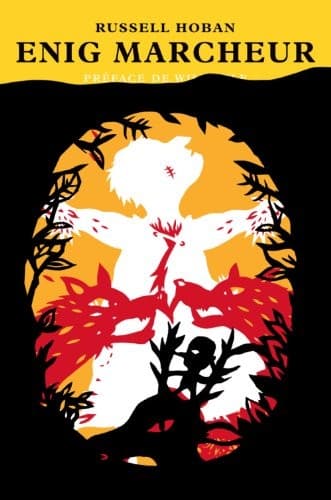
Book details and cover from Google Books.
Ready to read Riddley Walker?
Get your copy on Amazon, or listen to it on Audible. We earn a commission if you buy through these links.