
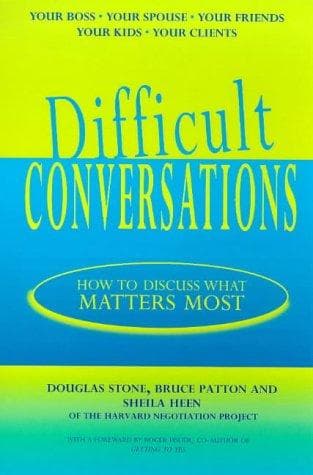
Difficult Conversations
Douglas Stone, Bruce Patton
Like Tannen, it shows how two people can hear the same exchange in completely different ways, and offers a practical framework for untangling the misunderstanding without escalating it.
Reader-supported: when you buy through links on our site, we may earn an affiliate commission. Learn more
We earn a commission if you buy through these links. Learn more
Find Similar BooksDeborah Tannen's classic explains, with linguistic detail, why well-meaning people so often hear the same conversation in different ways, and how to notice the pattern in your own talk.
You Just Don't Understand, published in 1990, is a book by linguist Deborah Tannen about how women and men talk to one another. Its central claim is that many people learn different habits of conversation, so the same words can carry different purposes. Tannen approaches the subject as a researcher who records and analyzes everyday talk rather than as a self-help writer handing out scripts. Her examples come from ordinary exchanges at home, at work, and among friends, which makes the argument feel grounded rather than abstract.
The style is conversational and warm, but also careful. Tannen keeps returning to small details: who asks questions, how people apologize, what a pause or a laugh signals, and why someone offers a solution when the other person wanted sympathy. Reading it feels less like being lectured and more like being shown the mechanics of talk you have taken for granted for years.
The book is also openly argumentative. Tannen wants readers to see differing conversational styles as neither right nor wrong, and she argues that most misunderstandings are good-faith mismatches rather than signs of indifference. That stance is what made it controversial and what keeps it discussed decades later.
Tannen's core distinction is between talk that builds connection and talk that conveys information or negotiates standing. She suggests that many women tend to use conversation for closeness and many men for status and independence. Neither is a universal rule. The useful insight is that a comment meant as connection can sound like a bid for control, or an invitation to fix something, when it lands with someone using the other frame.
Tannen argues that these patterns are shaped by childhood peer groups, where girls and boys develop different norms for talking, and that adults carry those norms into marriages, friendships, and workplaces. The book treats style as culturally learned rather than fixed by nature, which is why she believes it can be understood and adjusted without anyone being declared at fault.
When someone shares a problem, one person may hear a request for practical advice while the other wants acknowledgment and closeness. Tannen uses this familiar friction to show how good intentions can misfire. The book helps readers recognize the moment the conversation tilts, which is often more useful than any rule about what to say.
Tannen examines how questions, hedges, and apparent agreement can signal different things to different listeners. A question might show interest to one speaker and feel like an interrogation to another. Paying attention to these small signals is, for her, the practical skill the book is trying to build.
The most common criticism is that the book leans toward generalization. Tannen describes tendencies as if they were broad patterns across men and women, while critics note that her evidence is drawn largely from selected recordings and anecdotes. A gender framing can also flatten differences of class, race, culture, and personality. Later research has found that gender differences in conversational behavior are often smaller and more dependent on context than the book suggests. The book is also dated in its examples and says little about online communication.
Reviews from readers on YouTube. Their opinions are their own.
Book details and cover from Google Books.
Ready to read You Just Don't Understand?
Get your copy on Amazon, or listen to it on Audible. We earn a commission if you buy through these links.
Douglas Stone, Bruce Patton
Like Tannen, it shows how two people can hear the same exchange in completely different ways, and offers a practical framework for untangling the misunderstanding without escalating it.
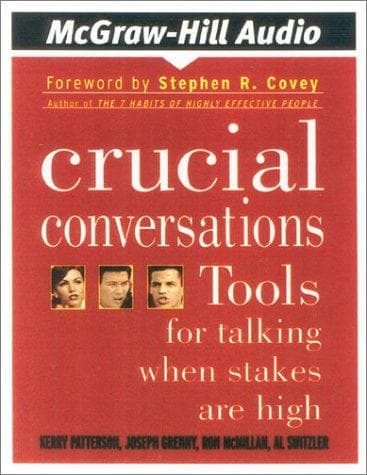
Kerry Patterson, Joseph Grenny
It gives readers concrete tools for high-stakes talk that goes sideways, focusing on listening and mutual understanding, much as Tannen does for everyday friction between partners.
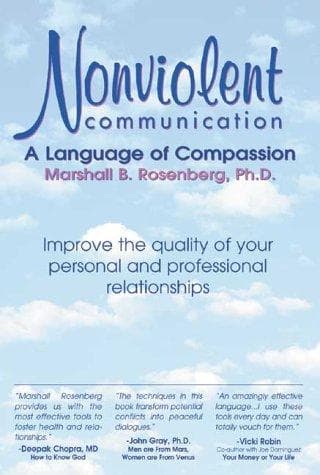
Marshall B. Rosenberg, Deepak Chopra
Its emphasis on hearing what someone means beneath their words, and on avoiding reactions that shut conversation down, will resonate with readers who valued Tannen's advice on listening.

John Gray, John Gray
This bestseller also explores how men and women approach talk differently, and it became one of the most popular books on the same theme, making it a natural companion to Tannen's work.