
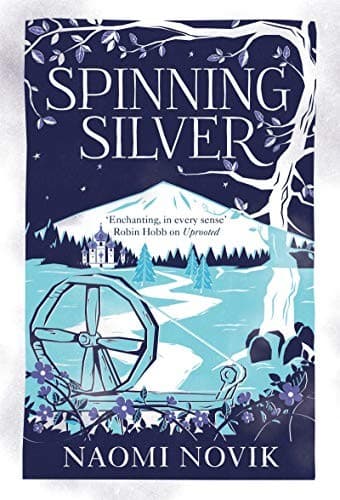
Spinning Silver
Naomi Novik
Also set in a fairy-tale Eastern Europe-inspired world, with folkloric bargains and a determined heroine who stands up to dangerous powers, much like Agnieszka does against the Wood.
Reader-supported: when you buy through links on our site, we may earn an affiliate commission. Learn more
We earn a commission if you buy through these links. Learn more
Find Similar Booksby Naomi Novik
Guide by the Books of the Day editors · Updated · How we write our guides
A fairy-tale fantasy with a prickly, earthy heroine, a dark forest that corrupts everything it touches, and a magic system built on hard work, which makes it worth your time if you want something warmer and less polished than most epic fantasy.
2 creators reviewed Uprooted on YouTube between 2015 and 2020, with 30.8K views between them. Their opinions are their own; we picked these reviews, we didn't write them.
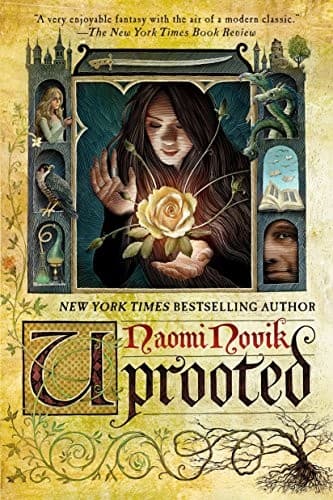
Uprooted is a standalone fantasy novel set in a farming valley that sits beside a vast, malevolent forest. Every ten years, a powerful wizard known as the Dragon takes a young woman from the valley to serve him in his tower. The story follows Agnieszka, a practical, slightly reckless farm girl who is certain she will not be chosen, and who is then chosen. The premise sounds familiar, and the book knows it, but the familiar shape is a way in rather than the point.
Novik draws on the texture of Eastern European folklore: village customs, household superstition, and the sense that the land itself has moods and debts. The narration is direct and often wry, with a voice that feels like someone telling you about their own life after the fact. The magic is concrete. Spells cost effort, and a large part of the book is an apprenticeship in which the heroine has to learn control, not just discover that she is special.
Reading it feels like sinking into a long, old-fashioned tale that keeps tightening as it goes. The early chapters are warm and grounded, and the tone darkens steadily as the forest's pressure grows. Expect a slow build in the relationships, a few genuinely frightening passages, and an ending that rewards the patience the book asks for.
The Wood is the book's central threat, and it works less like a monster than a slow poison that spreads through land, animals, and people. Its menace is driven by what it does over time rather than by set-piece battles. The sense that the valley is always on the edge of losing something gives the early chapters their tension and keeps the stakes personal rather than abstract.
Agnieszka's power is raw and untrained, and most of the book follows her learning to direct it. Magic here is tiring, imprecise, and dependent on discipline and attention. This makes her growth feel earned. Readers who enjoy stories where competence is built through practice and mistakes will find the apprenticeship scenes especially satisfying.
The book borrows the shape of the chosen-maiden tale and the wicked-sorcerer story, then asks what those roles cost the women inside them. It is interested in duty, sacrifice, and the way communities hand their daughters over to be used. The critique is never preachy; it grows out of the characters' choices and frustrations.
Agnieszka's friendship with Kasia, a more conventionally gifted and ambitious girl, is one of the emotional anchors of the novel. Their relationship is complicated by pride, jealousy, and old obligations. These scenes ground the magic in ordinary human feeling and give the book much of its emotional weight.
The Dragon is a deliberately ambiguous figure, and the book keeps asking how much authority a powerful man should have over the people around him. Questions of who gets to decide what happens to the valley's young women run beneath the adventure. The answers stay open enough to reward a second reading.
Some readers find the middle of the book slower and more episodic than the opening, and the final stretch moves quickly by comparison. The central romance is a slow burn and may feel underwritten to readers who want a more emotionally explicit arc. The worldbuilding is deliberately sketched rather than exhaustively explained, so anyone who wants detailed history or a fully mapped magic system may be left wanting. The Polish-inspired valley is an invented place, not a historical portrait, which some readers will want to know before they start.
Book details and cover from Google Books.
Ready to read Uprooted?
Get your copy on Amazon, or listen to it on Audible. We earn a commission if you buy through these links.
Naomi Novik
Also set in a fairy-tale Eastern Europe-inspired world, with folkloric bargains and a determined heroine who stands up to dangerous powers, much like Agnieszka does against the Wood.
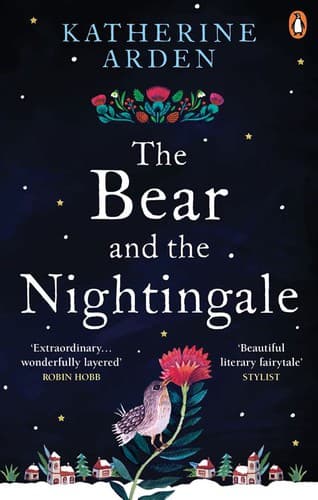
Katherine Arden
A Russian-inspired winter fairy tale where a village girl with a gift for seeing spirits faces an ancient forest threat, echoing Uprooted's folklore and creeping menace.
Susanna Clarke
Readers who enjoyed Uprooted's grounded, formal magic will appreciate this richly detailed English story of two magicians whose spellcraft feels scholarly and rule-bound.
Ursula K. Le Guin
A classic where a gifted but proud young mage learns hard lessons about power and restraint, mirroring the mentorship and self-discovery at the heart of Uprooted.