
We earn a commission if you buy through these links. Learn more
Spinning Silver
by Naomi Novik
Guide by the Books of the Day editors · Updated · How we write our guides
Naomi Novik's retelling of Rumpelstiltskin turns on three women, cold bargains, and the labor of making silver into gold, and it rewards readers who like slow, richly textured fantasy.
What Creators Say About Spinning Silver
2 creators reviewed Spinning Silver on YouTube between 2018 and 2021, with 24.2K views between them. Their opinions are their own; we picked these reviews, we didn't write them.
What It's About
Spinning Silver is a fantasy novel that takes the old tale of Rumpelstiltskin and rebuilds it around a winter-bound, loosely Eastern European world. Novik follows three young women whose lives start apart: Miryem, a moneylender's daughter whose hard-driving father has nearly ruined the family business; Wanda, who keeps her household alive while her father drinks away what little they have; and Irina, a duke's daughter whose family's ambitions reach toward a dangerous bargain. Their stories converge slowly, and the book stays patient with each woman's circumstances rather than rushing toward the fairy-tale hook.
The style is leisurely and textured. Novik spends real time on debt, household work, the small social rules that govern who can marry whom and who is trusted, and the everyday arithmetic of survival. The magic is cold and uncanny, tied to the Staryk, a people of winter whose promises bind them and whose logic is unlike human logic. Readers hoping for a quick, plot-driven adventure may find the early chapters slow, but the payoff comes from how carefully the pieces are laid.
Reading it feels like sitting by a stove while someone tells a long, folkloric story they clearly love, with the old tale underneath and hard practical concerns on top.
Read this if you…
- enjoy retellings of folklore that go deep into character and daily life
- like slow, atmospheric fantasy with a strong sense of place and winter
- want a book with several connected women protagonists and a patient build
Skip it if you…
- want fast, action-driven plotting from the first chapter
- prefer fantasy with a clear magic system and plenty of direct confrontation
Key Ideas
- 1
Retelling folklore through women's everyday labor
Novik takes a fairy tale built on a single clever trick and asks what it would cost the people who do the real work around it. Miryem's ledgers, Wanda's chores, and Irina's position in a household all shape how the magic lands. The folklore becomes a lens for thinking about who gets to profit from skill and who carries the burden of it.
- 2
Bargains and the weight of promises
Deals struck with the Staryk are binding in ways that shape every relationship in the book. The novel is interested in how people reason about what they owe and what they can refuse. Readers who enjoy fairy-tale rules, where a word spoken carelessly can cost everything, will find this a central pleasure.
- 3
Three narrators and a slow convergence
Each woman has her own voice, problems, and sense of what matters, so the book reads as several connected lives rather than one heroine's quest. The threads draw together gradually. This structure rewards patience, and some readers will find the switching between storylines more absorbing than others do.
- 4
Winter atmosphere and grounded community life
Novik builds a snowbound setting with specific textures of town life, religious community, markets, and family obligation. The cold is physical and the homes feel lived in. Much of the book's emotional force comes from this sense of ordinary people trying to keep their lives intact under strange pressures.
Limitations
The most common criticism is pacing. The first half moves slowly as the three storylines are established, and readers expecting the fairy-tale payoff early may lose patience. The narrative switches between perspectives, which some find scattered. The romantic threads are a significant part of the story and may feel too neat to some readers. The Staryk are intriguing but deliberately withheld, so readers who want their rules explained fully may be frustrated. The book is also filed under Tech in some catalogs, but it is a fantasy novel, not a technology book.
Questions Readers Ask
- Do I need to know the Rumpelstiltskin story first?
- No. The novel works as a standalone fantasy. Knowing the original tale adds a layer of recognition, since Novik plays with its logic of names, bargains, and impossible tasks. But the book explains what it needs, and readers who have never heard the tale can follow the story without difficulty.
- How does it compare to Uprooted by the same author?
- Both are fantasy with folkloric roots and strong female leads, but Spinning Silver is more interested in money, labor, and community, and it spreads its focus across three narrators. Uprooted is more tightly centered on one heroine and has a faster, more conventional quest structure. Readers who liked Uprooted's atmosphere usually find Spinning Silver rewarding, though it asks for more patience.
- Published
- 2018
- ISBN
- 9780399180996
- Difficulty
- intermediate
- Category
- Tech
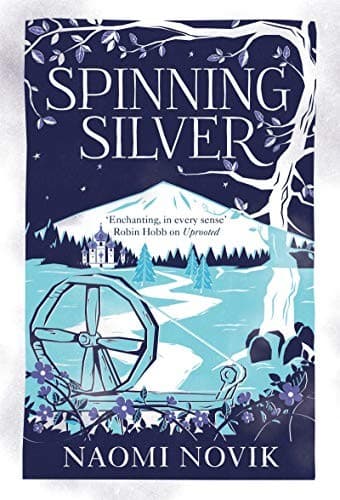
Book details and cover from Google Books.
Ready to read Spinning Silver?
Get your copy on Amazon, or listen to it on Audible. We earn a commission if you buy through these links.