
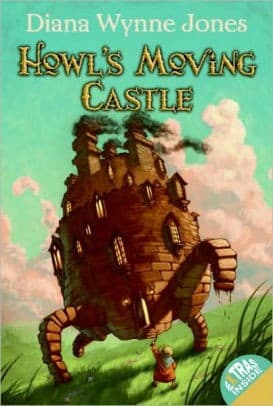
Howl's Moving Castle
Diana Wynne Jones
Like Ged's schooling under a demanding master, Sophie's story turns on a wizard's curses, bargains and hard lessons. Jones shares Le Guin's dry warmth and belief that ordinary people can handle great power.
Reader-supported: when you buy through links on our site, we may earn an affiliate commission. Learn more
We earn a commission if you buy through these links. Learn more
Find Similar BooksGuide by the Books of the Day editors · Updated · How we write our guides
Le Guin's 1968 opener is a short, spare coming-of-age fantasy about a gifted, proud young mage who learns that power over names and shadows carries a real cost.
2 creators reviewed A Wizard of Earthsea on YouTube between 2019 and 2023, with 53.3K views between them. Their opinions are their own; we picked these reviews, we didn't write them.
A Wizard of Earthsea follows Ged, a gifted boy from a modest island family, as he trains at the school of wizardry on Roke. Under his teacher's guidance he is drawn to the most dangerous kind of magic, the kind that reaches for knowledge he has no right to. His pride leads him into a reckless act, and the consequence is a shadow that begins to hunt him. Much of the book is his flight across the islands of Earthsea, always one step ahead of something that is partly himself.
Le Guin writes with restraint. The prose is plain and unshowy, closer to a folktale or a sea chronicle than to the lush, sprawling epic fantasy that followed it. Magic here works through true names and the careful choice of words, so spells feel like acts of attention and honesty rather than fireworks. The islands are described with a sailor's sense of distance and weather, and the pace is deliberate, giving space for reflection on fear, balance, and what it means to know yourself.
Reading it feels like listening to an old, grave storyteller who trusts you to keep up. It is not a page-turner in the modern thriller sense, but it rewards patience with a moral seriousness that is rare in books aimed at younger readers. Adults often find it richer on a second reading than on the first.
Ged's downfall starts with ambition, not malice. He wants to be the greatest, and he reaches past what he understands. The book treats this as a common human failing rather than a simple moral lesson about bad people. Its interest lies in how one prideful choice creates consequences that cannot be undone and must be lived with.
In Earthsea, knowing the true name of a thing gives power over it, and speaking words carelessly is dangerous. This makes language itself a moral matter. Le Guin uses this system to tie spellcasting to honesty, precision, and respect for what you are trying to affect, so magic feels grounded rather than arbitrary.
The central drama is a pursuit that becomes a question of self-acceptance. The shadow is frightening because it is a part of Ged himself. The book argues that fleeing a part of yourself only lengthens the chase, and that wholeness requires confronting what you would rather not admit.
The book's older beings, including dragons and the wise masters, do not offer comfort or tidy answers. Their knowledge is strange and sometimes unsettling. Le Guin shows that understanding the wider world means accepting ways of thinking that do not match our own, which gives the story an unusual intellectual texture.
The book is short and deliberately sparse, so readers used to dense, detailed worldbuilding may find the islands thinly drawn. Some modern readers find the pacing slow in the middle, and the portrayal of women and of the wider cultures of Earthsea is limited compared with Le Guin's later work. Its moral lessons are clear and sometimes stated outright, which can feel didactic to readers who prefer ambiguity. Later Earthsea books change tone and perspective considerably, so this one should be read as an opening rather than a complete picture.
Book details and cover from Google Books.
Ready to read A Wizard of Earthsea?
Get your copy on Amazon, or listen to it on Audible. We earn a commission if you buy through these links.
Diana Wynne Jones
Like Ged's schooling under a demanding master, Sophie's story turns on a wizard's curses, bargains and hard lessons. Jones shares Le Guin's dry warmth and belief that ordinary people can handle great power.
Patrick Rothfuss
Kvothe's years at a school of magic echo Sparrowhawk's training, with careful attention to language, names and the price of knowledge. Readers who prized Earthsea's precise, lyrical magic will find a similar devotion to craft.
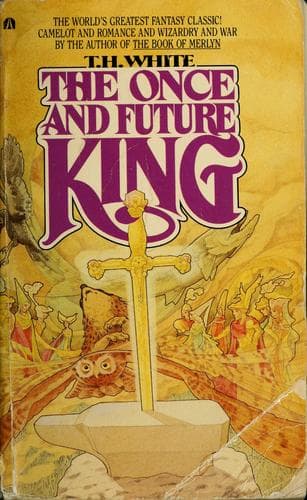
T. H. White
Merlin's teaching of the young Arthur is a gentle, wise mentorship in the Earthsea mould. White mixes humour with real reflection on power, duty and the cost of wisdom.
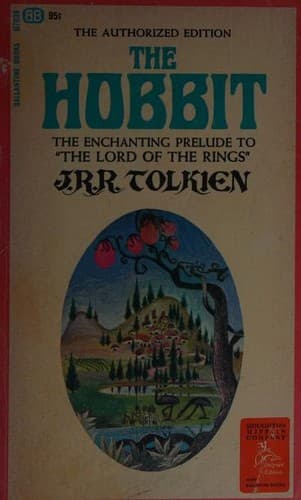
J.R.R. Tolkien
Bilbo's journey is a reluctant quest with a dragon at its heart, told in a warm, storytelling voice. Readers drawn to Earthsea's ancient, morally complex creatures will recognise the same sense of old lore.