
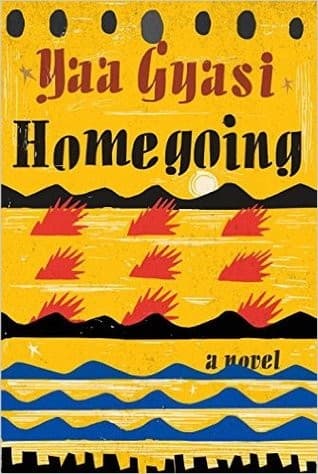
Homegoing
Yaa Gyasi
Like The Vanishing Half, it traces one family's branching lives across generations, with each chapter opening a new strand of the story and showing how the past shapes later choices.
Reader-supported: when you buy through links on our site, we may earn an affiliate commission. Learn more
We earn a commission if you buy through these links. Learn more
Find Similar Booksby Brit Bennett
Guide by the Books of the Day editors · Updated · How we write our guides
Brit Bennett's second novel turns a simple premise about twin sisters who split their lives into a sweeping, emotionally direct family saga about race, secrecy, and the pull of home.
2 creators reviewed The Vanishing Half on YouTube in 2020, with 105.2K views between them. Their opinions are their own; we picked these reviews, we didn't write them.
The Vanishing Half follows twin sisters Stella and Desiree Vignes, raised in Mallard, a small Louisiana town whose residents have spent generations chasing lighter skin. The twins run away at sixteen, and the novel tracks what each becomes. One returns to a life that stays visibly Black and rooted in her origins, raising a dark-skinned daughter. The other builds a life as a white woman and keeps her past sealed away from her husband.
Bennett moves across decades and places, from the Deep South to California, and shifts between the sisters and their daughters. The result feels less like one plot than a set of overlapping lives, each shaped by choices made long before. The prose is clean and propulsive. She sets up scenes, withholds just enough, and trusts you to keep turning pages, and the emotional beats often arrive through dialogue and confrontation rather than long reflection.
Reading it is an experience of watching consequences accumulate. It is less a debate about passing than a novel about what concealment costs, and about how people who stay behind feel the absence of those who leave. Expect a book that is warm, direct, and sometimes melodramatic, one that raises questions about belonging and identity more than it tries to settle them.
Stella's passing is a deliberate construction, and Bennett treats racial identity in the American setting as partly a performance governed by unspoken rules about who gets seen as what. The novel asks what it costs to maintain a life that depends on never being recognized, and how the effort of hiding can quietly shape every relationship that follows.
Desiree's return to Mallard, the town she fled as a teenager, shows how home can both trap and anchor a person. The town's obsession with skin tone shapes everyone who stayed, and the novel suggests that leaving does not free you from the values you grew up with.
The younger generation inherits decisions they never made. The daughters are left to piece together histories their mothers buried, and the book shows how secrets travel down a family line, changing shape as they go and affecting people who had no part in the original choice.
Despite miles, years, and lies, the twins remain bound to each other. The emotional core of the book is the question of whether a shared bond can survive a deliberate separation, and whether closeness can coexist with a lie that large.
Bennett braids several decades and viewpoints together, so the story gains force from what each character knows and conceals. The structure rewards attention and produces a steady pull, with information arriving at moments chosen to deepen the emotional impact without relying on spectacle.
Some readers find the plot leans on coincidence and melodrama, particularly in its later stretches. The second-generation storylines receive less depth than the twins' own arcs, which can leave some threads feeling underdeveloped. The novel is more interested in emotional consequence than in the social mechanics of passing or the specific pressures of its historical periods, so readers looking for a rigorous historical study may find it too selective. Some critics also felt certain resolutions were tidier than the material warranted.
Book details and cover from Google Books.
Ready to read The Vanishing Half?
Get your copy on Amazon, or listen to it on Audible. We earn a commission if you buy through these links.
Yaa Gyasi
Like The Vanishing Half, it traces one family's branching lives across generations, with each chapter opening a new strand of the story and showing how the past shapes later choices.
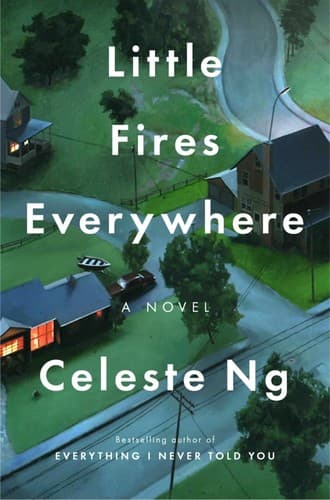
Celeste Ng
It mixes a suburban family drama with buried secrets and a question of identity, and its propulsive plotting will appeal to readers who enjoyed Bennett's page-turning pace.
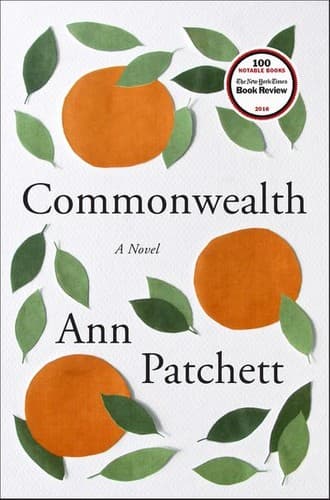
Ann Patchett
Its story of blended families and a single event rippling through decades matches the way The Vanishing Half follows how one choice echoes through several lives.
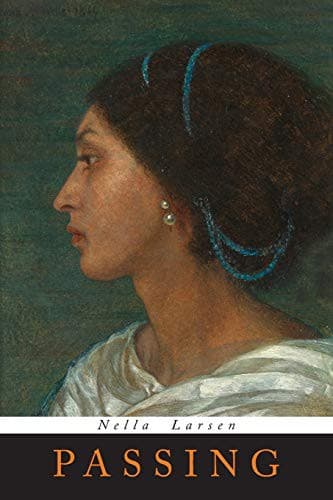
Nella Larsen, Matthew Hodgson
This short 1929 novel is a classic study of two light-skinned Black women and the risks of crossing the colour line, the theme at the heart of Bennett's book.