
We earn a commission if you buy through these links. Learn more
Passing
by Nella Larsen, Matthew Hodgson
Guide by the Books of the Day editors · Updated · How we write our guides
Larsen's 1929 novel packs racial passing, envy, and a Harlem marriage into a short, taut story whose ambiguities still provoke debate nearly a century later.
What It's About
Passing is a short novel about two light-skinned Black women who knew each other as girls in Chicago and meet again years later in New York. One of them, Clare, has been living as a white woman, married to a man who knows nothing about her background. The other, Irene, is a Harlem wife and mother whose comfortable, carefully managed life rests on the same racial line Clare has crossed. When Clare re-enters Irene's world, the reunion stirs up old affection, suspicion, and something closer to resentment.
Larsen tells the story mostly through Irene's eyes, and that choice shapes everything. Irene's observations are sharp, observant, and often self-justifying, so the reader is constantly weighing what she notices against what she chooses not to see. The prose is spare and controlled, with a lot of meaning carried by glances, small social rituals, and what goes unsaid at dinner parties.
Reading it feels less like watching a plot unfold and more like sitting in a room where the air is slowly thickening. It is a quick read, but it rewards slowing down, rereading key scenes, and asking what each character wants and why they cannot simply say it.
Read this if you…
- enjoy short, tightly controlled novels that reward close attention
- are interested in the Harlem Renaissance and the politics of racial identity
- like fiction that leaves emotional questions open instead of resolving them
Skip it if you…
- want a plot-driven story with clear heroes, villains, and resolution
- find slow, interior, ambiguous writing frustrating rather than absorbing
Key Ideas
- 1
Passing as a daily act of managing identity
Passing is presented not as a single dramatic deception but as an ongoing, exhausting labor of watching oneself and others. Larsen shows how it demands constant vigilance, a sense of being always slightly exposed, and a loss of any settled sense of home. The novel asks what it costs to keep one identity hidden from the people closest to you.
- 2
Envy, desire, and the tension between two women
The emotional center is the uneasy relationship between Clare and Irene, which swings between tenderness, rivalry, and a charged attraction the novel never fully names. Larsen lets these currents stay ambiguous, so the reader must decide how much is affection, how much is fear, and how much is something Irene herself refuses to look at.
- 3
Respectability and the limits of Harlem's middle class
Irene's life is built on propriety, careful appearances, and a belief that good behavior can shield her family from racism. Larsen quietly tests that belief, showing how the Black bourgeoisie polices itself as tightly as white society does. The novel is a sharp portrait of a community anxious about its own image.
- 4
An unreliable, self-protective narrator
Because Irene narrates, we see Clare and the world through her defensiveness and her need to be right. Larsen's craft lies in the gaps between what Irene reports and what the scenes suggest. Attentive readers will find that the novel's real subject is partly how Irene tells herself her own story.
Limitations
The novel's racial vocabulary and the 'tragic mulatta' conventions it draws on will feel dated to many readers, and the older language around race and skin color can be jarring. Its world is also narrow, focused on a comfortable, light-skinned circle in Chicago and Harlem, with little sense of working-class or darker-skinned Black life. Some readers find its ambiguity unsatisfying, and modern readers often debate how the sexual undertones should be read.
Questions Readers Ask
- Is Passing still worth reading today?
- Yes. Its subject, the way people manage race, class, and visibility to protect their place in society, remains very much alive. Readers now also tend to appreciate it as a period document and as an early example of a Black woman writer exploring interiority with real psychological precision. Expect some dated language along the way.
- Who is this book best for?
- It suits readers who like literary fiction with a psychological focus and don't need everything explained. If you enjoy novels where tension builds through conversation and subtext, it will likely hold you. It is less suited to readers wanting fast momentum or a conventional, tidy resolution.
- What should I read if I like Passing?
- If the moral unease and social precision appeal to you, Edith Wharton's novels about New York society offer a similar sense of constrained lives and hidden motives. For another look at identity and racial passing, Nella Larsen's own Quicksand is a natural companion, following a related heroine through a more expansive story.
- Published
- 1929
- ISBN
- 9789651326356
- Difficulty
- intermediate
- Category
- Fiction
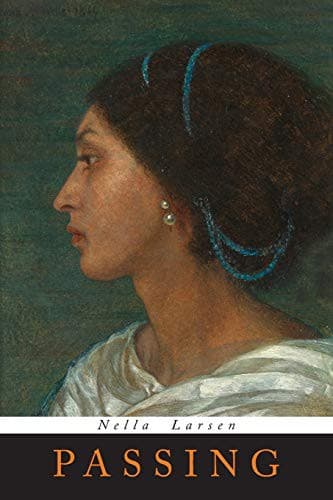
Book details and cover from Google Books.
Ready to read Passing?
Get your copy on Amazon, or listen to it on Audible. We earn a commission if you buy through these links.