
Beloved
Toni Morrison
Like Whitehead, Morrison confronts the physical and psychic cruelty of slavery head on, and her story of a woman haunted by her past shares the Underground Railroad's refusal to look away from what bondage did to families.
Reader-supported: when you buy through links on our site, we may earn an affiliate commission. Learn more
We earn a commission if you buy through these links. Learn more
Find Similar BooksGuide by the Books of the Day editors · Updated · How we write our guides
Whitehead's Pulitzer-winning novel imagines the Underground Railroad as a literal rail network, and turns one woman's flight through alternate American states into a harrowing, unsettling reading experience.
2 creators reviewed The Underground Railroad (Pulitzer Prize Winner) (National Book Award Winner) (Oprah's Book Club) on YouTube between 2016 and 2017, with 22.4K views between them. Their opinions are their own; we picked these reviews, we didn't write them.
The Underground Railroad follows Cora, a young enslaved woman on a Georgia cotton plantation who flees with a newly arrived man named Caesar. Whitehead takes the famous name literally: in his version the network is a real railway, with engines and tunnels hidden beneath the soil. Each stop Cora reaches is a different version of the American South, shaped by the same brutal logic in changing forms. The book is less a single plot than a sequence of set pieces, each rooted in a particular place and its particular cruelties.
Whitehead writes in a clear, controlled third person that moves between Cora's point of view and wider perspectives, and he occasionally steps back to comment on the historical record. Chapters are short and punchy, and the tone shifts between grim realism, dark satire, and a fable-like detachment. The result feels like a pursuit novel crossed with a history lesson, where the question of what freedom means in a country built on bondage hangs over every scene.
Expect a reading experience that is harrowing rather than comfortable. Violence is depicted directly and often, and the book asks you to sit with it. It rewards attention, and many readers find it more unsettling the longer they think about it afterward.
Escape here is not a single moment of crossing into safety but a continuing journey through hazards. Each apparent refuge carries its own threat, so Cora's hope keeps being tested. The structure makes the reader feel how precarious and exhausting running really was, rather than treating liberation as a finish line.
Each state Cora passes through shows a different face of control, from openly violent to outwardly civil and even progressive. Whitehead's argument is that the underlying logic of ownership and domination persists beneath whatever surface a place chooses to show. Reading the stops in sequence is what makes that pattern visible.
By building a literal railroad, the novel forces readers to take the abolitionist network seriously as something that required engineers, conductors, and secrecy. The fantastical device feels strange, but it also makes the history feel closer and more tangible than a familiar literal retelling might.
Whitehead connects the 1850s to later eras, suggesting that the American past is shared and still shaping the present. The book's wider historical passages push against the idea that slavery is a closed chapter. Readers who value novels that argue about national memory will find this thread central.
Cora is an outsider even among other enslaved people, which sharpens her sense of being alone in every decision. Her choices show survival as something that demands hardness and risk, not just courage. Her interior life gives the broad historical canvas a personal center.
Some critics find the allegorical design too schematic, with each state functioning almost like a lesson in a series. The episodic structure can make certain stretches feel more like vignettes than fully developed scenes, and the strongest passages are not always the most compelling. The violence is relentless, which is deliberate but can feel overwhelming to some readers. The book also focuses on one heroine's journey, so it leaves much of the broader enslaved experience and the perspectives of other characters less explored than some readers might want.
Book details and cover from Google Books.
Ready to read The Underground Railroad (Pulitzer Prize Winner) (National Book Award Winner) (Oprah's Book Club)?
Get your copy on Amazon, or listen to it on Audible. We earn a commission if you buy through these links.
Toni Morrison
Like Whitehead, Morrison confronts the physical and psychic cruelty of slavery head on, and her story of a woman haunted by her past shares the Underground Railroad's refusal to look away from what bondage did to families.
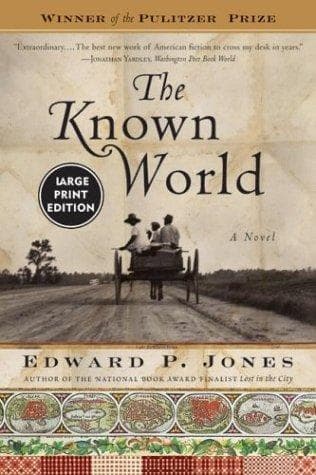
Edward P. Jones
Jones examines slavery through the lives of Black and white people in one Virginia county, with the same moral complexity and sharp attention to plantation hierarchy that readers admired in Cora's Georgia chapters.
Octavia Butler
Butler's time-travel story forces a modern woman to experience antebellum violence firsthand, echoing The Underground Railroad's blend of speculative premise and brutal historical detail about slavery's daily horrors.
Ta-Nehisi Coates
Coates also gives the Underground Railroad a literal, almost mythic form, with a hero who escapes bondage through a supernatural gift, much as Whitehead turns a historical network into a real underground system.