Reader-supported: when you buy through links on our site, we may earn an affiliate commission. Learn more

Cover of Kindred
Buy on AmazonBuy on Bookshop.orgListen on Audible

We earn a commission if you buy through these links. Learn more

Find Similar Books

Kindred

by Octavia Butler

Science Fiction
★★★★★4.5 (37)

Guide by the Books of the Day editors · Updated · How we write our guides

A sharp, unsettling time-travel novel that uses a fast, plain-spoken premise to make American slavery personal, immediate, and hard to look away from.

What Creators Say About Kindred

2 creators reviewed Kindred on YouTube between 2023 and 2025, with 18.1K views between them. Their opinions are their own; we picked these reviews, we didn't write them.

Kindred is a 5⭐️ masterpiece and that might be an understatement #booktube #kindred #scififantasySmitty1423 on YouTube11.1K views · 2025
Octavia E. Butler Ain’t Pleased: Kindred Book Vs. Hulu Series Review. | They Read A Different Book!ShelbeyAndTheBookClub on YouTube7K views · 2023

What It's About

Kindred is a 1979 science fiction novel by Octavia Butler about Dana, a Black writer in 1976 Los Angeles, who keeps getting yanked back to a Maryland plantation in the early 1800s. Each trip is triggered by danger to a white boy, Rufus, whose survival Dana has to protect, and each stay lasts unpredictably. The time-travel mechanism is never explained in any detail, and Butler doesn't seem to care. The engine of the book is what Dana has to do and become in order to survive.

Butler writes in clean, direct sentences, mostly in Dana's first-person voice. She avoids the florid, lingering cruelty that many slavery novels fall into. What she shows instead is routine: rules, bargains, small humiliations, and the gradual way a person starts to accept what should be unacceptable. The book is short and fast, and it reads more like a tense thriller than a historical epic, which makes its moral pressure build quietly.

Reading it is an uncomfortable and absorbing experience. You will spend much of the book wanting Dana to get out, and the book keeps asking what getting out would cost. Butler's structure rewards close attention to who holds power in each scene and how that power is passed along.

Read this if you…

  • want a short, fast novel that deals seriously with slavery without relying on graphic spectacle
  • enjoy science fiction that uses a fantastic premise to explore history and social power
  • are interested in Black speculative fiction and want an entry point into Octavia Butler's work

Skip it if you…

  • need a clear, scientific explanation for how time travel works
  • want a light escape and find dark, morally heavy material hard to sit with

Key Ideas

  1. 1

    Survival requires compromise, and compromise has costs

    Dana's sharpest tension is between staying alive and staying herself. The novel keeps showing how small accommodations pile up, so that by the time a choice feels necessary it has already been shaped by years of pressure. Butler makes the reader feel that slide rather than simply judge it.

  2. 2

    Slavery as a system of ordinary routines

    Rather than relying on spectacle, Butler focuses on the everyday machinery of control: who gets to decide what, how punishment is handed out as a warning to others, and how the enslaved are kept dependent. The horror comes from how normal it all looks to the people running it.

  3. 3

    Dana's present is tied to her past

    Dana's modern life in 1976 is never fully separate from the plantation. Her marriage, her sense of history, and her own body carry the past with them. The book uses time travel to ask how much of contemporary American life is still shaped by the institutions it portrays.

  4. 4

    Power, intimacy, and the blurring of roles

    Dana's relationship with Rufus is the emotional core of the book and the most difficult thing in it. Butler keeps the power imbalance visible at every turn, which means the closeness between them is never comfortable. The novel uses that discomfort to examine how slavery distorted even the relationships it seemed to allow.

Limitations

Some readers find the time-travel device underexplained and the rules of the premise shift in ways that frustrate them. Others argue that the novel's ending is abrupt or unresolved, and that Dana's experience of slavery is filtered through a modern, educated perspective that may feel distant from the lives it depicts. The book is also written in an accessible, straightforward style, which some critics see as limiting its formal ambition. It does not offer a broad survey of slavery across the South or its wider economy; it stays close to one household and one protagonist.

Questions Readers Ask

Is Kindred still relevant today?
Yes. Its focus on how institutions and ordinary routines shape people's choices has aged well, and its portrayal of racism and sexism remains pointed. Readers often find that the premise, though decades old, speaks directly to contemporary debates about history, memory, and inheritance.
How does Kindred compare to The Underground Railroad?
Kindred is shorter, more intimate, and more focused on one household. Whitehead's novel is broader and more allegorical, moving across many places and built around a larger system. If you want a close, tense look at slavery through one character's experience, Kindred is the more concentrated read.
Published
2004
ISBN
9780807083697
Difficulty
beginner
Category
Science Fiction

Book details and cover from Google Books.

Ready to read Kindred?

Get your copy on Amazon, or listen to it on Audible. We earn a commission if you buy through these links.

Books Like Kindred

View all →
Cover of The Water Dancer

The Water Dancer

Ta-Nehisi Coates

An enslaved man in Virginia discovers a mysterious power tied to memory, blending the supernatural with a searching portrait of family, bondage and escape that Kindred readers will recognise.

Cover of Beloved

Beloved

Toni Morrison

A haunting of a different kind: the past literally returns to a formerly enslaved mother's home, exploring trauma and memory with the same refusal to look away that powers Kindred.

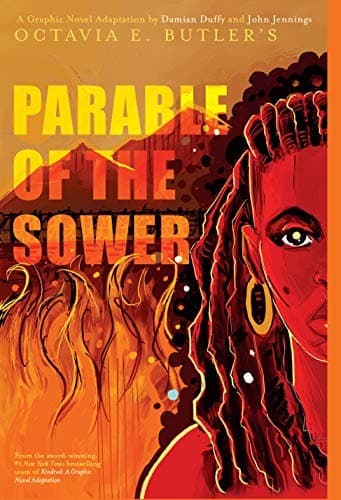
Cover of Parable of the Sower

Parable of the Sower

Octavia E. Butler

Butler's near-future story of a young Black woman surviving societal collapse offers the same clear prose, resilient heroine and sharp eye for how power and cruelty become normal.

Explore More