
Beloved
Toni Morrison
Like The Known World, it faces slavery directly and shows how its damage lingers in families and in a community's memory, told with lyrical, unhurried prose.
Reader-supported: when you buy through links on our site, we may earn an affiliate commission. Learn more
We earn a commission if you buy through these links. Learn more
Find Similar BooksGuide by the Books of the Day editors · Updated · How we write our guides
Edward P. Jones's Pulitzer-winning novel looks at slavery from inside a Black-owned household and a whole county, and rewards patient readers who want a wide, unsentimental view.
2 creators reviewed The Known World on YouTube between 2008 and 2012, with 49.8K views between them. Their opinions are their own; we picked these reviews, we didn't write them.
The Known World is a novel about slavery as it existed among free Black owners, set in and around the fictional Manchester County, Virginia, in the decades before the Civil War. Its center is Henry Townsend, a free Black man who owns enslaved people and must live with the contradictions of that position. Jones does not keep the story with him for long. The book moves through the county's households, white and Black, enslaved and free, and keeps returning to Townsend's world from different angles.
The structure is the main thing to know before starting. Jones moves back and forth in time and between perspectives, often jumping ahead to tell you what became of a character, sometimes far ahead, so you carry knowledge of fates before the scenes that explain them arrive. The sentences are plain and measured, and the tone is closer to a chronicle than a sentimental historical novel. Much of the cruelty is described briefly and without melodrama, which some readers find cold and others find exact.
Reading it is slow in a specific way. You have to hold a large cast and the county's social rules in your head, and you may find yourself rereading early sections once the larger pattern shows itself. The payoff is a cumulative sense of how a community is built on contradiction rather than on a single hero's arc.
The novel takes seriously the fact that some free Black Americans owned enslaved people. It does not excuse this or turn it into a simple moral lesson. Instead it asks what ownership meant inside a community that was itself denied full freedom, and how the owners understood their own position.
Jones shows freedom in this county as something granted, documented, and easily lost. Papers, reputation, and the goodwill of white neighbors matter as much as legal status. Characters who look secure can be undone by a single shift in the local rules, and the book makes that precariousness feel ordinary rather than dramatic.
Rather than building toward one protagonist's climax, the book works like a census of a place. Each section adds a household, a history, or a set of relationships, so the meaning comes from how the pieces relate. Readers who want a single strong narrative line may find this frustrating, but it is the book's deliberate method.
Jones writes in plain, controlled prose and often reports events from a distance. Emotional weight comes from what is withheld and from the gap between what characters know and what the reader knows. This restraint makes the violence and loss land harder than overt description would, though it asks more attention from the reader.
Readers often say the large cast and jumping timeline make the book hard to follow, especially early on, and that some characters are sketched more than developed. Its restraint can read as emotional distance, and a few readers find the constant foreshadowing deflates tension. Others argue the book's focus on Black owners leaves out the perspective of many enslaved people in the way a more conventional novel might. Its historical detail is careful but fictional, so it should not be treated as a record of a real county.
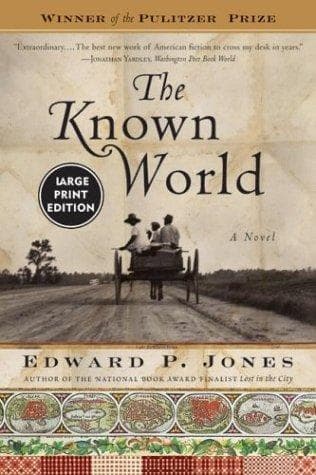
Book details and cover from Google Books.
Ready to read The Known World?
Get your copy on Amazon, or listen to it on Audible. We earn a commission if you buy through these links.
Toni Morrison
Like The Known World, it faces slavery directly and shows how its damage lingers in families and in a community's memory, told with lyrical, unhurried prose.
Colson Whitehead
It takes the historical weight of slavery seriously while using a sharp, moving narrative, giving readers the same sense of a brutal system examined closely.
Ta-Nehisi Coates
It follows an enslaved man in Virginia and the moral compromises around him, offering the same focus on the human costs of a system built on owning people.
Hillary Jordan
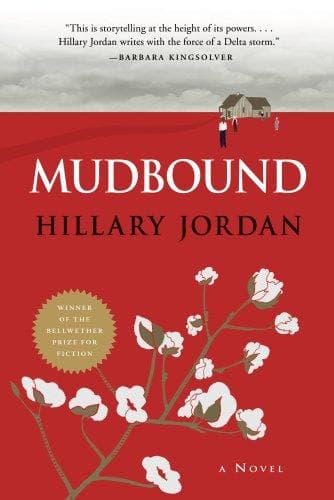
Several narrators share the story of a rural Southern farm, so readers see one place through many perspectives, much as Jones does in his portrait of Manchester County.