Reader-supported: when you buy through links on our site, we may earn an affiliate commission. Learn more

Cover of The Tokyo Zodiac Murders
Buy on AmazonBuy on Bookshop.orgListen on Audible

We earn a commission if you buy through these links. Learn more

Find Similar Books

The Tokyo Zodiac Murders

by Soji Shimada

Fiction
★★★★★5.0 (1)

Guide by the Books of the Day editors · Updated · How we write our guides

Soji Shimada's gory, illustrated locked-room puzzle asks readers to test an amateur detective's logic against a forty-year-old Tokyo murder, and it is one of the most original mysteries in Japanese crime fiction.

What Creators Say About The Tokyo Zodiac Murders

2 creators reviewed The Tokyo Zodiac Murders on YouTube in 2026, with 564 views between them. Their opinions are their own; we picked these reviews, we didn't write them.

Brilliant, Witty, Playful. A Wonderful Murder Mystery. The Tokyo Zodiac Murders!Rudolph Kohn on YouTube489 views · 2026
Book Review: The Tokyo Zodiac Murders karya Soji ShimadaStievano Tanaya PN on YouTube75 views · 2026

What It's About

The Tokyo Zodiac Murders is a detective novel built around a notorious crime from Japan's prewar years, reopened decades later by an amateur sleuth who is more at home with horoscopes than forensics. Kiyoshi Mitarai, an astrologer with a sharp mind and a habit of treating every detail as a clue, takes on the case with a freelance illustrator friend who helps him organize the evidence. The investigation moves between past and present, and the pieces refuse to fit together neatly.

Shimada writes in the tradition of Golden Age puzzle fiction, but the book is shaped like a case file. Maps, charts, and sketches appear in the text, and the reader is invited to follow the reasoning alongside the investigator. The prose is direct and sometimes lurid, leaning into grotesque imagery and dark comedy, so the experience feels closer to a tragedy staged in pieces than to a quiet literary novel. Expect long stretches of reconstruction and argument rather than brisk action.

The result is an ambitious puzzle that rewards patient reading. Some readers find the gore and the more outlandish elements off-putting, while others find the middle sections slow. For those who enjoy seeing a mystery built from first principles, the payoff is distinctive.

Read this if you…

  • enjoy puzzle mysteries where you can check the clues yourself
  • like Golden Age detective fiction and can tolerate graphic violence
  • want a Japanese mystery with an unusual, theatrical structure

Skip it if you…

  • want a fast-moving thriller with strong character arcs
  • are put off by graphic violence or grotesque imagery

Key Ideas

  1. 1

    The locked-room puzzle as the central engine

    The novel is organized around an apparently impossible crime, and its appeal lies in the sequence of hypotheses Mitarai tests. Readers who enjoy working out how a murder could have happened will find the logic more satisfying than the shock value, though the two are closely linked.

  2. 2

    Horror and gore alongside fair-play logic

    Shimada pairs careful deduction with images that are unsettling and sometimes absurd. The contrast is deliberate: the grisly details raise the stakes, while the reasoning keeps the story grounded. This mix is what sets the book apart from more restrained Golden Age mysteries.

  3. 3

    An astrologer as an unlikely detective

    Mitarai's astrology and his unusual method give the investigation a flavor no conventional sleuth offers. He is eccentric rather than a stock genius, and his outsider status lets him question assumptions the official investigators have accepted for decades.

  4. 4

    The past shaping the present investigation

    The old crime is not a closed file in this book. Its unresolved questions bleed into the present-day inquiry, and the novel asks how a community's memory of a terrible event can keep it from seeing the evidence in front of it.

  5. 5

    Theatrical structure and dark humor

    The book borrows the rhythm of a stage tragedy, with a clear sense of performance and revelation. Its humor is dry and often macabre, which keeps the tone from becoming relentless. Readers should expect a narrative that feels constructed on purpose.

Limitations

The gore and shock content is heavy and can overwhelm the puzzle for some readers. Characters often function more as devices for the mechanics than as fully developed people, so the emotional stakes can feel thin. Some solutions strain plausibility, which is part of the genre's charm but can frustrate readers who want realism. The novel was written in the early 1980s, and some of its attitudes and imagery reflect that era.

Questions Readers Ask

Is The Tokyo Zodiac Murders worth reading if I dislike gore?
Probably not, unless you can separate the shock imagery from the puzzle. The violence is central to the book's tone, not a passing detail. If you are sensitive to grisly content, you may find the reading experience unpleasant even when the logic is strong. Sampling the early chapters can help you decide.
How does it compare to Agatha Christie?
It shares Christie's commitment to fair-play clues and a detective who explains the case at the end, but it is darker, stranger, and more theatrical. Where Christie tends toward drawing-room restraint, Shimada leans into horror and dark comedy. Readers who like Christie's puzzles but want more edge often enjoy it.
Do I need to know Japanese history to follow it?
No. The novel supplies the context it needs, so general readers can follow the investigation without prior knowledge. Readers familiar with the period may pick up extra layers, but the puzzle works on its own terms.
Published
2015
ISBN
9781782271420
Difficulty
intermediate
Category
Fiction

Book details and cover from Google Books.

Ready to read The Tokyo Zodiac Murders?

Get your copy on Amazon, or listen to it on Audible. We earn a commission if you buy through these links.

Books Like The Tokyo Zodiac Murders

View all →
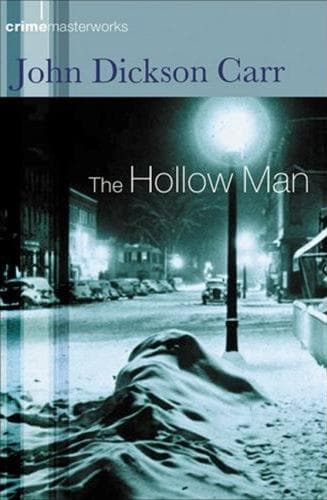
Cover of The hollow man

The hollow man

John Dickson Carr

A locked-room murder solved through a sequence of logical deductions, much like the impossible-crime puzzle at the heart of The Tokyo Zodiac Murders. Carr's lengthy explanation scene rewards close attention to the physical details.

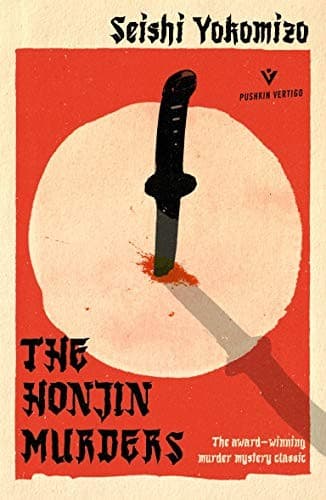
Cover of The Honjin Murders

The Honjin Murders

Seishi Yokomizo

A Japanese classic built on a closed-room killing in a rural mansion, with a detective who weighs strange details patiently. It shares the Tokyo Zodiac book's blend of old traditions and a grim, grotesque crime.

Cover of The Decagon House Murders

The Decagon House Murders

Yukito Ayatsuji

A group of students isolated on an island, where a series of murders unfolds in a sealed setting. Like Shimada's novel, it is a deliberate homage to Golden Age puzzle fiction and asks readers to solve the crime themselves.

Cover of And Then There Were None

And Then There Were None

Agatha Christie

Ten strangers are trapped on an island and killed one by one, with clues that gradually reveal the pattern. Its tight structure and fair-play clues appeal to anyone who loved the methodical reasoning in The Tokyo Zodiac Murders.

Explore More