
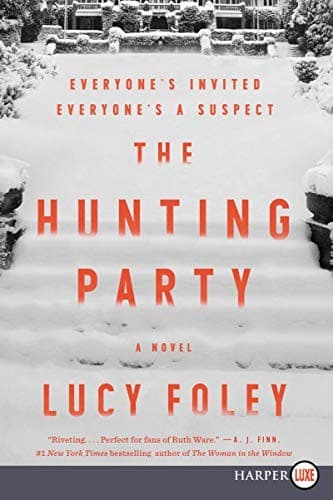
The Hunting Party
Lucy Foley
Old friends snowed in at a remote Highland lodge, one dead and everyone hiding something: a modern take on the sealed-off group and shifting suspicion that drives Christie's island.
Reader-supported: when you buy through links on our site, we may earn an affiliate commission. Learn more
We earn a commission if you buy through these links. Learn more
Find Similar BooksGuide by the Books of the Day editors · Updated · How we write our guides
A tightly built closed-circle puzzle where a countdown rhyme drives the deaths, and the tension comes from suspicion turning inward as the group shrinks.
2 creators reviewed And Then There Were None on YouTube in 2020, with 54.4K views between them. Their opinions are their own; we picked these reviews, we didn't write them.
Ten people with little in common are lured to an isolated island house by invitations from a host none of them has met. After dinner, a recorded voice accuses each guest of a death the law never punished. Then the killings begin, and each one seems to echo a verse of an old counting rhyme hung in every bedroom.
Christie builds the book as a closed-circle puzzle. No outsider can reach the island, so the survivors must work out among themselves who is responsible, and their suspicions turn on one another quickly. The chapters are short and brisk, and the narration moves between characters, so you watch fear and distrust grow in real time rather than from a detective's distance.
Reading it feels less like a cosy country-house whodunit and more like a pressure cooker. The tension comes mostly from the countdown structure and the dwindling numbers, though the clues are fair and worth tracking for anyone who likes to solve along. It is a fast read, and most of its pleasure is in the escalating mechanics of the trap.
Because the guests are cut off from the outside world, every death narrows the pool of possible culprits. Christie uses this shrinking group to make suspicion feel personal and immediate, so the reader is never sure whom to trust and the survivors start to turn on each other.
The counting verse does more than decorate the plot. Each death is staged to match a line, which gives the book a ritualistic, almost mechanical rhythm. The rhyme makes the killings feel orderly and inevitable, and it steadily shows the characters how little control they really have.
The opening accusations raise a moral question the book never fully settles: what happens when someone escapes punishment for a death? The guests' secrets are morally tangled, and the novel asks readers to weigh private vengeance against public justice without offering easy comfort.
Christie plays fair. The details that matter are placed in plain sight among ordinary conversation, so a careful reader has a real chance to reason toward the answer. Re-reading with the solution in mind shows how much of the misdirection depends on what the characters assume rather than what they say.
The characters are often types more than people, and their motives are mostly there to serve the plot. Some attitudes about class, gender, and race reflect the period and can jar for modern readers. The premise is deliberately contrived, and the book prizes cleverness over realism. Many readers now know the central idea from adaptations and retellings, which can soften the surprise. As a mystery, it rewards puzzle-solving more than emotional depth, so readers wanting literary richness may find it thin.
Book details and cover from Google Books.
Ready to read And Then There Were None?
Get your copy on Amazon, or listen to it on Audible. We earn a commission if you buy through these links.
Lucy Foley
Old friends snowed in at a remote Highland lodge, one dead and everyone hiding something: a modern take on the sealed-off group and shifting suspicion that drives Christie's island.
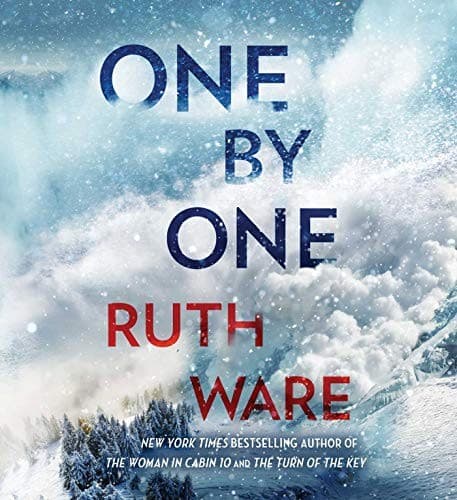
Ruth Ware
An avalanche traps a tech company's staff in an Alpine chalet as colleagues start disappearing, echoing the countdown structure and mounting dread of And Then There Were None.
Yukito Ayatsuji
A Japanese classic written in open homage to Christie: university mystery-club students on a deserted island begin dying, with a fiendishly fair puzzle to solve.
Agatha Christie
If the ingenious misdirection of the island mystery thrilled you, this village puzzle shows Christie at her most daring, playing with reader expectations in a way still talked about today.