
We earn a commission if you buy through these links. Learn more
The hollow man
Guide by the Books of the Day editors · Updated · How we write our guides
A tightly built locked-room puzzle from the Golden Age of detective fiction, with an impossible killing, fair-play clues, and one of the genre's most admired essays on how such crimes can be solved.
What Creators Say About The hollow man
1 creator reviewed The hollow man on YouTube in 2025, with 1.8K views between them. Their opinions are their own; we picked these reviews, we didn't write them.
What It's About
The Hollow Man (1935, published in the US as The Three Coffins) is a classic locked-room mystery built around a killing that seems to have been impossible. A shooting takes place in a room that was secured from the inside, the killer appears to have vanished, and a small circle of people with motives and shaky alibis becomes the focus of suspicion. John Dickson Carr, who also wrote as Carter Dickson, built much of his reputation on puzzles like this one.
The detective is Dr. Gideon Fell, a large, theatrical, pipe-smoking investigator who talks more than he hurries. Carr plays fair: the clues are on the page, and the reader is invited to work alongside Fell rather than wait for a last-minute rabbit from a hat. The prose is brisk and witty, with the atmosphere of an English country house and the manners of its period.
Reading the book feels like playing a game with a sharp referee. Its most famous feature is a long, discursive lecture in which Fell surveys the ways an impossible crime can be explained, an essay that genre readers have admired and argued over for decades. Expect a leisurely pace in places, some dated attitudes, and a solution that rewards careful attention rather than speed.
Read this if you…
- enjoy classic whodunits and want a locked-room puzzle at its best
- like detectives who reason out loud and enjoy a talkative, theatrical style
- want to see where modern impossible-crime fiction got many of its tricks
Skip it if you…
- need fast pacing, modern prose, or a dark, character-driven thriller
- find dated social attitudes and formal dialogue off-putting
Key Ideas
- 1
The impossible crime as the engine
The book is driven by a single question: how could someone have committed a murder in a room that appeared sealed? Carr treats this as a pure intellectual problem, and the story's tension comes from testing one explanation after another against the evidence. Readers who enjoy puzzles will find the central problem clean and easy to hold in mind.
- 2
Fair-play clueing
Carr sets out the physical and testimonial clues openly and lets the reader collect them. Fell's reasoning is presented step by step, so the solution feels earned rather than arbitrary. This is the quality that keeps Golden Age puzzles alive for modern readers who want to solve the case themselves.
- 3
Fell's locked-room lecture as a genre map
The famous lecture gives the book a second life as criticism. Fell sorts the many methods that writers have used to make a room seem impossible, offering a framework that readers of mystery fiction still cite. It is discursive and sometimes self-indulgent, but for many fans it is the highlight of the novel.
- 4
Period setting and social texture
The cast of gentlemen, society figures, and household staff reflects 1930s English life, with its class assumptions and formal conversation. This gives the book a distinct flavour that is part of its charm, though it also means the social world feels remote to many contemporary readers.
Limitations
The pace is slow by modern standards, and Fell's lengthy speeches can stall the story for readers used to tighter plotting. The characters are functional rather than deeply drawn, and some attitudes toward class, gender, and race reflect the 1930s. The puzzle is the point, so readers looking for emotional depth or a bold reinvention of the form may find it thin. Its reputation among genre fans is high, but it is best read as a historical example of its kind.
Questions Readers Ask
- Is The Hollow Man a good place to start with John Dickson Carr?
- It is one of the most respected entries in his catalogue and a strong introduction to his work, especially for readers who like locked-room puzzles. Because the lecture on impossible crimes is so well known, you may recognise its ideas from later fiction. Many readers start here, though some prefer his other Fell novels for pacing.
- How does it compare to Agatha Christie?
- Christie focuses more on character, social observation, and clever plotting, while Carr concentrates on the mechanics of impossible crimes and the ingenuity of their solutions. Christie is usually easier to read quickly. Carr rewards readers who enjoy puzzle-first fiction and don't mind a more theatrical, talkative detective.
- Published
- 1935
- ISBN
- 9781409129363
- Difficulty
- beginner
- Category
- Mystery & Thriller
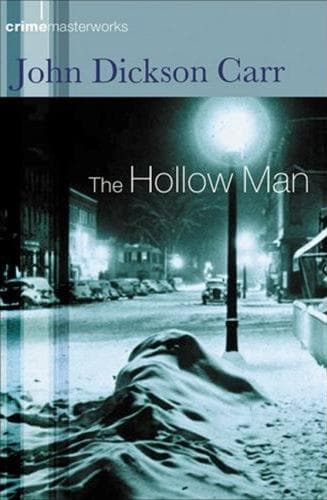
Book details and cover from Google Books.
Ready to read The hollow man?
Get your copy on Amazon, or listen to it on Audible. We earn a commission if you buy through these links.