
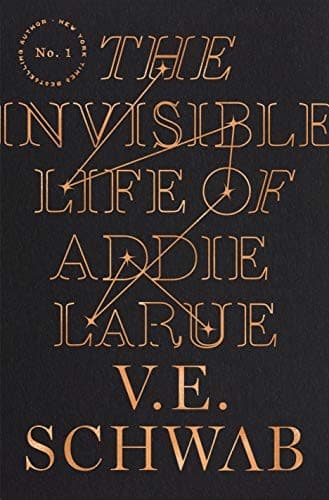
The Invisible Life of Addie LaRue
V. E. Schwab
Like Henry and Clare, Addie lives outside ordinary time, and her centuries-long story becomes a tender, bittersweet romance about memory and being truly known by one person.
Reader-supported: when you buy through links on our site, we may earn an affiliate commission. Learn more
We earn a commission if you buy through these links. Learn more
Find Similar BooksGuide by the Books of the Day editors · Updated · How we write our guides
A Chicago love story built on a man who involuntarily slips through time, and what it takes for a marriage to hold together when its center keeps disappearing.
2 creators reviewed The Time Traveler's Wife on YouTube between 2009 and 2024, with 10.6K views between them. Their opinions are their own; we picked these reviews, we didn't write them.
The Time Traveler's Wife follows Henry DeTamble, a Chicago librarian with a rare genetic condition that sends him unpredictably into his own past and future, and Clare Abshire, the woman he marries. The premise bends the usual rules of a love story: Henry turns up at different ages, often naked and without money, and the couple has to build a life around his sudden absences. The novel alternates first-person chapters between the two of them, with dates and ages attached, so you constantly track where each character stands in their own life.
Niffenegger's real interest is less in how time travel works than in the texture of ordinary life under strain. Much of the book is domestic: jobs, friendships, family, routines, and the small logistics of loving someone who keeps vanishing. The time travel is treated as a fact of life rather than something to explain, so your attention stays on how these two cope, argue, and keep hold of each other.
Reading it is an emotional experience, and the book makes no secret of that. It moves between tenderness and dread and asks you to sit with what love costs when time itself is unreliable. It is a long read with sustained feeling, and it can feel slow in stretches before its momentum builds.
Much of the emotional force comes from practical questions: how a couple plans around someone who may disappear mid-dinner, how money, work, and household life get handled, and how a relationship survives constant interruption. The romance is grounded in these small negotiations rather than grand gestures.
The characters repeatedly wonder whether what has already happened, or is about to happen, can be altered. The book keeps returning to the tension between accepting a set course and fighting it, and it uses that question to make ordinary decisions feel loaded.
Because the chapters jump around in time, you often know things one character does not yet know, or learn about a moment long after the other character has lived through it. This structure creates a steady undercurrent of anticipation and grief that a linear telling could not produce.
The city gives the story its everyday ground. Its neighborhoods, libraries, and art world root the fantastical premise in recognizable places, and the sense of a specific, lived-in place helps the book feel more like a family chronicle than a fable.
The time-travel mechanics are asserted rather than examined, so readers who want logical consistency may be frustrated by loose ends. Some find the book repetitive in its emotional beats and long for tighter editing. The early relationship, in which Henry visits Clare as a child, makes many readers uneasy, and the novel's handling of that dynamic is a frequent point of debate. Those who want a fast-moving plot may also find the pacing uneven.
Book details and cover from Google Books.
Ready to read The Time Traveler's Wife?
Get your copy on Amazon, or listen to it on Audible. We earn a commission if you buy through these links.
V. E. Schwab
Like Henry and Clare, Addie lives outside ordinary time, and her centuries-long story becomes a tender, bittersweet romance about memory and being truly known by one person.
Diana Gabaldon
A woman falls through time into eighteenth-century Scotland and into a sweeping love affair, offering the same mix of romance, time-slip danger and devotion tested by circumstance.
Octavia Butler
Dana is pulled involuntarily back in time, much like Henry, but Butler uses the device to explore slavery and inheritance with gripping intensity and emotional weight.
Kate Atkinson
Ursula Todd lives her life again and again, and readers who enjoyed the shuffled chronology of Niffenegger's novel will appreciate how each repetition deepens character and feeling.