
The Way of Kings
Brandon Sanderson
Like Islington's book, it builds a richly detailed magic system with clear rules and a large cast of characters whose storylines slowly converge. Expect a long, patient read that rewards careful attention.
Reader-supported: when you buy through links on our site, we may earn an affiliate commission. Learn more
We earn a commission if you buy through these links. Learn more
Find Similar BooksGuide by the Books of the Day editors · Updated · How we write our guides
A slow-burning epic fantasy debut that rewards patient readers with a layered magic system, a buried history, and a mystery that deepens with every chapter.
2 creators reviewed The Shadow of What Was Lost (The Licanius Trilogy Book 1) on YouTube between 2018 and 2020, with 80K views between them. Their opinions are their own; we picked these reviews, we didn't write them.
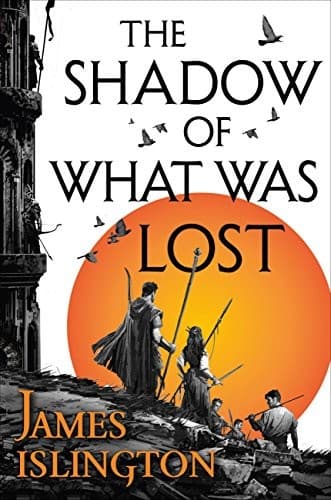
The Shadow of What Was Lost is the first volume of James Islington's Licanius Trilogy, an epic fantasy set in a world where a long-ago catastrophe still shapes the present. Its central mystery concerns what really happened in the past and why so much of it has been forgotten or rewritten. The story moves through several viewpoints, and the picture only comes into focus gradually, so the early chapters ask for trust.
The book's distinguishing feature is its magic, which is less about flashy spectacle and more about discipline, study, and the costs of power. Islington spends real time on how his systems work, how institutions control knowledge, and how ambition bends people's loyalties. The prose is controlled and sometimes ornate, and the pacing favours accumulation over action set pieces, though there are tense confrontations along the way.
Reading it feels like working through a puzzle that is still being assembled. The rewards come in moments when earlier details click into place, and the book ends by setting up larger questions rather than resolving them. Readers who enjoy long, intricate worldbuilding will find much to savour; those who want a fast, self-contained story may find the pace hard going.
A recurring concern is who gets to record, interpret, and teach the past. The book treats history as something actively managed by institutions, which gives the mystery a political edge. Characters who question official accounts are not just seeking truth; they are challenging the people who benefit from the current version of events.
Rather than granting power freely, the magic system demands training, mental rigour, and sacrifice. Islington uses this to make ability feel earned and to show how talent alone is never enough. The rules are explored in some detail, which will appeal to readers who like systems that have internal logic and consequences.
The catastrophe at the heart of the world is never fully explained at once. Fragments surface through different viewpoints, so the reader assembles the history alongside the characters. This slow reveal is the main engine of the book and explains why the early chapters can feel withholding.
Many of the characters are shaped by the institutions they serve and the people they are bound to. The book explores how loyalty can be used against a person, and how ambition can make decent people do troubling things. These dynamics give the wider plot emotional weight beyond its puzzles.
The most common criticism is pacing: the first half can feel slow and dense, with a lot of setup before the larger picture emerges. Some readers find the ornate prose and the large cast hard to track early on. The book is also unmistakably the opening of a trilogy, so it ends on unresolved threads and does not offer much closure on its own. Readers looking for a complete arc in one volume should know that going in.
Book details and cover from Google Books.
Ready to read The Shadow of What Was Lost (The Licanius Trilogy Book 1)?
Get your copy on Amazon, or listen to it on Audible. We earn a commission if you buy through these links.
Brandon Sanderson
Like Islington's book, it builds a richly detailed magic system with clear rules and a large cast of characters whose storylines slowly converge. Expect a long, patient read that rewards careful attention.
N. K. Jemisin
Its carefully constructed world hides secrets beneath its surface, much as the source book does. The layered structure and the gradual reveal of how magic really works will appeal to readers who enjoyed its intricate design.
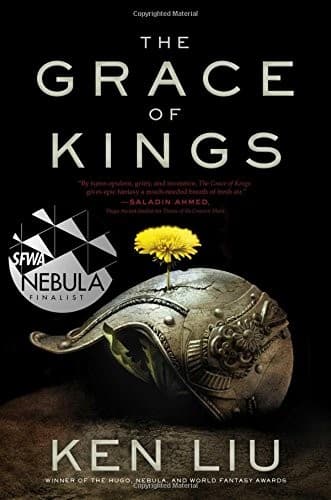
Ken Liu
It offers an epic, politically rich fantasy in which history and legend shape the present. Readers who appreciated the sense of a deep, lived-in world will find the same ambition and scale here.
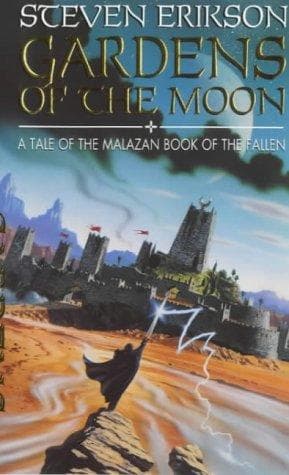
Steven Erikson
It drops the reader into a vast world with a long, half-hidden past and many factions pursuing unclear goals. Like The Shadow of What Was Lost, it trusts readers to piece together the larger picture over time.