
The Eye of the World
Robert Jordan
The series Sanderson himself finished. Like The Way of Kings, it opens a huge multi-POV saga with deep history, prophecy and a world whose lost past slowly comes back into view.
Reader-supported: when you buy through links on our site, we may earn an affiliate commission. Learn more
We earn a commission if you buy through these links. Learn more
Find Similar BooksGuide by the Books of the Day editors · Updated · How we write our guides
A long, ambitious fantasy opener with a storm-shaped world, a magic system that slowly reveals its rules, and three viewpoints that reward patient readers.
2 creators reviewed The Way of Kings on YouTube between 2020 and 2024, with 458.7K views between them. Their opinions are their own; we picked these reviews, we didn't write them.
The Way of Kings is the first volume of The Stormlight Archive, a long fantasy novel set on Roshar, a planet where violent storms sweep across barren plateaus and have shaped everything from plants and animals to cities. Sanderson rotates among several point-of-view characters: Kaladin, a former medical apprentice forced into slavery on a battlefield; Dalinar, a Brightlord haunted by visions; and Shallan, a young woman with ambitions she keeps hidden. Short interludes between chapters offer glimpses of other figures and of the wider history.
The approach is patient. Much of the first third is setup, with the reader piecing together how Shardblades and Shardplate work and why the war on the Shattered Plains is so strange. Sanderson's strength is systems: magic with costs and rules, and a world whose ecology follows logically from its weather. Action scenes are vivid and sometimes long, and the prose is clean and direct rather than ornate.
Reading it feels like settling into a large puzzle that unfolds slowly. The early chapters can drag for some readers, but the threads gradually tighten and the ending makes waiting for the next book feel like a real commitment. Expect a substantial time investment and a cast of characters you will need to keep track of.
Weather on Roshar is not just scenery. Violent highstorms drive how plants and animals behave and force cities into sheltered terrain. Sanderson uses this to connect the environment with culture and politics, so the setting explains why people live and fight the way they do.
Shardblades and Shardplate turn ordinary people into formidable fighters, but the book reveals their workings and limits gradually. Sanderson's magic has internal logic, so attentive readers can anticipate what it can and cannot do, which makes the stakes in battle easier to feel.
Dalinar's arc asks whether old oaths still mean anything, while Kaladin watches officers treat soldiers as disposable. The book is less about battles than about responsibility, loyalty and the gap between what leaders promise and what they do.
Kaladin, Dalinar and Shallan follow separate paths for much of the book. The reader holds these storylines in mind, and the payoff comes from how they gradually lean toward one another. Those who enjoy assembling a larger picture will find this rewarding.
Common criticisms center on length and pacing. The first third is slow, and the book's roughly thousand pages include long descriptive passages that some readers find wearing. The large cast and many invented terms can be hard to track, and the book ends without resolving its central questions, so it feels incomplete on its own. Sanderson's prose is functional rather than lyrical, and some readers find the dialogue plain. The payoff also depends on committing to later volumes.
Book details and cover from Google Books.
Ready to read The Way of Kings?
Get your copy on Amazon, or listen to it on Audible. We earn a commission if you buy through these links.
Robert Jordan
The series Sanderson himself finished. Like The Way of Kings, it opens a huge multi-POV saga with deep history, prophecy and a world whose lost past slowly comes back into view.
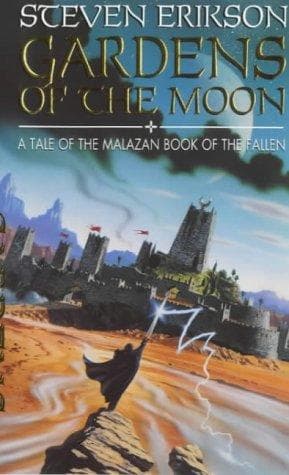
Steven Erikson
If you enjoyed piecing together Roshar's mysteries, Malazan's sprawling armies, ancient powers and layered history offer an even denser, more demanding epic that trusts readers to work things out.
N. K. Jemisin
Another world shaped by brutal natural forces, where geology drives ecology and society much as highstorms do on Roshar, with an inventive magic system and characters bearing heavy burdens.
Brandon Sanderson
Sanderson's tighter, faster Cosmere novel. Allomancy has the same precise, satisfying rules as Surgebinding, and a heist plot that echoes Shallan's thieving ambitions.