
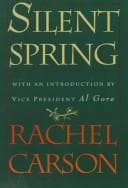
Silent Spring
Rachel Carson
Carson's best-known book uses the same clear, poetic prose to explain how living systems connect, turning ecology into a compelling argument that readers of The Sea Around Us will recognise.
Reader-supported: when you buy through links on our site, we may earn an affiliate commission. Learn more
We earn a commission if you buy through these links. Learn more
Find Similar BooksRachel Carson's lyrical, scientifically grounded tour of the ocean, from its origins in Earth's history to the life in its depths, still reads like nature writing at its best.
The Sea Around Us is a survey of the ocean written by a marine biologist who wanted general readers to see the sea as a whole system rather than a backdrop for ships and fish. Carson starts far back, with how the sea may have formed and how Earth's geology and climate shaped the water's chemistry, then moves through tides, currents, the ocean floor, and the living communities that depend on the sea. She treats the ocean as a physical and historical object as much as a biological one, which gives the book a wider sweep than most nature writing.
Her approach blends field-informed science with essay-like prose. She explains processes with patient analogies and avoids jargon where she can, but she does not talk down to readers. Chapters often move from a concrete image, such as a creature in the tide zone or a sounding taken in deep water, to a larger principle. Many passages are more poetic than a modern textbook would allow, and that is a large part of the appeal.
Reading it feels less like taking a course and more like being walked slowly along a coastline by someone who knows exactly what they are looking at. The pace is unhurried, and the book rewards a reader who is willing to slow down, reread a passage about currents or tides, and let the scale of the subject settle in. Expect to finish with a changed sense of how much of the planet is water and how little of that water most people ever think about, and with a new respect for the sheer age of the processes that govern it.
Carson argues that the sea should be understood as a single interacting system linking water, air, land, and life. Currents, tides, temperature, and chemistry influence one another, so no part of the ocean can be studied in isolation without losing the larger picture.
The ocean's salts, sediments, and floor preserve a long record of geological change. Carson uses this record to connect the sea's origins to the land and to timescales far longer than human experience, making the deep past feel present and relevant.
Light, temperature, and pressure divide the ocean into zones, each with its own kinds of organisms. Carson contrasts the crowded life of shorelines with the stranger, sparser communities of the deep, showing how environment shapes what can live where.
Carson writes with evident awe and insists that careful scientific detail and emotional attention to nature belong together. Her prose is part of the argument: it asks the reader to look closely and to feel the significance of what they see.
Published in 1951, the book predates the wide acceptance of plate tectonics and much of modern deep-sea exploration, so its geology and some of its claims about the ocean floor are outdated. Its tone is sometimes more romantic than contemporary readers expect, and it is less focused on human damage to the sea than Carson's later work. The early chapters on Earth's origins can feel drier than the rest, and some readers find the sweeping generalizations hard to check against newer evidence.
Reviews from readers on YouTube. Their opinions are their own.
Book details and cover from Google Books.
Ready to read The Sea Around Us?
Get your copy on Amazon, or listen to it on Audible. We earn a commission if you buy through these links.
Rachel Carson
Carson's best-known book uses the same clear, poetic prose to explain how living systems connect, turning ecology into a compelling argument that readers of The Sea Around Us will recognise.
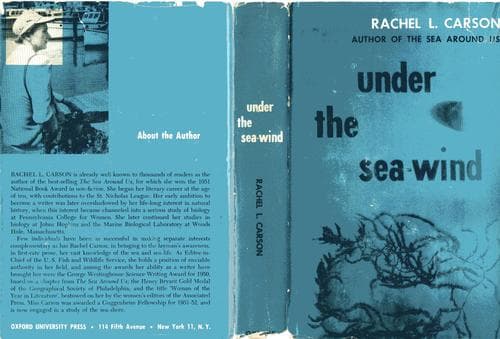
Rachel Carson, C. M. Hebert
Carson's first book follows birds, fish and eels through their seasonal lives, with the same attentive narration and feeling for the rhythm of the sea that defines The Sea Around Us.
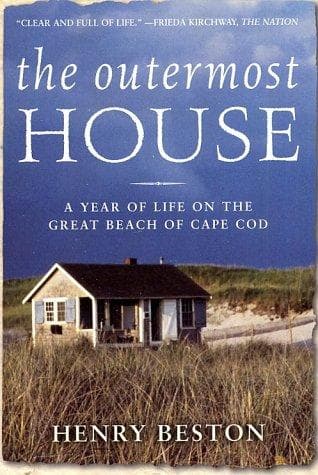
Henry Beston
Beston spends a year on a remote Cape Cod beach, writing with the same reverence for tides, weather and wildlife that makes Carson's ocean portrait so absorbing.
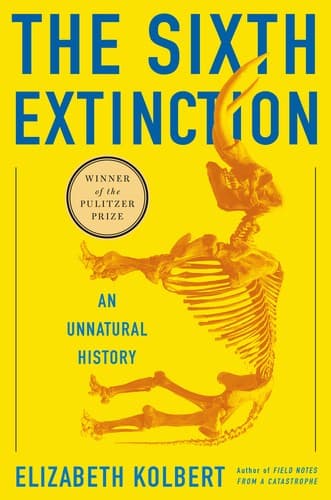
Elizabeth Kolbert, Marcel Blanc
Kolbert combines field reporting with deep scientific history, showing how natural processes unfold over vast timescales in the way Carson does for the ocean.