
We earn a commission if you buy through these links. Learn more
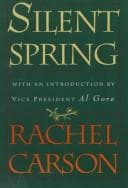
Silent Spring
Guide by the Books of the Day editors · Updated · How we write our guides
Rachel Carson's 1962 case against chemical pesticides is a readable, carefully sourced warning about how poisons move through ecosystems, and it still shapes how we think about environmental risk.
What Creators Say About Silent Spring
2 creators reviewed Silent Spring on YouTube between 2019 and 2022, with 60.7K views between them. Their opinions are their own; we picked these reviews, we didn't write them.
What It's About
Silent Spring, published in 1962, is Rachel Carson's case against the indiscriminate spraying of synthetic pesticides, especially DDT and the other chlorinated hydrocarbons that became routine on farms, in forests, and in suburban gardens after the Second World War. Although it is sometimes shelved under psychology, it is an environmental science book by a marine biologist who had spent years writing about the sea and working as a government scientist.
Carson builds her argument the way a researcher would, by following the chain of effects: how a chemical lands in soil and water, moves into plants and insects, concentrates as it climbs the food chain, and reaches birds, fish, and eventually people. Much of the book is a dense accumulation of field observations and laboratory findings, and its force comes from the weight of examples rather than a single dramatic episode. The opening fable of a town where birds have gone silent is the most famous passage and sets the emotional tone for everything that follows.
Reading it is less like reading a textbook and more like being guided through an argument by someone who is angry and exact at once. Carson's prose turns lyrical when she writes about birdsong and streams, which makes the technical material land harder. You will come away with a sharper sense of how interconnected ecosystems are and how regulators and manufacturers have weighed risk, and you may look at a lawn service or a garden hose differently.
Read this if you…
- want an early, influential account of how chemical pollution harms wildlife and people
- are interested in how scientific evidence gets challenged, defended, and turned into public policy
- like nonfiction that combines careful research with vivid, emotionally direct writing
Skip it if you…
- want a balanced modern survey of pesticide policy, agriculture, or food production
- are looking for practical gardening or farm advice, since the solutions are brief and dated
Key Ideas
- 1
Poisons that travel up the food chain
Carson's central idea is that persistent chemicals do not stay where they are applied. Small amounts taken up by plankton, insects, and small animals accumulate in the bodies of predators, so the animals at the top of the chain can carry far higher concentrations than the spray that started the process. This is the reasoning behind her most famous warnings about birds of prey and fish.
- 2
Chemicals that refuse to stay on target
The book argues that a pesticide meant for one insect or weed spreads through drift, runoff, soil, and groundwater, reaching animals and plants far outside the intended zone. Carson presses the point that broad-spectrum sprays hit beneficial species as readily as pests, and that persistence means the damage can outlast the application by years.
- 3
The spray treadmill and pest resistance
Carson describes how repeated chemical treatment selects for insects that survive it, which pushes farmers toward stronger or more frequent applications. The result is a cycle in which the cure creates new problems. She uses this to argue that chemical control, as practiced, was a short-term fix that undermined the natural checks on pest populations.
- 4
Trust in official reassurance
A large share of the book is about how government agencies, industry, and some scientists described the risks. Carson scrutinizes the language of control and conquest that framed pesticide programs, and she questions whether regulators had enough evidence to justify widespread use. Her critique of institutional confidence is as much a lesson in skepticism as it is an environmental argument.
- 5
Biological and ecological alternatives
Carson does not stop at criticism. Toward the end, she describes approaches that work with natural predators, parasites, and ecological balance rather than against them. These sections are shorter and less detailed than the indictment, but they show her view that the goal was to manage pests more intelligently, not simply to ban all control.
Limitations
Parts of the science have been revised since 1962, and some claims, particularly about cancer and long-term human harm, were more tentative than the book's tone suggests. Critics at the time argued that Carson overstated the case and understated the benefits of pesticides for food production and disease control, and that debate still resurfaces. The book centers on the United States and the chemicals of its era, so it does not cover later pesticide families or modern regulation in depth. Its alternatives are brief compared with its indictment.
Questions Readers Ask
- Is Silent Spring still relevant today?
- Yes. Many of its core concerns, including persistent chemicals, bioaccumulation, and the gap between regulatory assurances and field evidence, remain active debates. Some specific facts are outdated, but the book's method of tracing how chemicals move through an ecosystem is still the basis for much environmental science and policy discussion.
- Is it a good pick if I enjoy popular science books?
- Yes, though it is more demanding than most. Carson writes clearly and vividly, but she packs in a lot of evidence and cites many studies. Readers who like narrative science writing will find it rewarding, though some may find the middle sections slow and detailed.
- Published
- 1962
- ISBN
- 9798488638143
- Difficulty
- intermediate
- Category
- Psychology
Book details and cover from Google Books.
Ready to read Silent Spring?
Get your copy on Amazon, or listen to it on Audible. We earn a commission if you buy through these links.