
The Black Company
Glen Cook
Like The Poppy War, it follows ordinary soldiers in a mercenary unit who narrate the horror of war. Its gritty tone and sorcery-tinged battles will appeal to readers who valued Rin's hard-edged perspective.
Reader-supported: when you buy through links on our site, we may earn an affiliate commission. Learn more
We earn a commission if you buy through these links. Learn more
Find Similar Booksby R. F. Kuang
Guide by the Books of the Day editors · Updated · How we write our guides
A grim, fast epic fantasy about a poor war orphan who wins a place at a military academy and discovers that the power she needs comes with a ruinous price.
2 creators reviewed The Poppy War on YouTube between 2020 and 2023, with 135.9K views between them. Their opinions are their own; we picked these reviews, we didn't write them.
The Poppy War is a hard, fast fantasy novel about a girl from the margins who wants a way out of a poor life and finds one in the army, only to learn what the army is willing to spend. Rin grew up in a family that smuggles opium, so she knows the drug as a source of money and misery at once. Refusing an arranged marriage, she sets out for the military academy at Sinegard, where she is an outsider among wealthy, well-connected classmates.
Kuang writes in close third person, staying with Rin so the reader experiences training, politics and combat through her eyes. The first part reads like a military school story, with exams, rivalries and demanding mentors. The second turns into a brutal war novel with long battle sequences and scenes of atrocity that are not softened. The tone is angry and unsentimental, and the pages move quickly.
The setting borrows heavily from the Second Sino-Japanese War and the 1937 Nanjing massacre, with the Federation of Mugen standing in for imperial Japan. Kuang uses a secondary-world frame, with gods, shamans and invented geography, to let readers see that history from an unfamiliar angle. Expect the experience to be emotionally heavy, and expect it to ask uncomfortable questions about what victory costs.
The shamanic abilities at the heart of the book are tied to drugs, so every gain in strength carries a physical and psychological toll. Kuang uses this to examine how states and armies lean on chemical or bodily sacrifice to win, and how the people who pay that price are rarely the ones who benefit from the victory.
The poppy is not just a plot device but a daily reality in Rin's home province, where smuggling feeds families while destroying the addicted. The book shows how profit and suffering can exist in the same community, and how an economy built on an addiction can seem normal to the people inside it.
Sinegard rewards brilliance and determination, but it also demands conformity and cruelty. Rin's hunger to prove herself drives both her success and her worst decisions, and the book asks whether the institutions that open doors for outsiders also shape them into something they did not intend to become.
Kuang refuses a clean moral frame. Atrocities are committed by people the reader has come to understand, and the narrative makes it hard to look away or to assign blame neatly. This is the book's most discomforting feature and the source of much of its power.
Relationships with classmates and mentors provide the few moments of warmth and moral clarity in a grim story. These bonds are tested by the war and by divided loyalties, and they give the reader a sense of what is at stake beyond the battlefield.
Many readers find the second half extremely graphic, and some argue that its atrocity scenes lean on shock more than insight. Rin is abrasive and makes choices that are hard to forgive, which frustrates readers who want a clearer heroine. The first part's school plotting can feel slow compared with the later battles. Finally, the book works as the opening of a trilogy rather than a complete story, so it leaves major questions open for the sequels.
Book details and cover from Google Books.
Ready to read The Poppy War?
Get your copy on Amazon, or listen to it on Audible. We earn a commission if you buy through these links.
Glen Cook
Like The Poppy War, it follows ordinary soldiers in a mercenary unit who narrate the horror of war. Its gritty tone and sorcery-tinged battles will appeal to readers who valued Rin's hard-edged perspective.
Joe Abercrombie
Abercrombie's morally compromised characters and brutal, darkly funny violence echo the grim realism of Kuang's war chapters. Readers who admired the cost of Rin's choices will find a similar moral murk here.
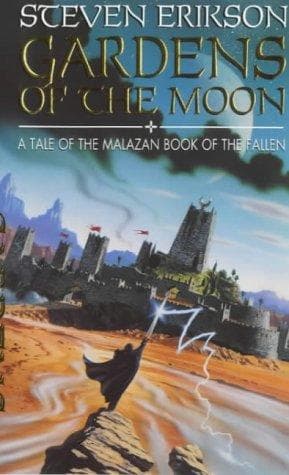
Steven Erikson
Its huge, unforgiving military campaigns and ancient, costly magic match the scale of The Poppy War's conflict. Readers who wanted the war to feel vast and devastating will find it here.
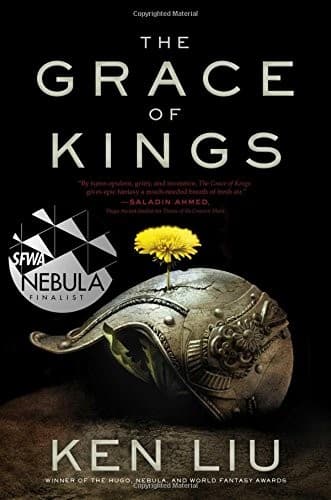
Ken Liu
Liu draws on Chinese history and mythology to build an epic of rival kingdoms and political strategy. Readers drawn to The Poppy War's imperial politics and its roots in real history will feel at home.