
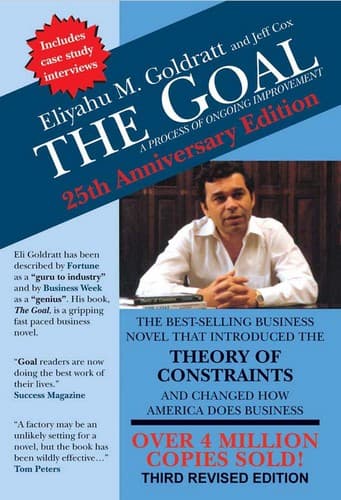
The goal
Eliyahu M. Goldratt, Jeff Cox
Like The Phoenix Project, it is a business novel in which a manager under pressure learns to fix a failing plant. It introduces the theory of constraints that inspired much of the Phoenix story.
Reader-supported: when you buy through links on our site, we may earn an affiliate commission. Learn more
We earn a commission if you buy through these links. Learn more
Find Similar Booksby Gene Kim, Kevin Behr, George Spafford
A fast, funny business novel that turns IT firefighting into a clear case for treating technology work like a factory floor, with lessons any team can use.
The Phoenix Project is a business novel about IT, written in the tradition of The Goal, the classic manufacturing novel that inspired it. Its protagonist, Bill Palmer, is an IT manager who inherits a troubled, overdue project and a department on the brink of being outsourced. Most of the book is dialogue, meetings, and escalating crises told from Bill's point of view, which makes it quick to read and easy to recognize from a working life.
The approach is deliberately simple. Rather than a how-to manual, the authors use the plot to show problems most technology teams already live with: unplanned work pushed onto the same people, deployments that break production, and a single overloaded expert whom everything depends on. A mentor character introduces the Three Ways as a lens for seeing these problems as flow issues, a framing borrowed from manufacturing. The reading experience is brisk and often funny, with a sense of mounting pressure rather than technical depth.
Reading it feels less like studying and more like watching a team slowly learn to see its own work. The value comes from the reframing, which you can apply to a team, a backlog, or a meeting you attended last week. Expect to finish it quickly and then want to talk about it with colleagues, since the book is written to start arguments about how work actually gets done.
The central move is to treat technology work as a flow of items moving through stages, much like parts on a production line. Once work is viewed this way, delays, queues, and bottlenecks become visible and can be discussed in plain terms. This shift in perspective is the book's most transferable idea, and it helps non-engineers understand why projects stall even when individual people are working hard.
Emergency requests, outages, and urgent fixes quietly consume the capacity that was supposed to go to planned projects. The book shows how this constant interruption makes schedules meaningless and why teams end up always behind. Readers who have spent years reacting to the latest crisis will recognize the pattern, and the story makes a convincing case that unplanned work needs to be measured and managed, not just absorbed.
The mentor character frames improvement around three principles: getting work to flow smoothly from development to operations, creating fast feedback loops so problems surface early, and building a culture of continual learning and experimentation. The book presents these as a memorable mental model rather than a complete method. They work best as a set of questions to ask about your own team's handoffs and feedback.
One of the book's sharpest observations is that a team's reliance on a single indispensable expert is not a strength but a fragile point of failure. The story treats this dependence as a symptom of poor process rather than a mark of talent. The argument pushes managers to spread knowledge, reduce single points of failure, and stop rewarding the late-night rescue as the highest form of work.
The book insists that IT exists to serve the rest of the company, and that friction between technology and other departments usually comes from unclear priorities and poor communication. It argues for shared goals and visible work across functions. For readers outside IT, this section offers a useful reminder that technology delays often trace back to decisions made in the business.
Critics point out that the characters are thin and the plot is mostly a vehicle for the ideas, so the dialogue can feel stilted. Some readers find the message repetitive or heavy-handed, and the hero-driven framing can flatten the complexity of real organizations. The book is also rooted in the early 2010s: cloud platforms, containers, and modern deployment tooling appear little or not at all. It does not go deep on security practice, regulated environments, or the cultural details of changing a large company. Treat it as a mindset primer, then consult The DevOps Handbook or newer sources for practice.
Reviews from readers on YouTube. Their opinions are their own.
Book details and cover from Google Books.
Ready to read The Phoenix Project?
Get your copy on Amazon, or listen to it on Audible. We earn a commission if you buy through these links.
Eliyahu M. Goldratt, Jeff Cox
Like The Phoenix Project, it is a business novel in which a manager under pressure learns to fix a failing plant. It introduces the theory of constraints that inspired much of the Phoenix story.
Patrick M. Lencioni
Written as a fable about a struggling leadership team, it mirrors the Phoenix Project's focus on broken collaboration between departments and gives a clear, memorable model for fixing it.
L. David Marquet
A submarine captain's true account of reversing a failing crew's culture. Readers who enjoyed Bill's turnaround will value its concrete, practical story of empowering people closest to the work.
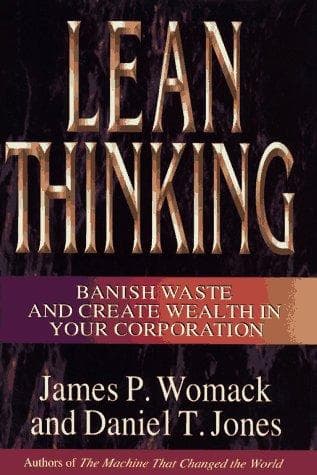
James P. Womack
This is the foundational text on lean principles of flow and waste reduction. It gives the manufacturing logic behind the Three Ways that Phoenix readers find so eye-opening.