
Extreme Ownership
Jocko Willink, Leif Babin
Like Marquet's submarine story, this book comes from military command and argues that leaders must own outcomes and push decisions down to the people closest to the work.
Reader-supported: when you buy through links on our site, we may earn an affiliate commission. Learn more
We earn a commission if you buy through these links. Learn more
Find Similar BooksGuide by the Books of the Day editors · Updated · How we write our guides
A practical case study in changing a failing team's culture from the inside, showing how a captain moved decision-making down to the people doing the work.
2 creators reviewed Turn the Ship Around! on YouTube between 2017 and 2019, with 350.8K views between them. Their opinions are their own; we picked these reviews, we didn't write them.
Turn the Ship Around! is L. David Marquet's account of taking command of the USS Santa Fe, a nuclear-powered attack submarine whose crew had grown used to waiting for orders. Marquet describes what he tried, what resisted, and how the boat's performance and attitude changed over time. It reads as a manager's story as much as a military memoir, and the lessons are meant to travel to offices, hospitals, and any other place where people are expected to wait to be told what to do.
The approach is anecdotal and practical. Marquet works through specific moments aboard the boat, the small habits he changed, the phrases he stopped using, and the setbacks that came along the way. The chapters build on one another around a single method, so you follow the reasoning behind each change rather than reading a list of tips.
The reading experience is brisk and conversational, with submarine jargon explained as it comes up. It works best as an example of organizational change in action. Expect a hopeful, persuasive voice that argues for its method with conviction, and be prepared to judge for yourself how much of the result depends on the unusual setting and how much transfers to your own workplace.
Marquet describes how crews were trained to ask permission before acting, which kept decisions with the captain and slowed everything down. He replaced this with a habit of stating what they intended to do and why, so people could act, report, and be corrected without waiting. The idea is simple to state but takes sustained discipline to practice.
The core argument is that the traditional command model treats most people as followers who execute orders. Marquet argues for a model in which people at every level are expected to think, take ownership of decisions within their role, and lead in their own areas. He frames this as a shift in how authority is distributed, not just a change in tone.
Marquet suggests that a leader who controls every decision creates a team that cannot function without them. He presents leadership as the work of building competence and judgment in others, so that the organization keeps performing when the leader is absent. This reframes success as the team's independence rather than the leader's involvement.
A recurring theme is that people must be able to explain what they understand and what they plan to do. Marquet emphasizes checking comprehension out loud and encouraging questions, which surfaces problems early. The point applies well beyond submarines to any work where errors are costly and information is spread across many people.
The book rests heavily on one captain's experience and one boat, so its evidence is largely anecdotal and hard to verify independently. Marquet's account is persuasive but often reads as a success story told by the person who led it, with limited discussion of what did not work or who was unhappy with the changes. Readers may also find that the naval context, with its rigid hierarchy and safety culture, makes some lessons harder to apply in looser, more fluid organizations. The book offers a strong mindset rather than a detailed implementation guide.
Book details and cover from Google Books.
Ready to read Turn the Ship Around!?
Get your copy on Amazon, or listen to it on Audible. We earn a commission if you buy through these links.
Jocko Willink, Leif Babin
Like Marquet's submarine story, this book comes from military command and argues that leaders must own outcomes and push decisions down to the people closest to the work.
Daniel H. Pink
Pink explores what truly motivates people at work, offering research on autonomy that echoes Marquet's central idea of giving crews control over their own choices.
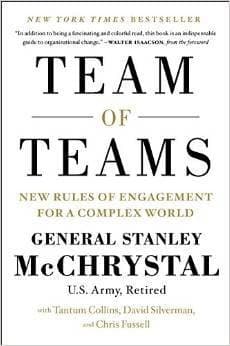
Stanley A. McChrystal, Tantum Collins
McChrystal describes reshaping a rigid military organisation into a network of empowered teams, a change in structure and trust that readers of Marquet's account will recognise.
Simon Sinek
Sinek connects trust, safety and belonging to effective teams, drawing on military and business examples in a way that complements Marquet's focus on people.