
We earn a commission if you buy through these links. Learn more
Lord of the Flies
Guide by the Books of the Day editors · Updated · How we write our guides
A gripping, uncomfortable study of how quickly order collapses when boys are left to govern themselves, and why it still gets taught in classrooms.
What Creators Say About Lord of the Flies
2 creators reviewed Lord of the Flies on YouTube between 2015 and 2019, with 3.9M views between them. Their opinions are their own; we picked these reviews, we didn't write them.
What It's About
Lord of the Flies is a short novel, published in 1954, about a group of British boys marooned on a tropical island after a plane crash during a war. With no adults to guide them, they try to build a society modeled on the rules they grew up with: they elect a leader, hold assemblies, and keep a signal fire burning in hope of rescue. The early chapters feel almost like an adventure, full of sunlight, swimming, and the thrill of freedom.
Golding's style is spare and vivid, with sharp descriptions of nature and a narrator who rarely lingers on inner monologue. Much of the book works through images and symbols rather than explanation, so the reader is constantly asked to interpret what things stand for. The tone shifts steadily from playful to tense to frightening, and the prose becomes more intense as the boys' behavior does.
Reading it is an unsettling experience rather than a comfortable one. It is quick to finish, but it tends to stay with you, and many readers find themselves thinking about it long afterward. It rewards a second reading, especially once you notice how carefully the symbolism is built.
Read this if you…
- want a short, intense novel that examines human nature without flattering it
- are interested in political or social thinking about order, authority, and how groups turn cruel
- enjoy symbolic fiction and don't mind working out meaning for yourself
Skip it if you…
- want warm, uplifting stories with a clear sense of hope or resolution
- prefer heavy character psychology and detailed inner lives over allegory and imagery
Key Ideas
- 1
Civilization as a thin, fragile layer
The novel's central argument is that the rules and institutions people take for granted are learned habits, not natural facts. Golding shows the boys importing adult structures such as meetings, procedures, and authority, and then watching those structures weaken under fear, desire, and the pull of the group. The book asks what is left of a society once the external supports are removed.
- 2
Fear as the engine of disorder
Fear, more than any plan or ambition, drives much of what happens on the island. Rumors about an unseen threat spread quickly and reshape how the group behaves. Golding presents fear as something that can be manufactured and amplified, and he shows how easily a community can organize itself around a shared terror instead of a shared purpose.
- 3
Power, appeal, and the hunger to lead
Leadership on the island goes to the boy who is most charismatic and visible, not necessarily the wisest or most considerate. The novel explores how people gravitate toward those who promise excitement, belonging, and relief from anxiety. It is a sharp study of why demagogues succeed and why reasonable voices often lose ground.
- 4
Symbols that reward close reading
Objects such as the conch, the glasses, and the signal fire carry layers of meaning that shift as the story progresses. Golding trusts the reader to track these images and notice how their significance changes. The distinctive pleasure of the book lies largely in following these threads and seeing how they connect.
Limitations
The characters are deliberately schematic. Ralph, Jack, Piggy, and Simon often function as representatives of ideas rather than fully realized people, which some readers find frustrating. The dialogue can feel stylized, and the symbolism is sometimes heavy-handed, especially for adult readers who have already encountered its ideas. The book also leaves out almost all female perspectives, since the cast is entirely male, and its view of human nature is bleak enough that some readers find it more fatalistic than persuasive.
Questions Readers Ask
- Is Lord of the Flies suitable for adults, or only for school reading?
- It is widely read in schools, but it works well for adults too. The prose is simple, yet the questions it raises about power, fear, and group behavior become richer with life experience. Many adults find it more disturbing on a second reading than on the first.
- How does it compare to The Coral Island by R.M. Ballantyne?
- Ballantyne's 1857 novel also features boys on a remote island, but it presents them as capable and virtuous. Golding wrote partly in response to that optimism. If you want the adventure story, Ballantyne is the older version; if you want the argument against it, Golding is the answer.
- Is the book still relevant today?
- Yes. Its themes of fear spreading through a group, the appeal of strong leaders, and the fragility of rules remain easy to recognize in current events. Readers often return to it when thinking about how institutions fail under pressure.
- Published
- 1954
- ISBN
- 9780399506437
- Difficulty
- beginner
- Category
- Fiction
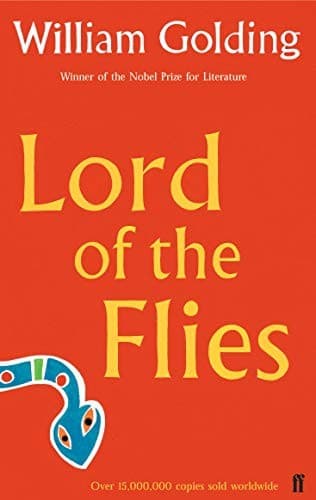
Book details and cover from Google Books.
Ready to read Lord of the Flies?
Get your copy on Amazon, or listen to it on Audible. We earn a commission if you buy through these links.