
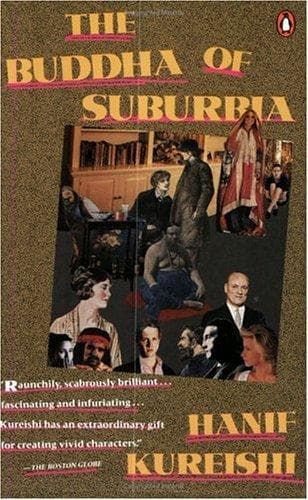
The Buddha of Suburbia
Hanif Kureishi, Eli Hirsch
A London-set coming-of-age story about a young man of mixed Indian and English heritage, with the same wry eye for the awkwardness of belonging in two worlds.
Reader-supported: when you buy through links on our site, we may earn an affiliate commission. Learn more

We earn a commission if you buy through these links. Learn more
Find Similar BooksGuide by the Books of the Day editors · Updated · How we write our guides
Lahiri's Pulitzer-winning debut shows how small silences and misreadings between people can carry more weight than any plot.
2 creators reviewed Interpreter of Maladies on YouTube between 2018 and 2020, with 17.9K views between them. Their opinions are their own; we picked these reviews, we didn't write them.
Interpreter of Maladies is a 1999 collection of nine short stories by Jhumpa Lahiri, her debut book, which won the Pulitzer Prize for Fiction that year. Most of the stories concern people of Indian origin, some living in India and others in America, and the gaps between the two. Lahiri writes mostly in third person and in a plain, exact prose style that rarely raises its voice.
Rather than building toward a single big plot, each story turns on a small moment of disclosure: a confession, an unexpected kindness, a misreading between strangers. The title story follows a driver who moonlights as a translator for a doctor's patients, and the tension between what people say and what they mean runs through the whole book. The settings shift between Calcutta and New England, and those shifts show how the characters carry their homes with them, sometimes uneasily.
The result is a book that reads quickly but lingers. Readers who want sweeping historical arcs or dramatic turns may find the stories small and closed. Those who enjoy noticing how one gesture can reveal an entire marriage or family will find the book rewards rereading. The emotional force builds from restraint rather than melodrama.
Language runs through nearly every story, but the book is less about vocabulary than about the gap between words and feeling. Characters who share a culture, or even a family, often fail to understand one another. Lahiri shows how a literal translation can be accurate and still miss the point, and how people use silence, politeness, or half-truths to protect themselves.
Many characters are caught between an inherited homeland and a life in the United States. Some are first-generation immigrants holding on to old customs, while others are children who feel they belong nowhere fully. The stories treat nostalgia and displacement with precision, avoiding both easy sentimentality and simple stories of assimilation.
Many stories hinge on one disclosure, such as a confession, a discovery, or a moment of unexpected candor. Lahiri gives these moments room to unfold without explaining them fully. The effect is that a reader finishes each story with the sense that a relationship has quietly shifted, even when little visibly happens.
The prose is clean and controlled, with little ornament and few dramatic flourishes. Lahiri trusts concrete details, such as a meal, a room, or a physical gesture, to carry feeling. Because she withholds big emotional statements, the stories land harder and stay with the reader longer than their length would suggest.
Critics have sometimes said the stories share a similar tone and emotional register, so the collection can feel more uniform than its variety of settings suggests. Many characters come from educated, middle-class backgrounds, which leaves out wider experiences of class and labor. The focus on the Indian diaspora can feel narrow to readers looking for broader perspectives. Because the book is from 1999, its picture of immigrant life reflects an earlier era, though its core themes of displacement and miscommunication remain relevant.
Book details and cover from Google Books.
Ready to read Interpreter of Maladies?
Get your copy on Amazon, or listen to it on Audible. We earn a commission if you buy through these links.
Hanif Kureishi, Eli Hirsch
A London-set coming-of-age story about a young man of mixed Indian and English heritage, with the same wry eye for the awkwardness of belonging in two worlds.
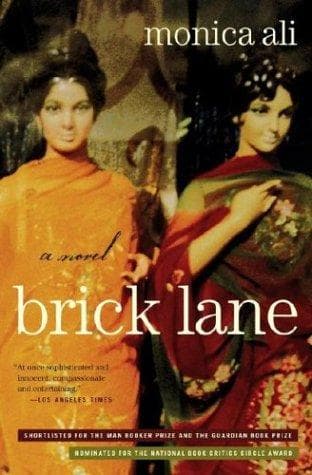
Monica Ali
Follows a Bangladeshi woman newly settled in London, tracing the private disappointments and small hopes of immigrant domestic life much like the stories in this collection.

James Joyce
Fifteen short stories building to sudden moments of recognition in ordinary lives, the same epiphanic structure that gives each story in Interpreter of Maladies its final turn.

Elizabeth Strout, Rosa Perez Perez
Linked stories about a difficult woman in a small Maine town, with the same close attention to unspoken feeling and the quiet ache of everyday relationships.