
The Joy Luck Club
Amy Tan
Tan's first novel braids the stories of four Chinese immigrant mothers and their American daughters, with the same misunderstandings, buried histories and slow reconciliations that make The Bonesetter's Daughter so moving.
Reader-supported: when you buy through links on our site, we may earn an affiliate commission. Learn more
We earn a commission if you buy through these links. Learn more
Find Similar Booksby Amy Tan
Guide by the Books of the Day editors · Updated · How we write our guides
A layered novel of mothers and daughters in which a dementia-stricken mother's written memoir uncovers a haunting past that reshapes her daughter's understanding of their whole relationship.
2 creators reviewed The Bonesetter's Daughter on YouTube between 2016 and 2022, with 1.2K views between them. Their opinions are their own; we picked these reviews, we didn't write them.
The Bonesetter's Daughter is a novel about a daughter and mother whose relationship has been strained for decades. Ruth Young, a ghostwriter in San Francisco, finds her widowed mother LuLing slipping into forgetfulness, just as LuLing begins handing over pages she has written. They are rough, idiosyncratic, and reveal a childhood Ruth knew nothing about.
The book alternates between Ruth's present-day life and LuLing's story, which unfolds in a remote mountain village where ghosts, superstition, and a family curse shape daily life. Ruth has to decide what the pages mean, and her own interpretations become part of the drama. The storytelling leans on folklore, obligation, and the way women pass hard truths to one another through stories rather than speech.
Expect a slow, immersive read with detailed, sensory prose and long passages of memory and digression. It is emotionally intense and at times suspenseful, with a late revelation that rewards patience. Reading it feels like being trusted with someone else's secrets, and the ending asks you to reconsider the story you thought you were following.
The novel treats storytelling as the main way families hand down what cannot be said aloud. LuLing's written pages become a channel for confessions and warnings she could never speak to Ruth directly. The book asks what gets lost when those stories go unread or are read wrongly, and how much of a parent's life a child can truly know.
LuLing writes in a fractured, idiosyncratic English, and Ruth often has to interpret it. Tan uses this gap to show how easily meaning slips across language, generations, and cultures. Ruth's assumptions shape what she thinks the pages say, which turns reading itself into a question of trust and humility.
In the village sections, superstition is not decoration but a working force in people's lives. Curses, spirits, and ancestral obligations shape marriages, families, and fates. Tan presents these beliefs with real seriousness, which makes the rural world feel vivid and also shows how tradition can protect and imprison in equal measure.
LuLing's dementia gives the book its ticking clock. As her memory fades, writing becomes both a race and a gift, the last chance to pass on a version of the past. The novel explores how memory is shaped by love, guilt, and selective forgetting, and why families often wait too long to ask the questions that matter.
Some readers find the structure slow, with long stretches of memory and backstory that delay the main tension. The Ruth sections are often judged less compelling than LuLing's story. The emotional register can tip into melodrama, and the mother-daughter conflict sometimes repeats itself. Others question how Chinese folklore and village life are rendered for an English-speaking audience, and how far an outsider's view captures lived experience. The novel is also a product of its early 2000s moment and reads as more conventionally structured than some later fiction.
Book details and cover from Google Books.
Ready to read The Bonesetter's Daughter?
Get your copy on Amazon, or listen to it on Audible. We earn a commission if you buy through these links.
Amy Tan
Tan's first novel braids the stories of four Chinese immigrant mothers and their American daughters, with the same misunderstandings, buried histories and slow reconciliations that make The Bonesetter's Daughter so moving.
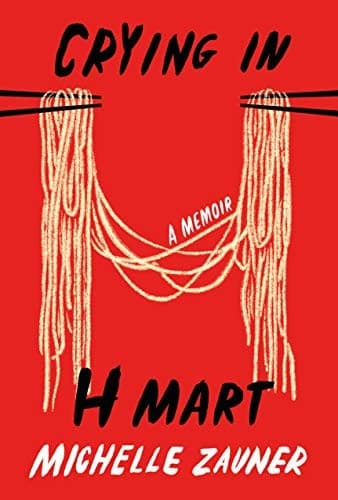
Michelle Zauner
A memoir of a Korean American daughter and her formidable mother, told through food, illness and grief. It shares the novel's mix of friction, love and cultural inheritance.
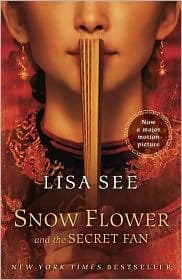
Lisa See
Two girls in nineteenth-century rural China share secrets in a hidden women's script, echoing the novel's theme of written words carrying what cannot be spoken aloud.
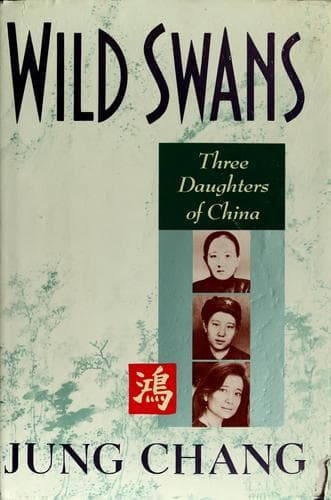
Jung Chang
Three generations of Chinese women across the twentieth century. If LuLing's chapters gripped you, this true family history offers the same sweep of tradition, upheaval and survival.