
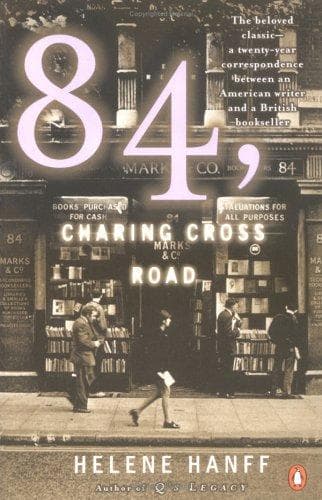
84, Charing Cross Road
Helene Hanff
A real correspondence between a New York writer and a London bookseller, spanning years. Like the Guernsey letters, it builds warm friendships and a love of books entirely on the page.
Reader-supported: when you buy through links on our site, we may earn an affiliate commission. Learn more
We earn a commission if you buy through these links. Learn more
Find Similar Booksby Mary Ann Shaffer, Annie Barrows
Guide by the Books of the Day editors · Updated · How we write our guides
A warm, witty epistolary novel about a London writer who is drawn into the lives of Channel Islanders just after the war, and about what books can mean to people who have lost almost everything.
2 creators reviewed The Guernsey Literary and Potato Peel Pie Society on YouTube between 2017 and 2020, with 4.1K views between them. Their opinions are their own; we picked these reviews, we didn't write them.
The Guernsey Literary and Potato Peel Pie Society is told almost entirely through letters. It opens in 1946, when Juliet Ashton, a London writer who has lost her sense of purpose since the war, begins corresponding with a stranger on Guernsey. That first exchange opens onto a widening circle of islanders, each with a distinct voice, and Juliet's own life slowly reorganizes around their letters.
The letter form is the book's great strength. Because every character has to be known through how they write, the cast comes alive quickly, and the reader gets the pleasure of watching relationships form across the Channel. Humor and grief sit side by side on most pages. The German occupation is always present, but it arrives as memory and sideways reference rather than as scene, which keeps the tone light even when the stories turn sad.
Reading it feels like being let into a close, slightly eccentric circle. It is quick, comforting, and easy to finish in a few sittings. Its real subject is the consolation of books and the way shared stories can rebuild a community, so it works best as a book about reading and kindness rather than a hard look at wartime history.
The novel shows how a community can form from scattered correspondence. Each letter adds a new person, a new habit, or a new grievance, and the reader slowly feels the island as a place made of many small connections. The form makes distance feel intimate, and it shows how people who have never met can come to rely on one another.
For the society's members, reading is not a hobby but a way of getting through hard years and of staying connected to ideas beyond the occupation. The book argues, without preaching, that literature offers comfort and a shared vocabulary for people who have little else in common. Readers who love being surrounded by other people's reading lives will feel this most strongly.
The German occupation shapes every character, yet the book keeps most of its hardship offstage and filters it through recollection. This choice gives the novel its gentleness, but it also means the reader sees the suffering through the warmth of the people who survived it. The effect is affecting rather than harrowing, and it is a deliberate tonal decision.
Since everything is written as correspondence, the authors have to differentiate characters by sentence rhythm, humor, and preoccupations alone. Where this works, the letters feel alive and specific. It is a useful thing to notice as a reader, because the novel shows how much character can be carried by voice alone.
The most common criticism is that the book is sentimental. Its characters are often charming and its resolutions tidy, and readers who want grit may find the wartime material too softened. The occupation is treated mostly through recollection, so it does not give a detailed picture of daily hardship or of the island's collaboration and resistance. Some readers also find the voices blur together, since many correspondents share a similar wry, bookish tone. The novel was completed by Annie Barrows after Mary Ann Shaffer's death, and some readers feel its seams occasionally show.
Book details and cover from Google Books.
Ready to read The Guernsey Literary and Potato Peel Pie Society?
Get your copy on Amazon, or listen to it on Audible. We earn a commission if you buy through these links.
Helene Hanff
A real correspondence between a New York writer and a London bookseller, spanning years. Like the Guernsey letters, it builds warm friendships and a love of books entirely on the page.
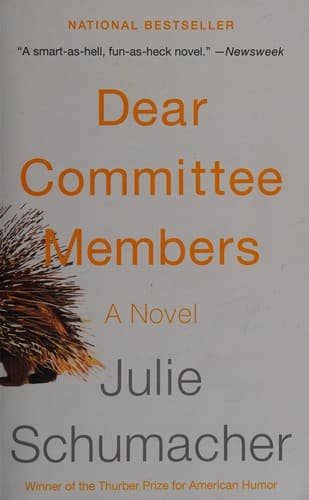
Julie Schumacher
A comic novel told entirely through letters of recommendation written by a frustrated professor. Readers who enjoyed the wit and character voices of the Guernsey letters will find similar pleasure here.

Maria Semple
A sharply funny story assembled from emails, notes and documents rather than straight narration. It shares the Guernsey book's mix of humour, eccentric characters and a gradual unveiling of the story.
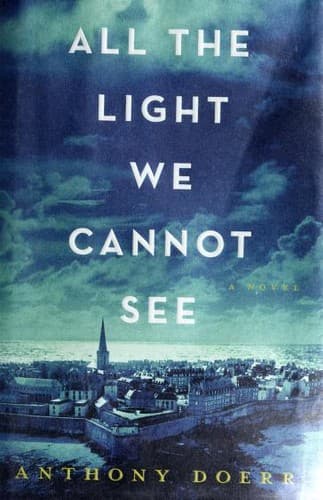
Anthony Doerr
A Second World War novel that follows ordinary people whose lives are shaped by occupation and conflict. Like the Guernsey book, it balances hardship with tenderness and the power of small kindnesses.