
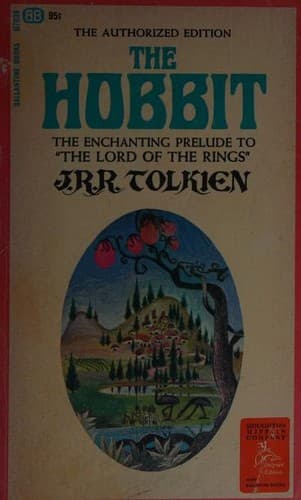
The Hobbit
J.R.R. Tolkien
The lighter, earlier adventure set in the same world, with Bilbo's journey offering the same blend of cosy hobbit humour, dragons, dwarves and a reluctant hero stepping beyond the Shire.
Reader-supported: when you buy through links on our site, we may earn an affiliate commission. Learn more
We earn a commission if you buy through these links. Learn more
Find Similar BooksOn screen: The Lord of the Rings: The Fellowship of the Ring (film, 2001)
Guide by the Books of the Day editors · Updated · How we write our guides
Tolkien's foundation of modern fantasy: a patient, melancholy quest about ordinary people facing a temptation too strong to ignore, rich with history and quiet courage.
2 creators reviewed The Fellowship of the Ring (The Lord of the Rings, Book 1) on YouTube between 2022 and 2025, with 34.9K views between them. Their opinions are their own; we picked these reviews, we didn't write them.
The Fellowship of the Ring is the first volume of J. R. R. Tolkien's epic, published in 1954. It opens in the comfortable Shire, where a hobbit named Frodo Baggins inherits a plain gold ring from his older cousin Bilbo and slowly learns it is far more dangerous than it looks. What follows is a long journey through a world with its own languages, histories, and maps, moving from quiet village life into wilder country and ancient ruins.
Tolkien writes in a deliberate, formal register, with long passages of landscape, genealogy, and song. Much of the pleasure comes from the slow accumulation of place: you feel the distance between one stop and the next, and the sense that the world existed long before the story began. Dialogue is often courtly or humorous, and the narration moves between cozy domestic comedy and moments of real dread. Expect the early chapters to move gently before the danger tightens.
Reading it feels less like following a thriller and more like walking a long road with companions. The tone is warm and melancholic at once, and the book rewards patience with a growing sense of history and weight. It is the first part of a larger story, so it ends on a deliberate pause rather than a neat resolution.
The central figures are small, unassuming hobbits rather than warriors or kings. Their courage shows up as stubbornness, loyalty, and a willingness to keep walking while frightened. The book asks what everyday decency is worth when the stakes are enormous, and it treats simple comforts like food, gardens, and friendship as things worth defending.
The Ring does not simply overpower its bearers. It offers a slow, persuasive pull, and the book shows how even wise and kind characters hesitate to use it. The fear of what it could do shapes almost every decision, making this a study of temptation as much as a story of battle.
Tolkien invested heavily in invented languages, songs, and a deep past so that places feel older than the characters. Ruins, old names, and verses carry memories of lost kingdoms. You sense that events have consequences reaching back centuries, which gives the quest its weight and its elegiac mood.
The title promises a company, and the book is as much about how very different people learn to trust one another as it is about the journey itself. Loyalties are tested and misunderstandings arise, and the bonds formed early on carry much of the story's emotional force.
The early chapters are famously slow, and the book includes several songs and poems that many readers skip. Tom Bombadil, a whimsical figure who seems to sit outside the main story's logic, divides readers. Female characters have limited roles compared with modern expectations, and the cultural framing of good and evil, including some racialized descriptions of enemies, has drawn criticism. The book also ends mid-story, so it is only the first part of a longer narrative.
Book details and cover from Google Books.
Ready to read The Fellowship of the Ring (The Lord of the Rings, Book 1)?
Get your copy on Amazon, or listen to it on Audible. We earn a commission if you buy through these links.
J.R.R. Tolkien
The lighter, earlier adventure set in the same world, with Bilbo's journey offering the same blend of cosy hobbit humour, dragons, dwarves and a reluctant hero stepping beyond the Shire.
Robert Jordan
Openly echoes Fellowship: village youths flee home pursued by dark servants, guided by a mysterious mentor, launching a sprawling epic with deep history and an ancient evil rising.
Terry Brooks
A quest to defeat a Warlock Lord with a small company of humans, elves and dwarves, ideal if you want another traditional journey in the Tolkien mould.
Ursula K. Le Guin
Like Tolkien, Le Guin builds a world where names hold power and old languages matter, told with a spare, mythic voice and a hero who must confront his own shadow.