
Speak
Laurie Halse Anderson
Like The Chocolate War, it follows a teenager isolated by her peers after a single act, showing how school social pressure can crush a student. Its narrator's sharp, wary voice will feel familiar to Cormier's readers.
Reader-supported: when you buy through links on our site, we may earn an affiliate commission. Learn more
We earn a commission if you buy through these links. Learn more
Find Similar BooksGuide by the Books of the Day editors · Updated · How we write our guides
Cormier's 1974 classic about a boy who refuses a school fundraiser and pays dearly for it is a sharp, unsettling look at conformity, cruelty, and institutional power.
2 creators reviewed The Chocolate War on YouTube in 2023, with 4.5K views between them. Their opinions are their own; we picked these reviews, we didn't write them.
The Chocolate War follows Jerry Renault, a freshman at Trinity, a private Catholic school run with rigid discipline. When Jerry refuses to take part in the school's annual chocolate sale, he sets off a chain of events he never planned for. The sale is run by a secret society called the Vigils, whose members assign tasks to classmates and enjoy the power they hold. Jerry's defiance draws the attention of the Vigils' leader, Archie Costello, and of Brother Leon, the faculty figure who keeps the fundraiser and the school's order running.
Cormier writes in a spare, direct style, and the book moves between viewpoints: Jerry, Archie, the Vigils, and the adults who look away. Short sections and the Vigils' written assignments give the story a jumpy, pressured feel, as if you are watching a machine tighten. Some sections read like orders or notices, and that flatness is part of the point. The book is bleak and offers little comfort or tidy moral resolution.
Reading it is less like settling into a comfortable story and more like being pulled into a tense, argumentative puzzle. You feel the pressure building long before anything breaks, and you are asked to notice how ordinary people go along with cruelty. It is short enough to finish in a few sittings, but it stays with you, which is why it has remained a staple of school reading lists.
Most students go along with the sale because it is easier than standing out, and the book asks why. The fear of being singled out is as powerful as any punishment. Cormier shows how a group can make refusal feel dangerous long before anyone is physically hurt. Readers will recognize this pressure from classrooms, teams, and workplaces.
The Vigils operate outside official authority yet are tolerated by it. Their assignments look trivial at first, then reveal how a little control, handed to the right people, can be turned against anyone. Cormier makes the mechanics of the group the subject, not just its violence, which is why the book feels uncomfortably plausible.
Brother Leon and the other faculty are not cartoon villains. Their interest in the school's image and its fundraising shapes what they see and what they ignore. The book suggests that institutions often protect themselves before the people inside them, and that silence can be a choice rather than an accident.
Jerry's refusal is small and personal rather than a grand political act, and that is what makes it hard to watch. The novel does not ask whether he is right in the abstract. It asks what standing alone actually costs a young teenager who has no allies and no clear way out.
Short sections, shifting viewpoints, and terse assignments make the book feel tight and relentless. The form reinforces the theme: like Jerry, the reader has little room to breathe, and the story keeps closing in rather than opening up.
The book's bleakness is its strength for some readers and a dealbreaker for others, and its ending offers little consolation. Its violence can feel abrupt and heavy. Some readers find the stylized structure, with its assignment lists and shifting viewpoints, harder to follow than conventional narration. Its focus is narrow, a single school in one time and place, so the wider social forces it touches are sketched rather than explored. Some of its attitudes and dialogue now read as dated.
Book details and cover from Google Books.
Ready to read The Chocolate War?
Get your copy on Amazon, or listen to it on Audible. We earn a commission if you buy through these links.
Laurie Halse Anderson
Like The Chocolate War, it follows a teenager isolated by her peers after a single act, showing how school social pressure can crush a student. Its narrator's sharp, wary voice will feel familiar to Cormier's readers.
S. E. Hinton, Christopher Sergel
Hinton's novel shows rival groups of teenagers and the loyalty and violence that bind them. Like Cormier's Trinity High, it presents school-age cruelty without sentimentality and with a clear eye on consequences.
John Green
Set at a boarding school with its own secret codes and rivalries, this novel explores teenage cliques, pranks and a shocking turn. Fans of Cormier's school setting and its undercurrent of danger will recognise the atmosphere.
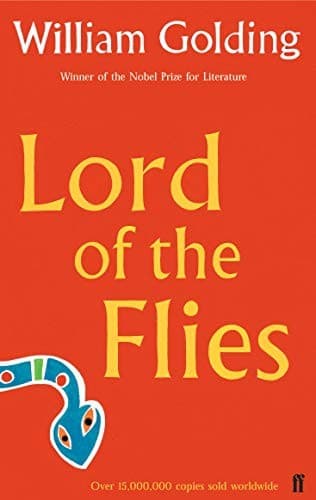
William Golding
Like The Chocolate War, it shows how a group of young people can turn on one another once a bully gains control. Its portrait of mob thinking and the cost of standing apart will resonate with Cormier's fans.