
The $100 Startup
Chris Guillebeau
Like Ferriss's muse chapters, it profiles ordinary people who launched small, profitable businesses with little money, giving step-by-step guidance for turning a skill into freedom-funding income.
Reader-supported: when you buy through links on our site, we may earn an affiliate commission. Learn more
We earn a commission if you buy through these links. Learn more
Find Similar BooksGuide by the Books of the Day editors · Updated · How we write our guides
A fast, opinionated playbook for shrinking your work week through outsourcing, systems, and deliberate cuts, worth reading for its mindset even where its tactics don't fit you.
2 creators reviewed The 4-hour Workweek on YouTube between 2015 and 2025, with 3.1M views between them. Their opinions are their own; we picked these reviews, we didn't write them.
The 4-Hour Workweek is a productivity book aimed less at getting more done than at questioning why you are doing so much of it in the first place. Ferriss argues that the standard path of climbing a career ladder and saving for a distant retirement is one option among many, and he lays out a method for building a business and a schedule that let you take time off now. The core toolkit includes ways to cut low-value tasks, hand routine work to outside help, and structure income so it depends less on your hours.
The style is punchy, confident, and full of case studies, personal experiments, and reader stories. Ferriss writes in a second-person, coaching voice, with plenty of tactical scripts and examples, and he is comfortable making bold claims. Chapters move quickly, and many sections read like a field guide rather than an argument built step by step.
Reading it feels like being pitched by an energetic friend who has tried everything and wants you to try it too. It is motivating and occasionally provocative, and some ideas, like delegating tasks to remote assistants or testing a minimum set of effective actions, stick after you close the book. Expect to filter the advice: the examples lean toward online and location-independent work, and not every recommendation is equally backed by evidence.
Ferriss leans heavily on the 80/20 idea that a small share of tasks, clients, or activities produces most of the results. The practical lesson is to identify which inputs actually matter and to drop or shrink the rest. The book pushes readers to be far more ruthless about what they agree to do than most office culture allows.
A large part of the book makes the case for handing email triage, research, scheduling, and other repeatable chores to contractors, often overseas and paid by the hour. The argument is that many tasks you do yourself do not require your specific skills. The book gives scripts and examples for finding and managing these helpers.
Ferriss favors products, services, and automated sales systems that generate money without a proportional amount of your time. This separates earnings from effort in a way a salary does not. The ideas are most applicable to people who can sell something online or work independently.
Rather than postponing all enjoyment until a traditional retirement, Ferriss suggests spreading time off across your working life through regular breaks and extended trips. This reframing of work and leisure as something to design, not endure, is the book's emotional core and the source of its popular appeal.
Critics point out that many case studies are anecdotal and selected for drama, and that the income and freedom results described are hard to reproduce. Some sections, particularly on diet and physical health, make claims that go beyond the evidence. The book also assumes a financial cushion and internet-based work that many readers lack, and its tone can read as self-promotional. Its core ideas remain useful, but treat specific numbers and promises as the author's experience rather than a reliable template.
Book details and cover from Google Books.
Ready to read The 4-hour Workweek?
Get your copy on Amazon, or listen to it on Audible. We earn a commission if you buy through these links.
Chris Guillebeau
Like Ferriss's muse chapters, it profiles ordinary people who launched small, profitable businesses with little money, giving step-by-step guidance for turning a skill into freedom-funding income.
Eric Ries
If you liked Ferriss's advice to test product ideas cheaply before committing, Ries expands that into a full method of rapid experiments, minimum viable products and learning from real customers.
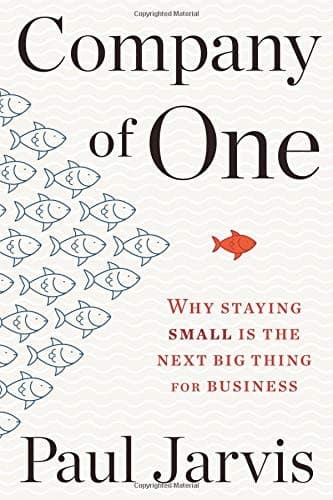
Paul Jarvis
Shares Ferriss's skepticism of growth for its own sake, arguing for staying small, automated and profitable so your business serves your life instead of consuming it.
Greg McKeown
Takes the 4-Hour Workweek's elimination principle and makes it a philosophy: ruthlessly cutting nonessential commitments so your energy goes to the few things that matter most.