
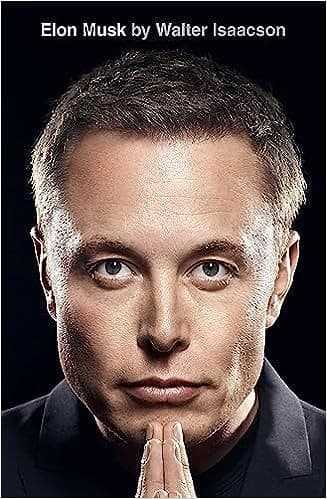
Elon Musk
Walter Isaacson
Isaacson applies the same fly-on-the-wall method to another demanding, polarising innovator, so fans of his Jobs portrait will recognise the candid tone and focus on how temperament drives breakthroughs.
Reader-supported: when you buy through links on our site, we may earn an affiliate commission. Learn more
We earn a commission if you buy through these links. Learn more
Find Similar BooksA candid, fast-moving portrait of Apple's co-founder, built on long access to Jobs, that shows how his temper, taste, and stubbornness shaped the products you use every day.
Walter Isaacson, a journalist and biographer who had previously written about Benjamin Franklin and Albert Einstein, was given extensive access to Steve Jobs in the last years of his life. The result is a chronological narrative that follows Jobs from his adoption and youth in California through the founding of Apple, his exile after the 1985 boardroom battle, the NeXT and Pixar years, his return to Apple, and the run of products that followed: the iMac, the iPod, the iPhone, and the iPad. Isaacson also interviewed more than a hundred people around Jobs, so the book is as much a chorus of colleagues, rivals, and family members as it is Jobs's own account.
The style is brisk and scene-driven rather than analytical. Isaacson lingers on meetings, arguments, and product launches, letting the reader watch Jobs demand the impossible from engineers and then sometimes get it. The tone is admiring but not uncritical; the cruelty, credit-taking, and emotional volatility are presented in detail alongside the vision.
Reading it feels like listening to a long, well-sourced conversation with someone who was rarely dull and often difficult. It is a book about a personality as much as about business, and it rewards readers who want to understand how an obsessive, controlling person can also be a serious judge of design and an effective storyteller.
The forced departure from Apple in 1985 is treated as the pivot of his life. The NeXT computer company and his purchase of Pixar, both initially disappointing commercially, taught him patience, supplied the software and animation expertise he later used, and made his eventual return to Apple more than a rescue story.
Jobs's insistence that products be stripped down, with fewer buttons, hidden complexity, and tight integration of hardware and software, is presented as a deliberate philosophy rather than a styling preference. Isaacson shows how this drove decisions that rivals often considered reckless or unnecessary.
The same need to control every detail that produced polished products also produced public humiliations of colleagues, credit disputes, and long-running feuds. The book does not separate the two; it asks readers to judge whether the results justified the human cost.
The iTunes Store, the App Store, and the device lineup are shown as parts of one strategy rather than separate successes. Isaacson traces how Jobs saw the connections between music, phones, tablets, and publishing before most competitors did.
Jobs's pancreatic cancer diagnosis and the years of treatment run through the later chapters. The book examines how his awareness of limited time sharpened his priorities and also how his secrecy about his health affected Apple and the people around him.
The biography rests heavily on Jobs's cooperation and recollections, which means his version of events is given considerable weight, even though Isaacson interviewed many others. Critics have pointed out that the book is more a narrative than an analysis, and that it says less about the engineers, designers, and factory workers whose labor made the products possible. The family portions and Jobs's personal relationships are covered unevenly. Written and published soon after his death, it has not been updated to reflect later Apple history or subsequent scholarship.
Reviews from readers on YouTube. Their opinions are their own.
Book details and cover from Google Books.
Ready to read Steve Jobs?
Get your copy on Amazon, or listen to it on Audible. We earn a commission if you buy through these links.
Walter Isaacson
Isaacson applies the same fly-on-the-wall method to another demanding, polarising innovator, so fans of his Jobs portrait will recognise the candid tone and focus on how temperament drives breakthroughs.
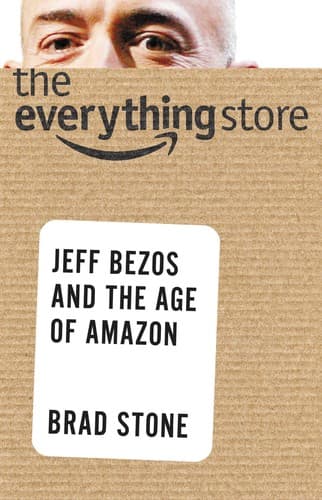
Brad Stone, Brad Stone
A sharp, reported account of Jeff Bezos and Amazon that, like Steve Jobs, shows a relentless founder whose exacting standards and hard edges built a company that reshaped how we live.
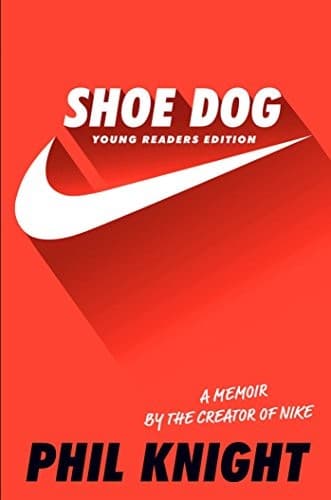
Phil Knight
Nike's founder tells his own story of scrappy early years and near-failures, offering the founder's-eye drama readers enjoyed in Jobs's garage-to-empire arc, with a warmer, more confessional voice.
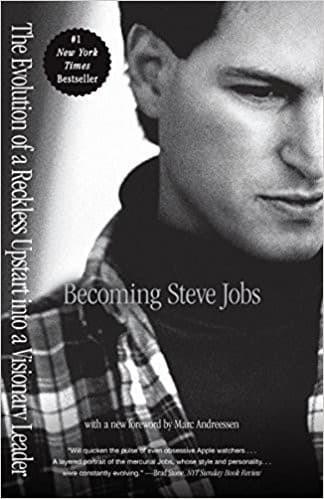
Brent Schlender, Rick Tetzeli
Written with longtime access and help from Apple insiders, it focuses on how Jobs matured after his exile, a useful complement to Isaacson for readers wanting a second perspective.