
We earn a commission if you buy through these links. Learn more
Elon Musk
Guide by the Books of the Day editors · Updated · How we write our guides
Walter Isaacson's portrait of Elon Musk is worth reading for its detailed, close-up view of how Musk makes decisions, runs his companies, and handles the people around him, flaws included.
What Creators Say About Elon Musk
2 creators reviewed Elon Musk on YouTube in 2023, with 1.6M views between them. Their opinions are their own; we picked these reviews, we didn't write them.
What It's About
Walter Isaacson, who previously wrote long biographies of Steve Jobs, Benjamin Franklin, and Albert Einstein, spent extended time with Musk and interviewed his family, former partners, engineers, executives, rivals, and critics. The result is a mostly chronological account that starts with Musk's childhood in South Africa and follows him through his early software companies, the merger that became PayPal, the building of SpaceX and Tesla, and the 2022 purchase of Twitter.
Isaacson writes in plain narrative prose. He moves between boardroom confrontations, launch-pad crises, and family history, and he explains technical problems only as far as they affect decisions. You will not learn rocket propulsion or battery chemistry in depth. What you will learn is how deadlines, money, and personal pressure shaped each outcome. The chapters on near-failures at SpaceX and Tesla's production struggles have a strong narrative pull.
Reading the book feels like being in the room with someone who is often admirable and often hard to work for. Isaacson does not deliver a single verdict. He lays out contradictions and lets you weigh them. It is closer to a character study than a business analysis, and readers tend to finish with a clearer sense of why people both followed Musk and left him.
Read this if you…
- want a detailed, human picture of how Musk's companies were actually built and nearly lost
- are curious how one founder's management style works in practice, for better and worse
- already follow Musk's news and want the background behind the headlines
Skip it if you…
- want a technical guide to rockets, batteries, or software engineering
- are looking for an admiring story that avoids Musk's conflicts and harsh treatment of people
Key Ideas
- 1
First-principles reasoning in practice
Musk often rejects industry convention and rebuilds problems from basic physics and raw material costs. The book shows this habit driving choices in rockets and batteries, and it also shows where the approach helped and where it led to costly detours.
- 2
Demanding management and its human cost
Musk sets extreme timelines and pushes teams hard, sometimes to the point of public humiliation. Isaacson traces how this intensity produced results at moments of crisis, and how it drove away talented people and strained relationships over the years.
- 3
One vision spanning several industries
Space travel, electric vehicles, energy storage, brain-computer interfaces, and artificial intelligence can look like unrelated bets. The book argues that Musk sees them as parts of one long-term project, and it helps you judge how convincing that link is.
- 4
Family history and early formation
The early chapters on Musk's childhood, his difficult relationship with his father, and his family's business ties help explain his drive and his distrust of institutions. Isaacson presents these details without fully settling their meaning.
- 5
The gap between public image and conduct
Musk's use of social media, his public statements, and his purchase of Twitter receive sustained attention. The book looks at how his online persona has affected his companies and his reputation, and it leaves readers to decide how much weight to give that conflict.
Limitations
Isaacson had substantial access to Musk, and critics argue that Musk's own account shaped parts of the story, even though Isaacson also interviewed many people who disagreed with him. Some readers find the narrative too focused on drama and personality and too thin on business strategy, finance, and engineering trade-offs. The book's coverage stops at its 2023 publication, so later developments in Twitter, now X, and in Musk's political activity are missing or only partly addressed.
Questions Readers Ask
- Is this book worth reading if I already know Musk from the news?
- Yes, if you want the background behind the headlines. The book fills in childhood, early business ventures, and the decisions that led to near-collapses at SpaceX and Tesla. Much of the material will be new even to readers who follow him closely, though anyone seeking an analysis of events after 2023 will need other sources.
- How does it compare to Isaacson's Steve Jobs biography?
- Both books use Isaacson's method of heavy interviewing and close observation of a difficult founder. The Musk book is more scattered and more openly tense, because its subject is still active and his story is still unfolding. If you liked the Jobs book, expect a similar style but a less settled ending.
- Is the book still relevant given how fast things change?
- Yes, as a portrait of Musk's working style and early history, which changes less than his public role. Its account of the Twitter purchase and later events is incomplete, so pair it with current reporting if you need the latest developments.
- Published
- 2023
- ISBN
- 9781398536418
- Difficulty
- beginner
- Category
- History
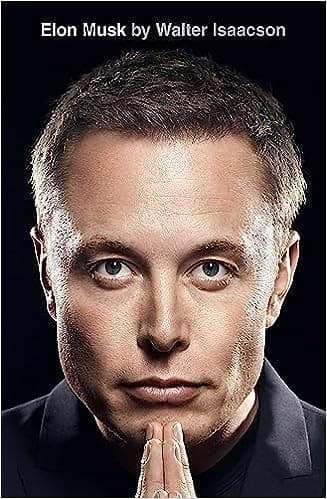
Book details and cover from Google Books.
Ready to read Elon Musk?
Get your copy on Amazon, or listen to it on Audible. We earn a commission if you buy through these links.