
We earn a commission if you buy through these links. Learn more
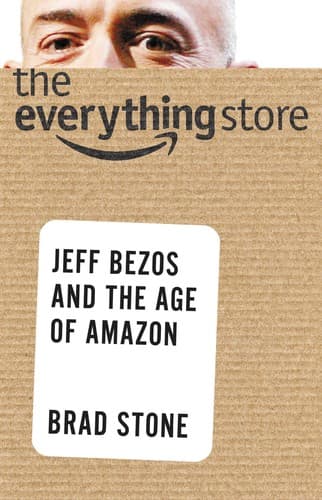
The Everything Store
Guide by the Books of the Day editors · Updated · How we write our guides
A readable, well-sourced narrative of how Jeff Bezos built Amazon from an online bookstore into a retail, cloud, and hardware giant, with the human drama behind the strategy.
What Creators Say About The Everything Store
2 creators reviewed The Everything Store on YouTube between 2015 and 2023, with 5.1K views between them. Their opinions are their own; we picked these reviews, we didn't write them.
What It's About
The Everything Store is a narrative history of Amazon from its founding in 1994 by Jeff Bezos through the early 2010s. Brad Stone, a longtime technology reporter, follows the company from an online bookseller run out of a Seattle garage to a sprawling retailer, a major cloud computing business, and a hardware maker. The book is built from interviews with former employees, executives, and rivals, along with public records and press coverage. Amazon itself did not cooperate with the project, so the portrait comes from people who worked around the company and watched it closely.
The approach is chronological and character-driven. Stone spends as much time on the people around Bezos as on Bezos himself, which gives the book a texture of late nights, arguments over strategy, and bets that looked foolish until they didn't. Readers get a clear sense of how the company's habits took shape: an almost stubborn focus on customers, a willingness to accept years of thin profits in pursuit of long-term scale, and a demanding internal culture that drew both loyalty and resentment.
Reading it feels like following a long, tense business story whose outcome is partly known in advance. The writing is brisk and rarely dull, though the author's sympathies are mixed: admiring of the ambition, skeptical of the costs to workers, competitors, and the people who got caught in the company's expansion. Expect a book about a company and its founder rather than a manual for running a business.
Read this if you…
- are curious how a modern tech giant was built step by step
- want business history with human stories and real tension
- use Amazon every day and wonder how it got so large
Skip it if you…
- want an authorized biography or inside access to Bezos himself
- are looking for a practical playbook on management or e-commerce strategy
Key Ideas
- 1
Long-term bets over short-term profits
A recurring pattern in the book is Amazon choosing to reinvest revenue and tolerate weak earnings to build scale and customer loyalty. Stone shows how this strategy frustrated investors for years and how it looked less like stubbornness once the payoff arrived. The lesson is less about any single decision than about a founder willing to be misunderstood for a long time.
- 2
Customer obsession as an operating discipline
The book shows how Amazon turned a vague value into concrete routines, including metrics, written memos, and a habit of starting from what the customer wants. Stone traces how this focus shaped product decisions, pricing, and the company's relentless push for convenience. It makes the case that the slogan became a working method, for better and for worse.
- 3
Cloud computing as an unplanned business
One of the most striking threads is how Amazon's internal computing infrastructure grew into Amazon Web Services, a business that sells capacity to other companies. Stone describes how a practical need inside the company became a new industry, and how the bet surprised even people close to it. It is a good case study in how big companies find new revenue from what they already built.
- 4
A demanding culture with real costs
The book does not treat Amazon's intensity as a simple success story. Stone describes high performance expectations, blunt internal feedback, and the strain these placed on employees and managers. Readers who care about how work is organized at large companies will find the tradeoffs here as important as the business results.
Limitations
Because Amazon did not cooperate, the book relies on sources who may have their own agendas, and Stone cannot confirm every internal motive. The story ends around 2013, so it misses later developments such as the Whole Foods acquisition, the pandemic-era surge, and the growing antitrust and labor debates. Some critics find the tone too admiring of Bezos's ambition, while others find it too critical. In places the level of business and product detail can feel dense.
Questions Readers Ask
- Is The Everything Store still relevant today?
- The core history holds up well, since it explains the habits and bets that made Amazon what it is. But the company has grown far larger since publication, and the book does not cover its later acquisitions, antitrust scrutiny, or labor controversies. Stone's follow-up, Amazon Unbound, picks up the story from there and is a useful companion.
- How does it compare to other books about Amazon?
- Stone's book is a broad, chronological narrative covering the company's founding through its expansion into cloud computing and hardware. Many other books on Amazon focus on a narrower theme such as its culture, its workers, or its management methods. If you want the full arc of the company's history, this is the stronger starting point.
- Published
- 2013
- ISBN
- 9781619690295
- Difficulty
- beginner
- Category
- Tech
Book details and cover from Google Books.
Ready to read The Everything Store?
Get your copy on Amazon, or listen to it on Audible. We earn a commission if you buy through these links.