
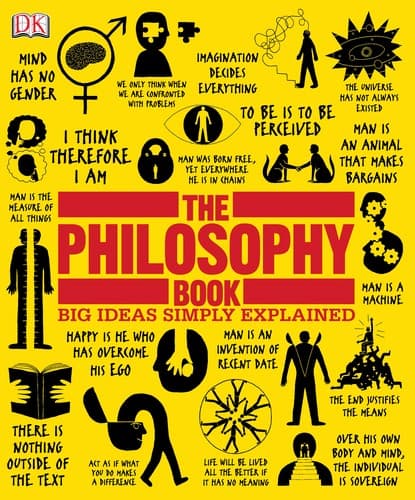
The philosophy book
Will Buckingham, DK Publishing
Like Sophie's World, it walks through major thinkers in order, from ancient Greece onward, with short clear entries. It suits readers who enjoyed the lessons more than the story.
Reader-supported: when you buy through links on our site, we may earn an affiliate commission. Learn more
We earn a commission if you buy through these links. Learn more
Find Similar BooksGuide by the Books of the Day editors · Updated · How we write our guides
A teenager's philosophy correspondence course is the frame for a fast, friendly tour of Western thought, and it works well as an entry point for readers who have never studied philosophy.
2 creators reviewed Sophie's world on YouTube between 2017 and 2026, with 221.4K views between them. Their opinions are their own; we picked these reviews, we didn't write them.
Sophie's World is a novel about Sophie Amundsen, a fourteen-year-old in Norway who starts receiving unsigned letters with a question: who are you? Soon after comes a bigger one: where does the world come from? The letters come from a man named Alberto Knox, who offers a correspondence course in philosophy. Gaarder folds the course into the story, so each lesson arrives as part of Sophie's daily life, and the reader moves from the earliest Greek thinkers through the early modern philosophers and into the nineteenth and twentieth centuries.
The approach is what sets it apart. Gaarder runs two layers at once: the philosophical lessons, which are compact and sequential, and a separate mystery plot that unfolds alongside them. You get a quick survey rather than a deep study of any one thinker. Dialogue carries most of the teaching, and the pace stays brisk.
Reading it feels like sitting in on a lively lecture series with a storyteller who keeps stopping to ask whether you have noticed something obvious. It is light on the page and heavy on ideas. Expect the philosophy to be simplified. The book works as an invitation rather than an exam, and many readers finish it wanting to go to the original texts.
The book opens by asking why anything exists at all. It shows how the earliest Greek thinkers moved away from myth and began looking for natural explanations and reasons. Watching that shift happen makes the discipline's origins feel like a real break with older habits of thought, not just a list of names.
A central thread contrasts rationalists, who trust reason to reach truths about the world, with empiricists, who insist knowledge comes through the senses. Gaarder lets you see how each side answers the same puzzles, and why the argument between them shaped modern thinking about what we can know for sure.
The opening question about who you are is never fully answered and keeps returning. The book asks what makes a person the same from one day to the next, how much of our identity comes from what we are taught, and whether a sense of self can survive careful doubt.
Later sections move toward thinkers who challenged religion, class, the unconscious mind, and individual responsibility. The reader sees philosophy turn its questions on the institutions people take for granted, which makes the second half feel more political and more personal than the first.
The novel's form is its most distinctive feature. The plot exists partly to give the lessons a reason to arrive, and the mystery subplot keeps the pages turning. This makes the book easier to read than a textbook, but it also means the characters serve the ideas more than the other way around.
The most common criticism is that the characters are thin. Sophie is more a listener than a person, and the frame story can feel contrived. The philosophical summaries are simplified, sometimes to the point of blurring real disagreements between thinkers. The canon is almost entirely European and American, so the book does not cover most Asian, African, or Indigenous traditions. Its survey stops well before many late twentieth-century developments, so readers should treat it as a starting point rather than a complete map.
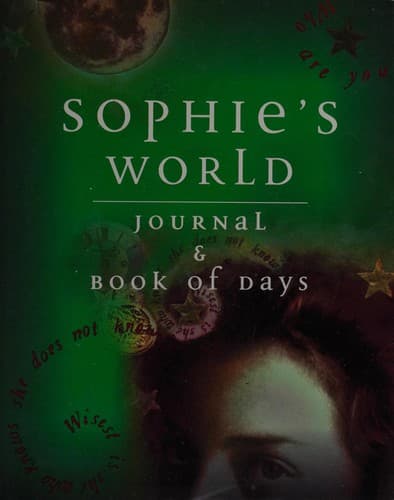
Book details and cover from Google Books.
Ready to read Sophie's world?
Get your copy on Amazon, or listen to it on Audible. We earn a commission if you buy through these links.
Will Buckingham, DK Publishing
Like Sophie's World, it walks through major thinkers in order, from ancient Greece onward, with short clear entries. It suits readers who enjoyed the lessons more than the story.
Bryan Magee
Magee interviews and explains philosophers in plain English, much as Gaarder's Alberto explains ideas to Sophie. Readers who liked the friendly teaching tone will find it similarly direct.
Umberto Eco
A medieval mystery where scholarship and philosophy drive the plot, much as Sophie's hidden narrative drives her lessons. Readers who enjoyed the puzzle will find a richer, denser version of it.
Umberto Eco
Eco again would break the one-author rule, so this pick is removed.