
We earn a commission if you buy through these links. Learn more
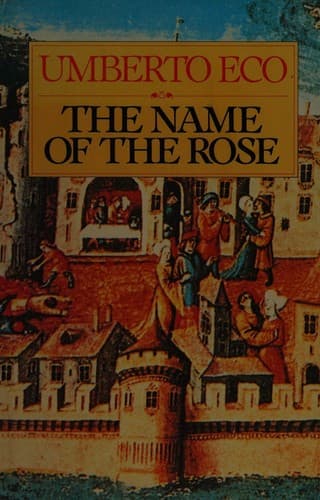
The Name of the Rose (Helen and Kurt Wolff Books)
by Umberto Eco
On screen: The Name of the Rose (film, 1986)
Guide by the Books of the Day editors · Updated · How we write our guides
A Franciscan investigator, a young novice narrator, and a labyrinthine monastic library make this a witty, learned medieval mystery that rewards patient readers with ideas as much as plot.
What Creators Say About The Name of the Rose (Helen and Kurt Wolff Books)
2 creators reviewed The Name of the Rose (Helen and Kurt Wolff Books) on YouTube between 2018 and 2022, with 15.2K views between them. Their opinions are their own; we picked these reviews, we didn't write them.
What It's About
The Name of the Rose is a 1980 historical mystery set in an isolated Benedictine abbey in northern Italy in 1327, narrated years later by a monk who as a young novice accompanied an English Franciscan friar named William of Baskerville. The two arrive at a tense gathering of theologians and church officials, just as a series of deaths begins among the monks. The story is built as a detective puzzle, but it draws heavily on the atmosphere and intellectual debates of its period, from disputes over apostolic poverty to the workings of the Inquisition.
Eco writes in a deliberately old-fashioned, erudite voice, full of Latin fragments, scholarly asides, and long descriptions of buildings, manuscripts, and rituals. The pace is uneven by modern standards. Some chapters move quickly through interrogations and chases, while others pause for theological argument or a careful reading of a text. The novel also plays with the idea of the detective story itself, using the logic of clues and reasoning to examine how readers and scholars interpret signs.
Reading it feels less like consuming a thriller and more like walking through a richly furnished, slightly dangerous building. You are invited to slow down, check the details, and enjoy the playfulness of the prose. The payoff is a story that is both a satisfying puzzle and a reflection on knowledge, authority, and the risks of reading too much into things.
Read this if you…
- enjoy historical mysteries with a strong sense of place and period detail
- are curious about medieval intellectual history and church politics
- like puzzles that reward close reading and don't mind a slow, digressive pace
Skip it if you…
- want a fast-moving thriller with short chapters and quick resolutions
- find long Latin passages, theological argument, or academic tangents tiring
Key Ideas
- 1
A mystery driven by reasoning and interpretation
William solves the deaths through close observation and inference, much as a scholar reads a text. The book makes the act of interpreting clues feel like the central activity, so the investigation is as much about how we read signs as about who is responsible.
- 2
The danger of forbidden knowledge
The abbey's library is a place of secrecy and restricted access, and the novel explores what happens when a community decides some books are too dangerous to be read. It asks whether controlling knowledge protects people or simply breeds fear and suspicion.
- 3
Church power and the question of poverty
Much of the novel's tension comes from real medieval disputes about whether Christ and his apostles owned anything, and how the papacy should treat those who argue otherwise. These debates give the plot political stakes beyond the murders.
- 4
Ambiguity, humor, and the limits of certainty
Eco mixes comedy, learned digression, and serious themes, and he often leaves meaning open. Readers who want clear answers may find this frustrating, while those who enjoy ambiguity will find it one of the book's most rewarding features.
Limitations
The book's pace and density are its most common criticisms. Long philosophical and theological discussions can stall the plot, and the many Latin phrases and scholarly references may feel like homework to readers without a classical or medieval background. The novel is also heavily shaped by its era: some of its portrayals of medieval life, gender, and religious violence reflect the assumptions of its time and the author's own viewpoint. Readers looking for a deep account of the historical period should treat it as a novel rather than a textbook.
Questions Readers Ask
- Is The Name of the Rose hard to read?
- The plot is a mystery and moves forward, but the prose is dense, with Latin phrases, learned digressions, and long descriptive passages. Most patient adult readers can get through it, though some find the first hundred pages slow. Reading with an edition that includes notes or a glossary can help.
- Do I need to know medieval history or philosophy first?
- No, though some background helps. The novel explains its key debates within the story, and many readers enjoy looking up figures and disputes afterward. Familiarity with medieval religious history adds depth, but the core mystery is accessible without it.
- How does it compare to Sherlock Holmes stories?
- Both feature a brilliant investigator who reasons from small details. Eco's book is much longer, more philosophical, and more concerned with its setting and ideas than with quick solutions. Readers who enjoy Holmes for the deduction may enjoy it, but expect a slower, more literary experience.
- Published
- 1983
- ISBN
- 9780156001311
- Difficulty
- intermediate
Book details and cover from Google Books.
Ready to read The Name of the Rose (Helen and Kurt Wolff Books)?
Get your copy on Amazon, or listen to it on Audible. We earn a commission if you buy through these links.