
We earn a commission if you buy through these links. Learn more
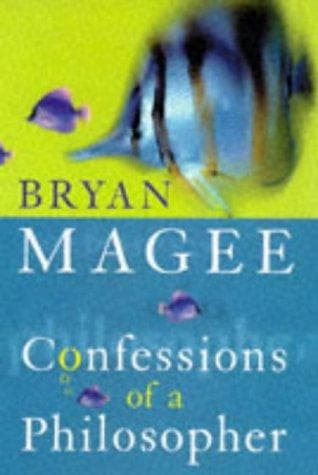
Confessions of a philosopher
by Bryan Magee
A candid intellectual memoir from a broadcaster and philosopher who moved from a working-class childhood into academic philosophy, television and Parliament, and who reflects honestly on what that path cost and gave him.
What It's About
Confessions of a Philosopher (1997) is Bryan Magee's account of his own intellectual life. It is less a tidy chronicle than a candid, wandering memoir organised around the questions that drove him: what makes an idea worth taking seriously, and how a person can live with philosophical doubt. He traces his route from modest beginnings to university study, then into academic philosophy and the wider world of ideas.
Much of the book's value lies in its portraits of the thinkers he knew and argued with, especially Karl Popper, and in its frank account of the tension between academic philosophy and public life. Magee writes partly as a broadcaster and writer, so he cares about clarity and about whether a question matters to ordinary people, not only about technical argument.
Reading it feels like sitting across from a talkative, opinionated older man who is willing to admit his mistakes. The pace is conversational, some sections lean heavily on anecdote, and the prose is plain. It works best as a companion to Magee's thinking and his era rather than as a manual of philosophy itself.
Read this if you…
- want an intellectual memoir rather than a textbook
- are curious how a working-class childhood led into university philosophy and public life
- enjoy vivid portraits of twentieth-century thinkers and the arguments they had
Skip it if you…
- want a systematic introduction to philosophy; try Magee's own The Great Philosophers or Bertrand Russell's History of Western Philosophy instead
- are mainly interested in detailed postwar British politics or in the technical debates of professional philosophy
Key Ideas
- 1
Philosophy as a question you live with
Magee treats philosophy less as a closed body of doctrine and more as a set of unsettling questions about meaning, knowledge and how to live. The memoir shows how those questions shaped his choices about work, relationships and public life, and why he found them hard to put down.
- 2
Popper and the value of testing ideas
Karl Popper's insistence that claims must be exposed to possible refutation runs through the book as a standard for judging thought. Magee uses it to measure both his own arguments and the grander theories of others, which gives the memoir a consistent critical spine.
- 3
Clarity as a responsibility of thinkers
Magee's work in broadcasting left him convinced that difficult ideas can and should be stated plainly. He presents this as an ethical habit, not a compromise, arguing that obscure writing often hides weak thinking from its author as well as its readers.
- 4
The strain between academic and public life
The book is candid about the pull between scholarly specialisation and engagement with a wider audience. Magee does not present either path as obviously superior, and his reflections on the costs of each are among the most useful parts for anyone weighing a similar choice.
- 5
Self-examination as the book's method
Magee repeatedly turns his critical tools on himself, admitting errors of judgement and shifting views. This willingness to confess, rather than polish a legacy, is what gives the title its double meaning and makes the memoir feel more honest than most intellectual autobiographies.
Limitations
The memoir is shaped by its author's point of view and can read as self-regarding in places, with some episodes told more to justify Magee than to inform the reader. Its coverage of politics and broadcasting reflects a particular era and some references will feel dated to younger readers. The pacing is uneven, and readers wanting rigorous philosophical argument will find it light. Its value depends on enjoying Magee's personality as much as his ideas.
Questions Readers Ask
- Do I need to know philosophy to enjoy Confessions of a Philosopher?
- No. The book is written in plain, conversational English and is mostly about a life rather than a set of arguments. Some philosophers and their ideas are mentioned, and a basic familiarity helps, but Magee explains what matters as he goes. Readers with no background will still follow the story and the central questions.
- How does it compare with Magee's The Great Philosophers?
- The Great Philosophers is a guided tour of major thinkers, built from Magee's broadcast conversations, and it works as an introduction to the history of ideas. Confessions is personal rather than expository. If you want to learn philosophy, start with the earlier book. If you want to know what it felt like to live a philosophical life, this is the better choice.
- Published
- 1997
- ISBN
- 9780297819592
- Difficulty
- beginner
- Category
- Biographies
Book details and cover from Google Books.
Ready to read Confessions of a philosopher?
Get your copy on Amazon, or listen to it on Audible. We earn a commission if you buy through these links.