
The Hunger Games
Suzanne Collins
Like Red Rising, it follows a young person forced into a brutal competition by a rigid, unfair society, with a rebellion slowly catching fire around them. The pacing and the sense of injustice will feel familiar.
Reader-supported: when you buy through links on our site, we may earn an affiliate commission. Learn more
We earn a commission if you buy through these links. Learn more
Find Similar Booksby Pierce Brown
Guide by the Books of the Day editors · Updated · How we write our guides
Red Rising is a fast, brutal class-war thriller that turns a Mars miner's rebellion into a gripping espionage story inside a rigid color-coded society.
2 creators reviewed Red Rising on YouTube in 2025, with 460.2K views between them. Their opinions are their own; we picked these reviews, we didn't write them.
Red Rising, published in 2014 and the first book in a series, opens on Mars, where Darrow, a young miner in the lowest caste, works beneath the surface believing his people are building a habitable world for those above. Society is sorted by color, and the gap between castes is enforced through law, propaganda, and violence. Brown writes mostly in close third person from Darrow's point of view, which keeps the story tight and emotionally direct.
The book's engine is plot and momentum. Chapters are short and often end on a hook, and the middle section is built around a brutal competitive environment where Darrow's hidden identity is tested against people who are supposed to be his social superiors. The prose is spare and punchy rather than literary, favoring action, sharp banter, and quick emotional beats over long description. Violence is frequent and often graphic, and the book does not soften it.
Reading it feels like watching a historical epic filtered through a revenge story and a video game. Readers who enjoy the classical Roman and Greek references Brown uses in names and institutions will find extra texture. Readers who want subtle worldbuilding or restrained prose may find it heavy-handed. It rewards anyone willing to accept big emotions and unapologetic genre pleasures.
Status is written onto the body and reinforced by myth, propaganda, and technology. The hierarchy feels total and natural to the people inside it, which is what makes the injustice so hard to see from within. Brown spends more energy showing how the system works than explaining why it was designed this way.
Darrow's resistance depends on performing a role he does not believe in. The book examines what it costs to pretend, to hide anger, and to keep your real self out of view while you work toward a goal. This tension gives the plot much of its suspense.
Brutality is constant, and the story repeatedly asks whether a revolution can stay clean. It does not offer easy answers, though its sympathies are clear. Readers who are bothered by the violence are the ones most likely to notice that the book is asking them to weigh it.
Friendships, rivalries, and betrayals carry much of the emotional weight. Bonds are formed quickly under pressure, and the book is interested in how loyalty to a group can override personal conscience. The relationships are more memorable for their intensity than their subtlety.
Critics often note that the prose is plain and sometimes leans on clichés, and the dialogue can feel more clever than natural. Characters beyond Darrow and a handful of peers are thin, and the caste system's logic is asserted more than explored. The story follows a familiar young-hero arc, so readers who know the genre may see the turns coming. Its violence and intensity are not for everyone, and the emotional register can feel overwrought.
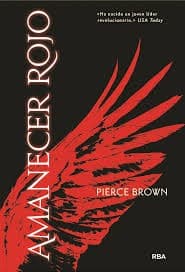
Book details and cover from Google Books.
Ready to read Red Rising?
Get your copy on Amazon, or listen to it on Audible. We earn a commission if you buy through these links.
Suzanne Collins
Like Red Rising, it follows a young person forced into a brutal competition by a rigid, unfair society, with a rebellion slowly catching fire around them. The pacing and the sense of injustice will feel familiar.

Veronica Roth
It shares Red Rising's divided society sorted into rigid groups and a protagonist who must prove where they belong. Its fast plotting and survival tests will suit readers who loved the training and trials.
Marissa Meyer
A class-divided world, a heroine hiding a dangerous identity, and a growing revolt make this a good match. It has the same mix of romance, political stakes and sharp action.
Ann Leckie
It delivers sweeping space politics, empire, and a protagonist with a hidden agenda, much like Red Rising's Society. Readers who enjoyed its layered conspiracies will find plenty to chew on.