Reader-supported: when you buy through links on our site, we may earn an affiliate commission. Learn more

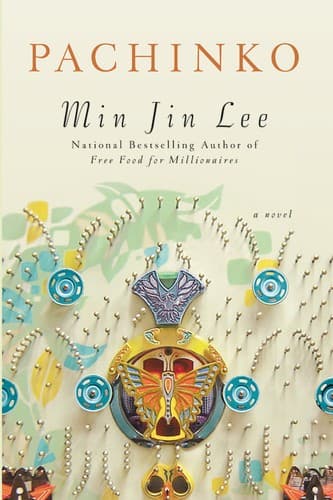
Cover of Pachinko
Buy on AmazonBuy on Bookshop.orgListen on Audible

We earn a commission if you buy through these links. Learn more

Find Similar Books

Pachinko

by Min Jin Lee

Guide by the Books of the Day editors · Updated · How we write our guides

Min Jin Lee's sweeping saga traces a Korean family across generations from colonial Busan to Osaka, rendering identity and survival with patient, humane detail.

What Creators Say About Pachinko

2 creators reviewed Pachinko on YouTube between 2025 and 2026, with 43.3K views between them. Their opinions are their own; we picked these reviews, we didn't write them.

'Pachinko' author Min Jin Lee talks new book 'American Hagwon,' Korean diaspora, and what's nextNBC Chicago on YouTube22K views · 2026
Pachinko by Min Jin Lee | Book Review - no spoilers!Kristen & Maddie on YouTube21.3K views · 2025

What It's About

Pachinko opens on Yeongdo, a poor island district of Busan in the early twentieth century, where Sunja grows up in a struggling boardinghouse family. A chance encounter with a married man changes the course of her life, and an offer of marriage from a Christian minister named Isak carries her across the sea to Osaka. The novel runs from the early 1900s into the late 1980s, following her descendants as they build lives in Japan under a Korean identity the country refuses to fully recognize.

Lee writes in a wide, almost omniscient voice that moves freely between characters and decades. She will summarize years in a few sentences, then slow down to dwell on a meal, a debt, a sermon, or a hard conversation. The prose is plain and unshowy, but the scope is considerable, and the book reads more like a long family chronicle than a tightly plotted novel. Korean and Japanese words appear throughout, often without much translation, which adds to the sense of an unfamiliar world the reader slowly learns to navigate.

The experience is immersive and emotional rather than suspenseful. Much of the tension comes from accumulated pressure: money that never quite stretches, prejudice that follows children to school and into job interviews, and choices made to protect people who may never know the cost. The pachinko parlors that give the book its title serve as a recurring thread, tied to the family's livelihood and to the social position of Korean residents in Japan.

Read this if you…

  • enjoy sweeping, multigenerational family sagas that span decades
  • want to understand the lives of Korean residents in Japan beyond the headlines
  • are willing to trade quick plot momentum for depth, texture, and patience

Skip it if you…

  • want a fast-paced plot with a clear, driving mystery or suspense
  • prefer tightly focused novels with only a handful of central characters

Key Ideas

  1. 1

    Survival as quiet, daily labor

    Much of the novel is about the unglamorous work of getting by: cooking, lodging boarders, handling money, and finding ways to keep a household running when resources are thin. Lee treats these routines with real respect, showing that endurance is built from ordinary decisions made again and again. The book suggests that the family's dignity lives less in grand gestures than in the steady refusal to give up.

  2. 2

    Belonging without a recognized country

    Several generations are born in Japan yet are treated as outsiders, unable to fully claim the country they know as home. The novel explores how legal status, schooling, housing, and employment can lock people into a position they did not choose. Identity here is shaped as much by how others see you as by what you feel inside.

  3. 3

    Faith, duty, and moral compromise

    Religion, obligation to family, and the pull of self-interest repeatedly collide in the characters' choices. Lee does not present these conflicts as neat moral lessons, and several characters make decisions that are defensible and painful at once. Readers who enjoy ethical complexity will find plenty to argue about.

  4. 4

    History seen through ordinary lives

    Major political events arrive in the story mostly as they reach individual households: a shift in rules, a wartime hardship, a change in who is allowed to work where. The large historical frame is present but kept at the edges of the family's experience. This makes the history feel lived rather than lectured, though readers wanting a full political account will need other sources.

Limitations

Some readers find the sheer number of characters and the jumps across decades hard to track, and the narrative sometimes summarizes significant events briefly before moving on. The melodrama of certain turns can feel heavy, and a few supporting figures remain more functional than fully developed. The novel views Japanese society largely through Korean eyes, so readers seeking a balanced panorama of Japan may want to pair it with other books.

Questions Readers Ask

Is Pachinko hard to follow?
The prose itself is clear and accessible, but the book covers about eighty years and many characters, so it asks for attention. Lee signals time jumps and family connections fairly well. Most readers settle in after the first section, once they recognize the recurring names and the pattern of the story.
What should I read after Pachinko?
If you want another novel about Korean identity and migration, Chang-rae Lee's Native Speaker is a strong choice, though it focuses on a single narrator in America. For a multigenerational family saga, you might also enjoy Lisa See's novels about families and history in Asia, which share the scope and emotional weight of this book.
Published
2017
ISBN
9781786691378
Difficulty
intermediate
Category
Fiction

Book details and cover from Google Books.

Ready to read Pachinko?

Get your copy on Amazon, or listen to it on Audible. We earn a commission if you buy through these links.

Books Like Pachinko

View all →
Cover of The Vanishing Half

The Vanishing Half

Brit Bennett

Like Pachinko, it follows family lines across decades, tracing how one choice ripples through children and grandchildren. Its close attention to identity and secrets mirrors Lee's interest in what families hide from each other.

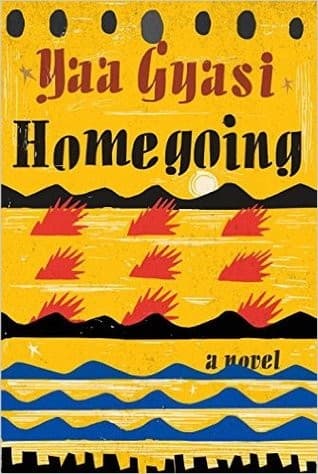
Cover of Homegoing

Homegoing

Yaa Gyasi

Gyasi traces two branches of one family across centuries, much as Pachinko moves through four generations. Each chapter opens a new life, and the connections between them reward the same patient reading Lee's novel asks for.

Cover of Brooklyn

Brooklyn

Colm Tóibín

Tóibín's restrained portrait of a young woman leaving home for a new country and an uncertain future captures the emotional weight Pachinko gives to displacement and duty.

Explore More