

Gilead
Marilynne Robinson
Like Brooklyn, it is a quiet, reflective novel in which ordinary days carry deep emotional weight, told through a voice that notices small things with great care.
Reader-supported: when you buy through links on our site, we may earn an affiliate commission. Learn more

We earn a commission if you buy through these links. Learn more
Find Similar Booksby Colm Tóibín
On screen: Brooklyn (film, 2015)
Guide by the Books of the Day editors · Updated · How we write our guides
Colm Tóibín's Brooklyn follows Eilis Lacey from small-town Ireland to 1950s New York and a hard choice. Find out if its quiet pace suits you.
2 creators reviewed Brooklyn on YouTube between 2015 and 2024, with 37.7K views between them. Their opinions are their own; we picked these reviews, we didn't write them.
Brooklyn is a quiet, closely observed novel about Eilis Lacey, a young woman in a small Irish town in the early 1950s with few prospects at home. When an Irish priest arranges a place for her in America, she leaves her mother and sister behind and crosses the Atlantic to a boarding house in Brooklyn, where she works in a department store and takes evening classes in bookkeeping.
Tóibín writes in a restrained, third-person style that stays close to Eilis and rarely tells us more than she knows. Long stretches pass without dramatic events; much of the power comes from small details of daily routine, homesickness, letters, and the slow formation of a new life. Dialogue is spare and feelings are mostly implied rather than announced. Some readers find this patient method slow, but it rewards attention.
Reading it feels less like following a plot than sitting with a person working out what she wants. The pleasure lies in the texture of the prose and the steady tension of a decision that no one can make for her. It asks what it costs to belong somewhere and what it costs to leave, and it does so without melodrama.
The novel treats leaving home as more than an escape. Eilis gains independence and a future in America, but she also loses daily closeness with her family and the familiar shape of her world. The book keeps both sides visible, so the move never feels like a simple step up. Readers see how opportunity and loss arrive together, and how hard it is to weigh them from the inside.
Tóibín is interested in what happens to identity when a person lives in two places at once. Eilis slowly builds a life in Brooklyn, yet her thoughts keep returning to Ireland. The book looks closely at how home is made from people and routines rather than from geography, and how that sense of home can shift without anyone quite noticing.
Tóibín rarely names feelings outright. Instead he lets gestures, silences, and ordinary tasks carry the emotional weight. This makes the reading slower but also more intense, because the reader has to infer what Eilis is holding back. Many readers find that the unspoken material stays with them longer than any dramatic scene would.
For much of the story, Eilis is moved along by the plans of priests, employers, family members, and suitors. The novel explores how a young woman in that period could have agency while still living within narrow expectations. Her gradual movement toward making her own choices is one of the book's quietest and most satisfying threads.
The pace will feel slow to many readers, and the restraint can read as coolness. Eilis is often more observed than fully revealed, which some find frustrating. Because the story stays close to her perspective, the wider world of 1950s Irish and Italian-American communities appears only in sketches. Readers wanting a panoramic social history or sharper dramatic conflict may find the book too contained. Its emotional method is not for everyone.
Book details and cover from Google Books.
Ready to read Brooklyn?
Get your copy on Amazon, or listen to it on Audible. We earn a commission if you buy through these links.
Marilynne Robinson
Like Brooklyn, it is a quiet, reflective novel in which ordinary days carry deep emotional weight, told through a voice that notices small things with great care.
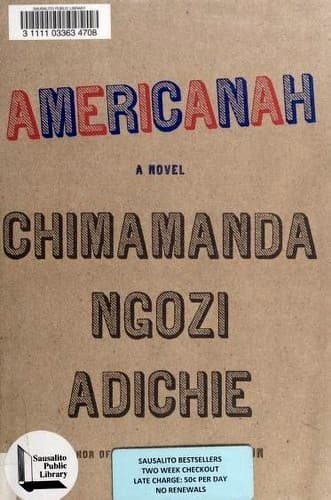
Chimamanda Ngozi Adichie
Its heroine also moves to America and wrestles with what she gave up, offering a wide-ranging look at identity and home that Brooklyn fans will appreciate.
Kazuo Ishiguro
Ishiguro shares Tóibín's calm, controlled narration, where understatement and quiet feeling build to a powerful emotional effect.

John Williams
A plain-spoken, deeply humane novel about an ordinary life, it rewards the same patient reading and attention to restrained feeling that Brooklyn does.