
Wonder
R. J. Palacio
Like Melody, Auggie enters a mainstream school where classmates judge him on sight, and his warm, funny voice will appeal to readers who loved being inside Melody's head.
Reader-supported: when you buy through links on our site, we may earn an affiliate commission. Learn more
We earn a commission if you buy through these links. Learn more
Find Similar BooksA sharp, funny first-person novel that lets readers inside the mind of a girl everyone assumes can't think, and the voice carries the whole book.
Melody is eleven. She has cerebral palsy that keeps her from walking or speaking, and the adults around her mostly assume that a girl who cannot talk cannot think either. The book is narrated in her first person, so we hear everything she is thinking while the people in her life hear only what she manages to communicate. Her memory is extraordinary, and she catalogs facts, lists, and observations with a dry, impatient humor that makes her easy to root for.
The story turns on a communication device that gives her a way to answer back. Much of the book follows what happens when a school and a family start to take her seriously: a new classroom, new friendships, a team competition, and the friction that comes with being seen differently. Draper keeps chapters short and sentences plain, so the book moves quickly, and its emotional weight comes from small moments rather than speeches.
Reading it feels like being let into a mind that is usually overlooked. It is a book about dignity and assumption more than a lesson about disability, and it does not rush to be uplifting. Expect a few hard turns and a steady ache underneath the humor.
The book's central argument is that being unable to speak is not the same as having nothing to say. Melody's inner life is rich, quick, and observant, and the gap between what she thinks and what others can perceive is the source of most of the tension. Draper makes the reader feel that gap constantly.
Many of the book's most painful moments come from teachers, relatives, and professionals who decide what Melody can understand based on her body. The novel shows how low expectations become self-fulfilling and how often kindness can still be condescending. It asks readers to notice their own assumptions.
A communication device gives Melody a literal voice, but the book keeps asking what having a voice really means. It depends on being listened to, having a place to be heard, and being trusted with your own choices. The technology opens a door, and the rest of the story is about who will walk through it.
School is the book's main arena, and the classroom becomes a small model of how a community either includes or excludes. Melody's relationships with classmates shift as they learn to see her, and the book portrays both awkward generosity and real cruelty without sentimentality.
The book sees the world through one child's eyes, so it offers a single experience of cerebral palsy rather than a broad picture of disability. Some of the adult characters are written as simple foils, and the turn toward a communication breakthrough can feel tidy. The school competition plot follows familiar patterns that experienced readers may spot early. Written for younger readers, it is brief and direct, which some adults will find slight, though many find it moving anyway.
Reviews from readers on YouTube. Their opinions are their own.
Book details and cover from Google Books.
Ready to read Out of My Mind?
Get your copy on Amazon, or listen to it on Audible. We earn a commission if you buy through these links.
R. J. Palacio
Like Melody, Auggie enters a mainstream school where classmates judge him on sight, and his warm, funny voice will appeal to readers who loved being inside Melody's head.
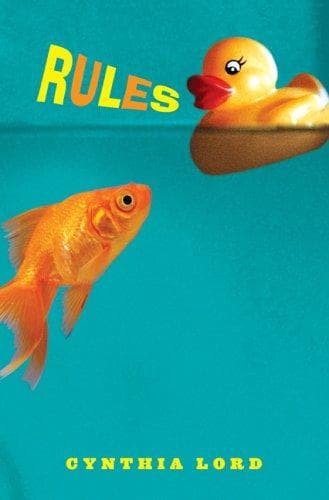
Cynthia Lord
Catherine befriends Jason, a boy who uses a communication book, echoing Out of My Mind's focus on how nonspeaking people have so much to say when given a way.
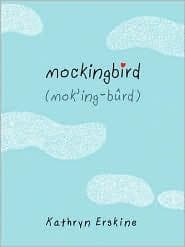
Kathryn Erskine
Caitlin, an autistic girl, narrates her struggle to understand others after a family loss, offering the same deeply interior perspective that made Melody's story so vivid.
Lynda Mullaly Hunt
Ally hides her dyslexia and is labelled a troublemaker until a teacher sees her intelligence, a satisfying parallel to Melody's fight to prove what her mind can do.